Activists in ‘Vesna’ case handed prison terms of up to 12 years for ‘extremism’
Several defendants in the ‘Vesna’ case have been sentenced to between six and twelve years in prison after being found guilty of creating an ‘extremist community’, according to OVD-Info and reports from the courtroom.
The sentences were handed down by St Petersburg City Court. The six defendants were convicted of organising and participating in an ‘extremist community’, as well as charges including the dissemination of ‘false information’ about the military, public calls for activity deemed against state security, incitement to mass unrest, and the rehabilitation of Nazism.
More than twenty people are being prosecuted in connection with the case, spanning 13 regions. Most have left Russia; six were held in custody and have now been sentenced:
Anna Arkhipova — 12 years
Vasily Neustroev — 10 years
Yan Ksenzhepolsky — 11 years
Yevgeny Zateev — 6 years and 2 months
Pavel Sinelnikov — 7 years and 6 months
Valentin Khoroshenin — 6 years and 2 months (following a deal with the investigation)
All six were also handed additional restrictions, including a seven-year ban on publishing online and participation in public organisations.
Prosecutors had sought sentences ranging from eight to thirteen years. The case concerns 21 defendants in total.
According to the investigation, the case rests in part on around 90 social media posts published in the name of the movement, including calls to protest against the war in Ukraine. In court, individual authorship was not established, prosecutors argued the content reflected the collective position of the group.
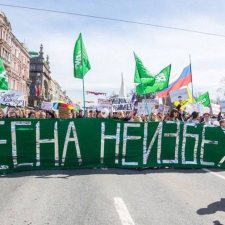
The youth movement ‘Vesna’ was founded in St Petersburg in 2013 by activists linked to the youth wings of Yabloko, Solidarity, and Oborona. From 2014 onwards, it organised political actions and anti-war pickets.
In May 2022, its members called on supporters to attend the ‘Immortal Regiment’ march carrying anti-war placards. In September of the same year, the movement urged protests against mobilisation. On 14 October 2022, the Ministry of Justice designated it a ‘foreign agent’. On 6 December, it was formally declared an ‘extremist’ organisation.
Six members of the movement were detained in June 2023.
The human rights project Political Prisoners Memorial has recognised all six defendants as political prisoners, stating that their prosecution stems from alleged involvement in the Vesna movement and violates rights to freedom of association, expression and peaceful assembly.
Defence lawyers have criticised the case as fundamentally unjust. Yulia Kuznetsova, representing Vasily Neustroev, said: ‘A fair trial is impossible where people face criminal prosecution for words posted online. They have been in custody for a third year. Their sentences exceed those imposed for many violent offences. A public anti-war stance is now equated with extremism — leaving silence as the only safe option for a citizen. This is a demonstrative process, showing how rights are being buried.’
The defence intends to appeal. Supporters say the most effective way to assist those convicted is to continue following the case, sharing information, and writing to the prisoners.