63-year-old Jehovah’s Witness released after four years in a penal colony
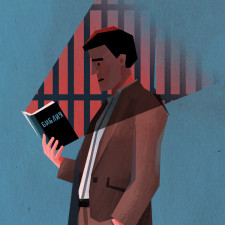
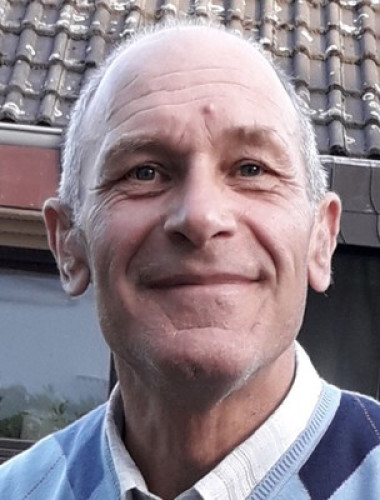
On 28 July 2026, Volodymyr Maladyka, 63, was released from Penal Colony No. 3 in Russia’s Tambov Oblast. A resident of occupied Sevastopol, he had served a prison sentence for practising his faith. Friends and his wife, Nataliya, who had travelled approximately 1,600 kilometres to meet him, were there to greet him upon his release. The news was reported by the portal Jehovah’s Witnesses: Legal Situation in Russia.
‘I felt well in the penal colony, and I feel well now that I’ve been released. I was in good spirits from the very beginning,’ Volodymyr said, describing his state of mind.
Volodymyr Maladyka and two fellow believers, Yevhen Zhukov and Volodymyr Sakada, were detained in September 2020. The previous day, the FSB in occupied Crimea had opened a criminal case against them under Part 1 of Article 282.2 of the Russian Criminal Code (‘organising the activities of an extremist organisation’). The prosecution relied on video recordings of four worship services secretly filmed by FSB agents. All three men spent more than a year and four months in pre-trial detention, followed by more than eight months under house arrest.
In October 2022, the Nakhimovsky District Court of Sevastopol sentenced each of them to six years in a general-regime penal colony. The verdict was upheld on appeal a year later and was ultimately upheld by the cassation court in December 2024. Yevhen Zhukov was released in June 2026, followed by Volodymyr Maladyka a month later. Volodymyr Sakada remains imprisoned.
Volodymyr Maladyka spent most of his sentence at the Tambov penal colony, where he worked preparing metal parts for further processing. According to him, the prison administration prohibited him from communicating with other prisoners. His wife said the authorities considered him prone to ‘agitation’ because of the charges against him. Volodymyr Maladyka also recalled the harsh living conditions: the drinking water had a swampy smell and was unfit to drink, leaving him heavily dependent on parcels sent from outside. On the day of his release, he walked out carrying a bag packed to the brim with letters from his supporters.
On 20 April 2017, the Supreme Court of Russia ruled that the Administrative Centre of Jehovah’s Witnesses in Russia was an ‘extremist organisation’, effectively banning the denomination in the country.
We consider criminal charges brought solely because individuals practised their faith as Jehovah’s Witnesses, by participating in religious services and meetings or distributing religious literature, to be discriminatory and in violation of international human rights law, in particular the right to freedom of religion or belief. Prosecutions under Article 282.2 of the Russian Criminal Code, which effectively criminalise membership of an organised religious community, are fundamentally unlawful.
On 7 June 2022, the European Court of Human Rights (ECtHR) ruled that Russia’s ban on Jehovah’s Witnesses and its persecution of believers were unlawful.
The Court held that Russia had violated the applicants’ rights to freedom of religion under Article 9, freedom of expression under Article 10, freedom of assembly under Article 11, and the right to peaceful enjoyment of possessions under Article 1 of Protocol No. 1 to the European Convention on Human Rights.