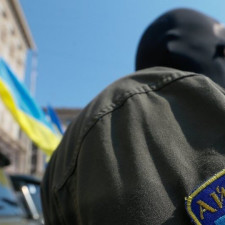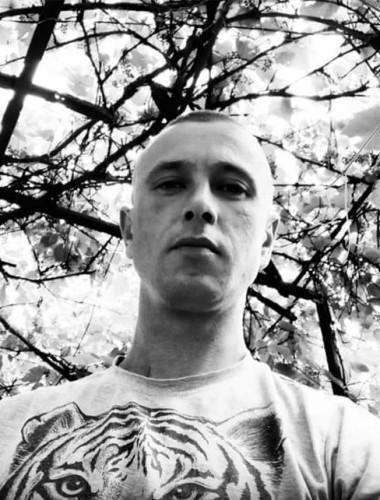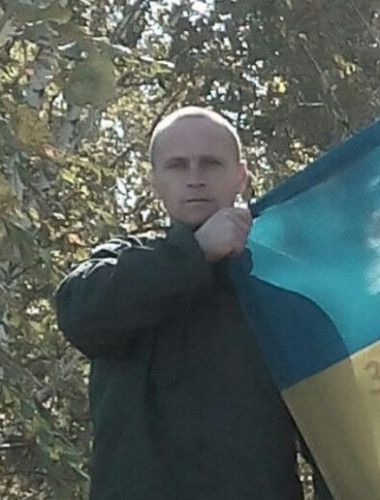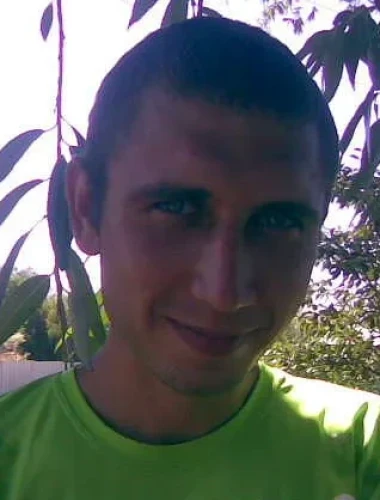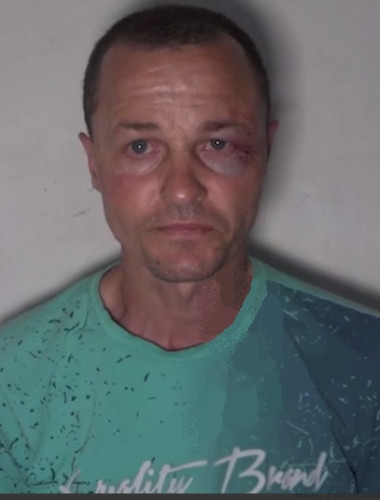
Andrii Haiduchenko, Vitalii Kononenko, Serhii Kozinskyi and Volodymyr Shevchenko are political prisoners
Four Ukrainians were sentenced to terms of imprisonment for serving in the Aidar Battalion
The ‘Political Prisoners. Memorial’ human rights project, in accordance with international standards, considers Ukrainian citizens Andrii Haiduchenko, Vitalii Kononenko, Serhii Kozinskyi and Volodymyr Shevchenko political prisoners. All four men were convicted of ‘participating in a terrorist organisation’ for serving in the Aidar Battalion; Kozinskyi was also convicted of ‘undergoing training for the purpose of carrying out terrorist activities.’ The criminal prosecutions and convictions of Haiduchenko, Kononenko, Kozinskyi and Shevchenko violated their rights to a fair trial. We demand that their convictions be quashed, that the treatment of prisoners of war comply with international law, and that those who are not prisoners of war be released.
What were the charges against the four Ukrainian citizens?
Andrii Haiduchenko, Vitalii Kononenko, Serhii Kozinskyi and Volodymyr Shevchenko were taken prisoner by Russia or detained in the occupied territories. All four were charged with ‘participating in a terrorist organisation’ (Article 205.4, Part 2, of the Criminal Code of the Russian Federation) for serving in the Aidar Battalion. Serhii Kozinskyi was also charged with ‘undergoing training for the purpose of carrying out terrorist activities’ (Article 205.3 CC RF).
So far as is known, Shevchenko served in the Aidar Battalion periodically from 2015 to 2021. He was detained no later than August 2022. At that time, according to Shevchenko, he was no longer a member of the military. Kononenko began his service in the Aidar Battalion in 2014 and was detained no later than October 2023. Haiduchenko served from 2019 but was already a civilian when detained in the spring of 2025. We have no information as to when Kozinskyi served in the Aidar Battalion or when he was detained.
Andrii Haiduchenko was sentenced to five and a half years in a penal colony. We do not know the length of the sentences handed down to the three others.
Why do we consider Andrii Haiduchenko, Vitalii Kononenko, Serhii Kozinskyi and Volodymyr Shevchenko political prisoners?
We do not know for certain whether Haiduchenko, Kononenko, Kozinskyi and Shevchenko were taken prisoner during military operations (in which case they would be prisoners of war) or were captured in the occupied territories after they had left military service (in which case they would be civilians).
In either case, their criminal prosecutions were unlawful. The four Ukrainians were prosecuted and convicted for serving in the Ukrainian Aidar Battalion, which Russian courts consider a terrorist organisation. However, as part of the Ukrainian armed forces, Aidar carries out combat missions in accordance with orders from the country’s military command. The provisions of counterterrorism legislation are not applicable to armed conflict.
The prosecution of Serhii Kozinskyi on a charge of undergoing training for the purpose of carrying out terrorist activities was also unlawful. He underwent training to carry out combat missions, not terrorism.
In international law, Russia’s military actions against Ukraine are unlawful and criminal, while Ukraine’s actions in defending itself against military aggression are lawful and justified. Defending one’s country against an armed invasion is not a crime.
Prosecuting prisoners of war for having participated in combat operations is a gross violation of the provisions of the Geneva Convention on the Treatment of Prisoners of War. If any of the four men were captured after having left active military service, their prosecution violated the Geneva Convention on the Protection of Civilian Persons in Time of War.
Detailed descriptions of the cases of Andrii Haiduchenko, Serhii Kozinskyi, Vitalii Kononenko, and Volodymyr Shevchenko and of our position are available on our website.
How can you help?
You can write to Serhii Kozynskyi at the following address:
RU:
Российская Федерация, 677004, Республика Саха (Якутия), г. Якутск, ул. Очиченко, 25, ФКУ ИК-1 УФСИН России по Республике Саха (Якутия), Козинский Сергей Леонидович, 1986 г. р.
EN:
Serhii Leonidovych Kozynskyi (born 1986), Penal Colony No. 1, Federal Penitentiary Service for the Republic of Sakha (Yakutia), 25 Ochichenko Street, Yakutsk, Republic of Sakha (Yakutia), 677004, Russian Federation.
You can also send emails via F-Pismo (for payment with Russian bank cards), ZT (for payment with all bank cards), and Memorial-France (free of charge).
Please note that letters in languages other than Russian are highly unlikely to reach the intended recipient.
If you have information as to the place of detention where Andrii Haiduchenko, Vitalii Kononenko, and Volodymyr Shevchenko are being held, please let us know by email at [email protected]
You can donate to help all political prisoners in Russia.