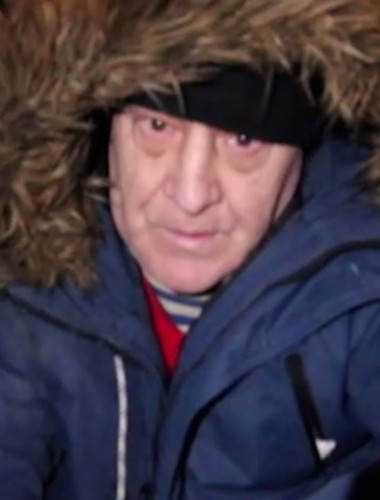
Gennady Novitsky, Vladimir Khvan and Magomed Kurabegov are political prisoners
Three men were convicted on charges of collusion with foreign nationals
The ‘Political Prisoners. Memorial’ human rights project, in accordance with international standards, considers Gennady Novitsky, Vladimir Khvan and Magomed Kurabegov political prisoners. The three men were convicted on a charge of collusion with a foreign state or organisation. Their criminal prosecutions violated their rights to a fair trial. We demand their release and the dropping of all criminal charges against them.
What were the charges against Gennady Novitsky, Vladimir Khvan and Magomed Kurabegov?
Gennady Novitsky, aged 62, from Rostov-on-Don, worked as a security guard. In February 2024, he was detained and remanded in custody on a charge of collusion with a foreign state (Article 275.1 of the Criminal Code of the Russian Federation). Novitsky allegedly contacted representatives of the Ukrainian Security Service via a messaging app and offered to assist them in ‘activities against the Russian Federation’. In fact, Novitsky’s correspondence was with FSB officers. The court reclassified Novitsky’s case as attempted collusion with foreigners (Article 30, Part 3, CC RF in conjunction with Article 275.1 CC RF). On 13 August 2024, he was sentenced to three years six months in a general regime penal colony and fined 700,000 roubles.
Vladimir Khvan from Primorsky Krai was apparently detained in March 2024. According to the investigative authorities, he spoke out against the ‘special military operation’ and contacted representatives of the Free Russia Legion to assist them in ‘activities against the security of the Russian Federation’. Khvan was charged with collusion with a foreign state. On 21 June 2024, he was sentenced to three years six months in a general regime penal colony.
Businessman Magomed Kurabegov from Novosibirsk was detained at the city airport on 28 June 2024. He was forced to buy a ticket to Moscow and fined on a charge of petty hooliganism. The following day, immediately upon arrival in Moscow, he was jailed on the same administrative-law charge and was then likely remanded in custody on a charge of collusion with a foreign state. In 2025, Kurabegov was sentenced, but the length of his sentence is not known.
Grounds for the charge against Kurabegov are also not known. There is information that the security services’ attention was drawn to one of the contacts in his phone, allegedly linked to the Ukrainian Security Service. At the same time, Kurabegov conducted business with China and lived in both Russia and China, which could also have been grounds for a charge of collusion with foreigners.
Why do we consider Gennady Novitsky, Vladimir Khvan and Magomed Kurabegov political prisoners?
The law on collusion with foreigners contradicts the principle of legal certainty and must be repealed. All related convictions must be quashed, and ongoing prosecutions dropped. You can read more about our analysis of such cases here.
The security services made no secret of the fact that they carried out a sting operation against Gennady Novitsky. Such actions by the FSB are illegal. Even if he had been in contact with the Ukrainian Security Service, an offer of assistance to that organisation would not have been a crime.
Vladimir Khvan was likely also a victim of a sting operation. Moreover, judging by the fact that he was not charged with a more serious offence for correspondence with the Free Russia Legion, it would seem he did not express readiness to cooperate with that organisation.
The prosecution of Magomed Kurabegov was illegal, as shown by his trumped-up convictions for administrative-law offences. Regardless of which country he allegedly colluded with, his actions did not pose a threat to Russia’s security. This is shown by the fact that he was charged with this unlawful offence.
You can read more about the cases of Gennady Novitsky, Vladimir Khvan and Magomed Kurabegov on our website.
How can you help?
You can write to Gennady Novitsky at the following address:
RU:
Российская Федерация, 172011, Тверская область, г. Торжок, ул. Старицкая, д. 79, ФКУ ИК-4 УФСИН России по Тверской области, Новицкий Геннадий Леонидович, 1962 г. р. (адрес предположительный)
EN:
Gennady Leonidovich Novitsky (born 1962), Penal Colony No. 4, Federal Penitentiary Service of Russia for Tver Oblast, 79 Staritskaya Street, Torzhok, Tver Oblast, 172011, Russian Federation (assumed address).
You can also send emails via F-Pismo (for payment with Russian bank cards), ZT (for payment with all bank cards), and Memorial-France (free of charge).
Please note that letters in languages other than Russian are highly unlikely to reach the intended recipient.
If you have information as to the locations where Magomed Kurabetov or Vladimir Khvan are serving their sentences, please let us know by email at [email protected].
You can donate to help all political prisoners in Russia.