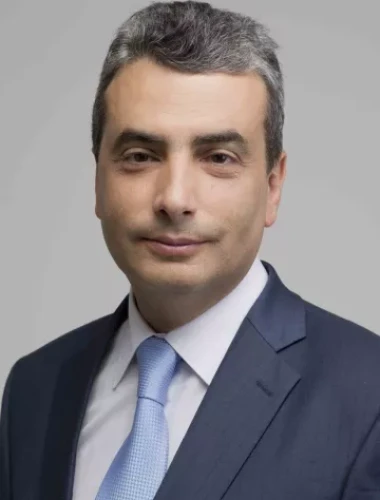
Lev Shlosberg sentenced to 11 years and one month over war debate and Daily Mirror repost
Lev Shlosberg, deputy chair of the Yabloko party, has been sentenced by Pskov City Court to 11 years and one month in a penal colony over his participation in a debate about the war and his reposting of an Echo of Moscow item featuring the Daily Mirror‘s front page. Prosecutors treated both as repeated ‘discrediting of the army’ (Article 280.3, Part 1) and spreading ‘fakes’ about it (Article 207.3, Part 2(e)), Mediazona reports.
Prosecutor Anna Goryacheva had sought a year longer, 12 years and one month. As a mitigating factor, the prosecution noted that Lev Shlosberg had been caring for his father, who has a legally recognised Group II disability. The final sentence results from a partial aggregation of terms under the two charges, taking into account Shlosberg’s earlier conviction under Russia’s ‘foreign agent’ legislation.
The trial unfolded against the backdrop of Yabloko, Russia’s only openly antiwar party, being struck from the ballot for September’s parliamentary elections.
The proceedings were marked by serious procedural irregularities. For the trial’s final three days, the court brought in state-appointed lawyer Leonid Skripilyov after Shlosberg’s own defence team became tied up in other proceedings. Shlosberg objected to the appointment each time, but Judge Viktoriya Malyamova refused to let him reject Skripilyov’s services and would not allow Skripilyov himself to leave the courtroom. Closing arguments on 14 August likewise went ahead without the lawyers Shlosberg trusts; one of them, Vladimir Danilov, was later able to attend, but was given just 15 minutes to prepare his submission.
Lev Shlosberg was never questioned in court. At a hearing on 28 July, Judge Malyamova ordered his pre-trial testimony read aloud instead, overriding his objection: he had wanted to testify only after the defence presented the rest of its evidence, but the judge treated this as a refusal to testify. She went on to repeatedly interrupt his final statement, at one point cutting him off as he raised his rights:
‘Your Honour, I am speaking about my rights and freedoms.’
‘Rights and freedoms can be discussed elsewhere. Let’s have the final statement now.’
Lev Shlosberg was remanded in custody on 5 December 2025 in the ‘fake news’ case (Article 207.3, Part 2(e)), brought over a Telegram repost on 25 February 2022, the day after the invasion of Ukraine began, of an Echo of Moscow post featuring the Daily Mirror‘s front page. The cover showed a bloodied Ukrainian woman beside Vladimir Putin under the headline ‘Her blood… His hands.’ Shlosberg told the court he had posted this before the ‘fake news’ law even existed.
Before his detention, he had been under house arrest in a separate case over repeated ‘discrediting’ of the army (Article 280.3, Part 1), brought over a recording of the debate ‘An obscene peace or a just war’, in which Shlosberg argued against historian Yuri Pivovarov. The prosecution attributed to Shlosberg statements that were in fact Pivovarov’s. These were the very positions Shlosberg had been arguing against.
Denied a proper closing argument, Shlosberg used his final statement both to dismantle the case against him and to deliver a wider indictment of the Russian state, describing the trial as a purely political, not legal, exercise.
Despite repeated interruptions, he spoke of the war’s human cost:
‘A life worthy of a human being is a life without war, without the constant threat of sudden death. A dignified life means civic dialogue and civil peace within the country. A dignified life is only possible in conditions of peace.’
He went further, arguing for an immediate end to hostilities:
‘No state reorganisation, no political reshaping of the world is worth the deaths of so many people. For them, everything is over. They have no future. They are dead. […] My position is that it is now necessary to reach two agreements simultaneously. The first is a ceasefire agreement. […] The only pressing task today is stopping the killing of people and moving to political dialogue. We cannot say right now how long this political dialogue will last or how it will end. But every day of this dialogue saves thousands upon thousands of lives.’
In November 2025, Lev Shlosberg had already been convicted separately of failing to comply with ‘foreign agent’ obligations (Article 330.1, Part 2) and sentenced to 420 hours of compulsory labour. That sentence was later converted to one month’s imprisonment and added to his term in the present case.