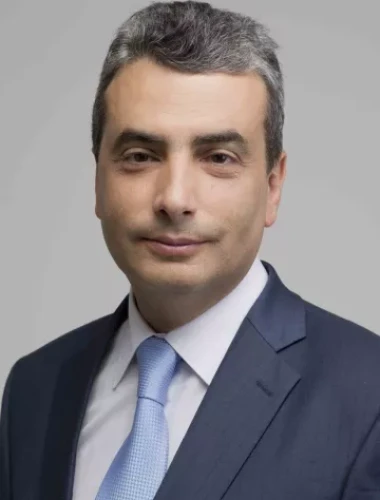
Lev Shlosberg is a political prisoner
The deputy chair of the Yabloko party is being held in custody on three criminal charges

The ‘Political Prisoners. Memorial’ human rights project, in accordance with international criteria, considers Lev Shlosberg a political prisoner. Shlosberg is being prosecuted on charges of evading his obligations under Russian ‘foreign agent’ legislation (for allegedly failing to label publications appropriately), for repeated public actions aimed at ‘discrediting’ the use of the Russian armed forces (for a video posted on Odnoklassniki), and for disseminating ‘fake’ information about the use of the Russian armed forces (for a repost on Telegram). Shlosberg’s criminal prosecution violates his rights to freedom of expression and fair trial. We demand the immediate release of Lev Shlosberg and that all criminal charges against him be dropped.
Who is Lev Shlosberg and what are the charges against him?
Lev Shlosberg is a politician and journalist, deputy chair of the Yabloko party and head of the party’s regional branch in Pskov Oblast. In June 2023, the Russian Ministry of Justice added Shlosberg to the register of ‘foreign agents,’ stating that he ‘spoke out against the special military operation in Ukraine.’
In February 2024, the politician was fined twice under administrative law for failing to label his publications as a ‘foreign agent’. In June 2024, he was fined for public actions aimed at ‘discrediting’ the use of the Russian army.
On 2 October 2024, the homes of Lev Shlosberg and his 95-year-old father were searched. A criminal case was then brought against Shlosberg for repeatedly evading his obligations as a ‘foreign agent’ (Article 330.1, Part 2, of the Russian Criminal Code). On 23 November 2024, he was placed under travel restrictions pending trial.
On 10 June 2025, Lev Shlosberg’s home was again searched. Another criminal case was opened for repeated public ‘discrediting’ of the Russian army (Article 280.3, Part 1). The investigative authorities believe that Shlosberg posted a video recording of a debate with historian Yury Pivovarov about Russia’s war against Ukraine on the Odnoklassniki social media platform. Shlosberg and his Yabloko colleagues assert that the Odnoklassniki page in question neither belongs to Shlosberg nor is run by him. The next day, Lev Shlosberg was placed under house arrest.
On 7 October 2025, Pskov City Court released Shlosberg from house arrest with travel restrictions pending trial, but on 10 October, Pskov Oblast Court returned him to house arrest.
On 5 November, a court found Shlosberg guilty of repeatedly evading his obligations as a ‘foreign agent’ and sentenced him to 420 hours of compulsory work.
Later, a third case was opened against Shlosberg for spreading ‘fake’ information about the use of the Russian armed forces (Article 207.3 of the Russian Criminal Code). The investigative authorities pointed out that the basis for this was a repost on Telegram that Shlosbeg made in February 2022. On 5 December, Lev Shlosberg was taken into custody.
Why do we consider Lev Shlosberg a political prisoner?
Russian legislation on ‘foreign agents’ is discriminatory, not based on law, and is designed to enable the prosecution of dissidents. The article of the Russian Criminal Code on evading the obligations of a ‘foreign agent,’ which establishes punishment for violations of this legislation, is also unlawful. We believe that this article should be rescinded, all related convictions quashed, and ongoing prosecutions, including that of Shlosberg, dropped.
The articles of the Criminal Code on both public ‘discrediting’ the Russian army and spreading information known to be false about the Russian army were adopted into law after the start of Russia’s full-scale invasion of Ukraine to suppress dissent. Both articles effectively prohibit any criticism of the war or of the Russian authorities, in violation of the right to freedom of expression. They contradict fundamental principles of law and should be rescinded, and all related criminal cases closed.
A detailed description of the case of Lev Shlosberg and of our position is available on our website.
Recognition of an individual as a political prisoner does not imply the ‘Political Prisoners. Memorial’ human rights project agrees with, or approves, their views, statements, or actions.
How can you help?
You can write to Lev Shlosberg at the following address:
RU: 180000, г. Псков, ул. Некрасова, д. 39, ФКУ СИЗО-1 УФСИН России по Псковской области, Шлосберг Лев Маркович, 1963 г. р.
EN: Shlosberg Lev Markovich (born 1963), Remand Prison No. 1, Federal Penitentiary Service for Pskov Oblast, 39 Ulitsa Nekrasova, Pskov, 180000, Russia.
You can also send emails via the ZT service (for payment with Russian bank cards) and OVD-Info (free of charge).
Please note that letters in languages other than Russian are highly unlikely to reach the intended recipient.
You can donate to help all political prisoners in Russia.