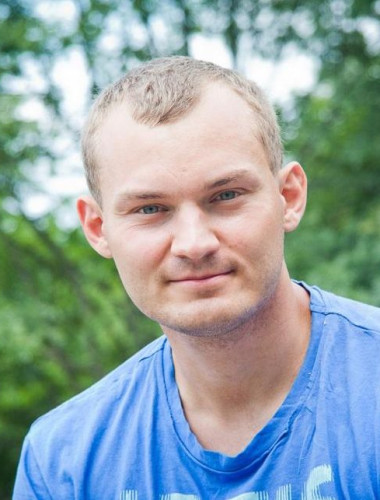
Pavel Gladky is a political prisoner
A Stavropol resident has been sentenced to 15 years in prison on charges of preparing to set fire to a military recruitment office and distributing leaflets with symbols of the Free Russia Legion
The ‘Political Prisoners. Memorial’ human rights project, in accordance with international criteria, considers Pavel Gladky a political prisoner. Gladky was convicted on charges of treason for distributing leaflets with the symbols of the Free Russia Legion and of preparing to commit a terrorist act for allegedly planning to set fire to a military recruitment office. Gladky’s prosecution, in all likelihood, was based on fabricated evidence. His prosecution and conviction violated his right to a fair trial. We demand the release of Pavel Gladky and that all criminal charges against him be dropped.
What were the charges against Pavel Gladky?
Pavel Gladky was detained on the night of 22 September 2022. Searches of his home and workplace found anti-war materials bearing the symbols of the Free Russia Legion that were seized. He was sentenced to 10 days’ jail on a charge of petty hooliganism.
While in detention, Pavel Gladky allegedly told his cellmate about plans to set fire to military recruitment offices ‘in the interests of the Legion’ and asked him ‘to collect a package from the forest for a reward.’ This cellmate, whose personal details remain secret, allegedly contacted the FSB and gave testimony that formed the basis of Gladky’s subsequent criminal prosecution. FSB officers then claimed to have found a Molotov cocktail in the forest, supposedly hidden there by Gladky. Under pressure from the security forces, Gladky at first confessed to the charges, but later stated he did not know this witness, had not made a Molotov cocktail, and had not hidden anything in the forest.
On 1 October 2022, Gladky was charged with preparing to commit a terrorist act (Article 30, Part 1, of the Russian Criminal Code in conjunction with Article 205, Part 1) and was remanded in custody.
A year later, he was additionally charged with treason in the form of ‘providing other assistance to a foreign organisation in activities directed against the security of the Russian Federation’ (Article 275). According to the investigative authorities, Gladky’s alleged assistance consisted of distributing leaflets and sending photographs of them to the Free Russia Legion. While the investigation was underway, Gladky was also twice fined under administrative law for ‘discrediting’ the Russian army.
On 29 October 2024, Gladky was sentenced to 15 years’ imprisonment, with the first three years to be served in a cell-type prison and the remainder in a strict regime penal colony, and an additional one year’s probation on release. Gladky’s appeal is currently being heard.
Why do we consider Pavel Gladky a political prisoner?
Gladky does not deny his contacts with the Free Russia Legion or his distribution of anti-war leaflets. However, he insists that he confessed to preparing to set fire to a military recruitment office only because he was tortured in the FSB building.
The charge of preparing to commit an act of terrorism is based on Gladky’s initial confession, which he later retracted, and on the testimony of a secret witness. No evidence was found during searches of Gladky’s home that would indicate he had made preparations to carry out an arson attack. We consider the charge unproven and, in all probability, fabricated.
Distributing materials with the symbols of the Free Russia Legion cannot be considered a crime. It has not been proven that Gladky had any intention to harm the security of Russia. Gladky had been expressing his opinions and protesting against Russia’s war against Ukraine.
Gladky suffers from health problems and did not receive adequate medical assistance on remand. His prosecution is part of the authorities’ campaign of repression to intimidate the public and, especially, opponents of the war of aggression against Ukraine.
A detailed description of Pavel Gladky’s case and of our position is available on our website.
Recognition of an individual as a political prisoner does not imply the ‘Political Prisoners. Memorial’ human rights project agrees with, or approves, their views, statements, or actions.
How can you help?
You can donate to help all political prisoners in Russia.