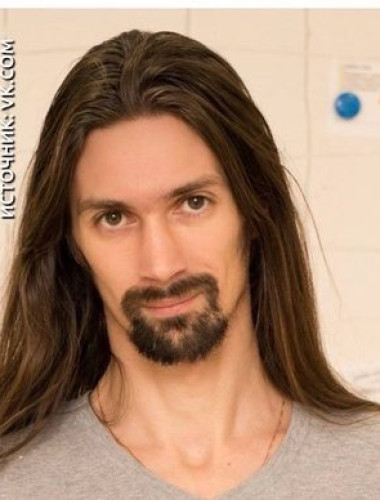
Anna Panteleeva, Kristina Rozhkova and Sergei Evstyukhin are political prisoners
Artists and a photographer are being prosecuted for ‘insulting the feelings of believers’ and ‘desecrating burial places’ because of a photoshoot in a cemetery
The ‘Political Prisoners. Memorial’ human rights project, in accordance with international standards, considers Anna Panteleeva, Kristina Rozhkova and Sergei Evstyukhin political prisoners; Yaroslava Gumennaya is considered a victim of a politically motivated prosecution. All four have been charged with ‘publicly insulting the religious feelings of believers in places of religious worship’ and with ‘desecration of burial places and grave memorials by a group of persons acting by prior collusion,’ for a semi-nude photoshoot in a cemetery. Their prosecutions violate their rights to a fair trial. We demand that all criminal charges against them be dropped and that Panteleeva, Rozhkova and Evstyukhin be released.
What are the charges against them?
On 16 June 2024, the artists staged a photoshoot in one of St Petersburg’s cemeteries. Semi-nude models were bound with ropes in the style of shibari. Yaroslava Gumennaya was tied to a cross on a grave, while Anna Panteleeva was tied to a bench nearby. Sergei Evstyukhin and Kristina Rozhkova photographed them. Later Panteleeva posted the pictures on her Instagram page.
The photographs drew the attention of Vladislav Pozdnyakov, founder of Male State, an extremist masculinist organisation. He published the pictures together with the young woman’s personal details, after which she began receiving threats in private messages. Timur Bulatov, well-known for making complaints to the police, also submitted a complaint against Panteleeva to the St Petersburg branch of the Interior Ministry.
On 19 and 20 June 2024, the participants in the photoshoot were detained and remanded in custody. Over the next two months the pretrial conditions were relaxed: Gumennaya was released under a travel ban, while the other participants in the photoshoot were placed under house arrest.
Initially, all were charged with ‘desecration of burial places and grave memorials by a group of persons acting by prior collusion’ (Article 244, Part 2, of the Russian Criminal Code). Later, an additional charge was added of ‘publicly insulting the religious feelings of believers in places specially designated for the holding of religious worship and ceremonies’ (Article 148, Part 2).
The charges were based on the assessment of an expert who considered the defendants had committed ‘immoral and cynical actions’ and that their photoshoot in a cemetery offended ‘the religious feelings and dignity of all Christian believers who venerate the cross as a religious symbol.’
The investigative authorities considered Panteleeva the organiser of the action, which she denies. According to her, this was an artistic performance through which she reproduced her own traumatic experience.
The trial began in March 2025. Gumennaya admitted guilt in relation to the charge of desecration of burial places. The others maintained they had not intended to desecrate burial places or insult anyone’s feelings.
Why do we consider Anna Panteleeva, Kristina Rozhkova and Sergei Evstyukhin political prisoners?
The article of the Russian Criminal Code on ‘publicly insulting the religious feelings of believers’ does not meet the principle of legal certainty. It is not possible to know in advance what actions may be considered unlawful. This law is often used to prosecute dissidents and is applied for propaganda purposes to impose ‘traditional values’ and strengthen support for the Russian authorities.
We do not consider the defendants’ actions to have been public in nature, since there was no one present during the photoshoot, and publishing the photographs on Instagram does not constitute a crime.
The notion of ‘desecration’ used in the article on the desecration of burial places is evaluative in nature and lacks a clear legal definition. We consider that neither partial nudity nor being tied up in the vicinity of burial places can be regarded as desecration. Nor was there any intent on the part of the defendants to desecrate burial places: they were conducting an art performance.
The defendants used religious symbols and objects in the cemetery for purposes of artistic expression; they caused no material damage to the burial site.
While we consider the action inappropriate, it posed no danger to society and cannot be grounds for criminal prosecution. Nevertheless, the participants have been charged under two articles of the Criminal Code for one and the same action. We believe such a classification in law is wrong: at most their actions fall under the article of the Code of Administrative Offences on the public desecration of objects of religious veneration but should not be prosecuted under the criminal law.
A detailed description of the case of Anna Panteleeva, Kristina Rozhkova and Sergei Evstyukhin and of our position is available on our website.
Recognition of an individual as a political prisoner does not imply the ‘Political Prisoners. Memorial’ human rights project agrees with, or approves, their views, statements, or actions.
How can you help?
You can donate to help all political prisoners in Russia on our website.