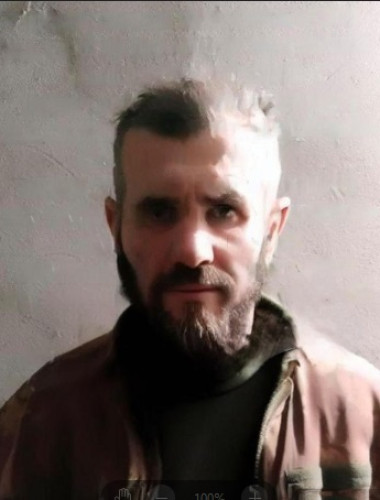
Oleh Zaklekta and Arkadii Lyubchenko are political prisoners
Two Ukrainian servicemen have been sentenced to long terms of imprisonment for participating in combat operations as members of the Aidar Battalion of the Ukrainian armed forces
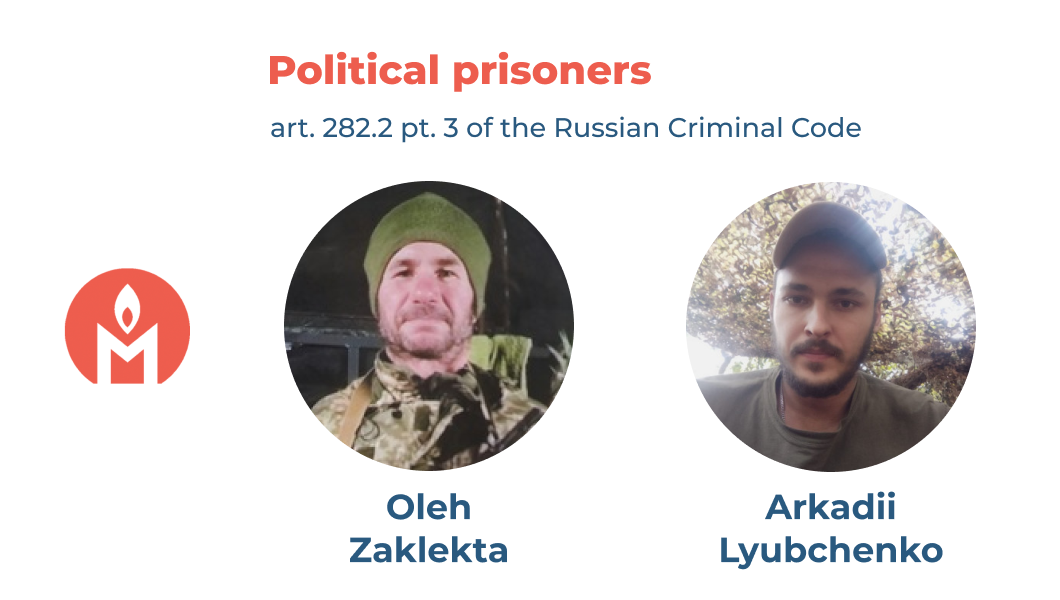
The ‘Political Prisoners. Memorial’ human rights project, in accordance with international criteria, considers Oleh Zaklekta and Arkadii Lyubchenko political prisoners. The two Ukrainians were convicted of participation in a terrorist group for serving in the Aidar Battalion, a unit of the Ukrainian armed forces. The prosecution and conviction of Zaklekta and Lyubchenko violated their right to a fair trial, as well as the Geneva Convention on the Treatment of Prisoners of War. We demand that the criminal convictions of Oleh Zaklekta and Arkadii Liubchenko be quashed and that their treatment be in compliance with international law.
What were the charges against Oleh Zaklekta and Arkadii Lyubchenko?
Oleh Zaklekta and Arkadii Lyubchenko served in the Aidar 24th Separate Assault Battalion of the Ukrainian armed forces. On 7 November 2024, they were captured by Russian forces in Donetsk Oblast. Shortly afterwards, videos of their interrogations appeared on the Internet.
In December 2024, a Russian-controlled court in Luhansk remanded Zaklekta and Lyubchenko in custody. Both servicemen were accused of participating in a terrorist group (Article 205.4, Part 2, of the Russian Criminal Code). The basis for the charge was that Liubchenko and Zaklekta had taken part in combat operations in Donetsk Oblast as part of the Aidar Battalion.
The investigation lasted only two months, and on 13 February 2025 their criminal cases went to court. On 16 April 2025, a military court sentenced Zaklekta to 12 years’ imprisonment, the first three years of which are to be served in a cell-type prison and the rest in a strict regime penal colony. On 11 June 2025, Liubchenko was sentenced to 13 years’ imprisonment with similar provisions.
Why do we consider Oleh Zaklekta and Arkadii Lyubchenko political prisoners?
Zaklekta and Lyubchenko were not accused of committing war crimes but were convicted solely for serving in the Aidar Battalion. The prosecution of service personnel from the Aidar Battalion for the mere fact of participation in hostilities grossly violates the provisions of the Geneva Conventions on the Treatment of Prisoners of War and on the Protection of Civilian Persons in Time of War.
Russian courts unlawfully and without justification designated this Ukrainian unit a terrorist group. The Aidar 24th Separate Assault Battalion is part of the Ukrainian army and carries out combat missions in accordance with the orders of that country’s military command. The provisions of anti-terrorism legislation do not apply to the situation of armed conflict between Russia and Ukraine.
In terms of international law, Russia’s armed aggression against Ukraine is illegal and criminal, while Ukraine’s actions to defend itself against aggression are lawful and justified. Defending one’s country from armed invasion is not a crime.
Prosecutions of Ukrainian military personnel are part of a propaganda campaign by the Russian authorities aimed at justifying Russia’s war of aggression against Ukraine.
A detailed description of the cases of Oleh Zaklekta and Arkadii Lyubchenko and of our position is available on our website.
Recognition of an individual as a political prisoner does not imply the ‘Political Prisoners. Memorial’ human rights project agrees with, or approves, their views, statements, or actions.
How can you help?
You can write to Arkadii Lyubchenko at the following address:
RU: 364037, Чеченская Республика, г. Грозный, Ленинский р-н, ул. Кунта-Хаджи Кишиева, д. 2, ФКУ СИЗО-1 УФСИН России по Чеченской Республике, Любченко Аркадий Иванович, 1993 г. р.
EN: Arkadii Ivanovych Liubchenko (born 1993), Remand Prison No. 1, Federal Penitentiary Service for the Chechen Republic, 2 ulitsa Kunta-Khadzhi Kishieva, Leninsky district, Grozny, Chechen Republic, 364037.
You can also send emails via the ZT service (for payment with Russian bank cards).
Please note that letters in languages other than Russian are highly unlikely to reach the intended recipient.
If you know in which correctional facility Oleh Zaklekta is being held, please write to our Telegram bot or email us at [email protected].
You can donate to help all political prisoners in Russia.