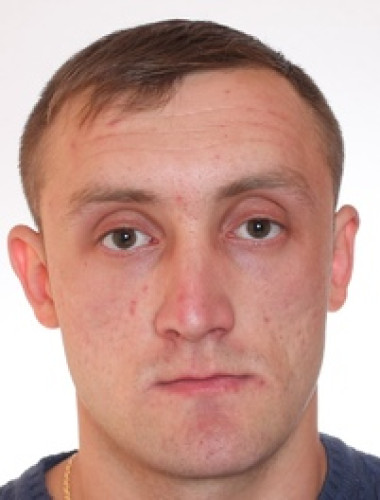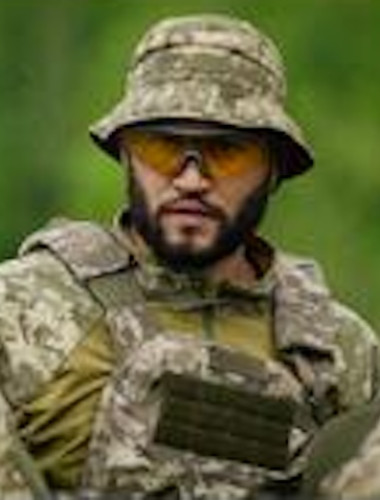
Vitalii Panchenko and Ivan Dmytrakov are political prisoners
Two Ukrainian soldiers have been sentenced to 15 and 14 years in a strict regime penal colony on terrorism charges for participating in combat in Kursk Oblast
The ‘Political Prisoners. Memorial’ human rights project, in accordance with international standards, considers Vitalii Panchenko and Ivan Dmytrakov political prisoners. The two Ukrainian soldiers were convicted of terrorism offences for participating in military operations on Russian territory. The criminal prosecution and conviction of Panchenko and Dmytrakov violated their right to a fair trial and the Geneva Convention on the Treatment of Prisoners of War. We demand that the convictions of Ivan Dmytrakov and Vitalii Panchenko be quashed and that their treatment be in full compliance with international law.
What were the charges against Vitalii Panchenko and Ivan Dmytrakov?
Vitalii Panchenko and Ivan Dmytrakov served as scouts in the 61st Separate Mechanised Brigade of the Ukrainian armed forces. In August 2024, they participated in the Ukrainian offensive in Russia’s Kursk Oblast. On 15 August, they were captured by servicemen of the Akhmat Rosgvardia Special Forces.
Videos appeared online showing Panchenko and Dmytrakov with their hands bound with tape, being forced to shout ‘Akhmat is power!’ and ‘God is Great!’ On 9 September, Russian investigators announced the opening of a criminal investigation against the two Ukrainian soldiers on charges of terrorism, attempted murder, kidnapping and other crimes. However, only the charge of a ‘terrorist act committed by a group of persons by prior agreement and resulting in serious consequences’ (Article 205, Part 2 of the Russian Criminal Code) went to trial.
On 12 December 2024, Panchenko and Dmytrakov were sentenced to 15- and 14-years’ imprisonment respectively, with the first three years to be served in a cell-type prison and the rest in a strict regime penal colony.
Why do we consider Vitalii Panchenko and Ivan Dmytrakov political prisoners?
The court officially recognised that Panchenko and Dmytrakov were active servicemen of the Ukrainian army and that they were captured while carrying out a combat mission in the context of an armed conflict. According to international law, anti-terrorism laws cannot be applied to the actions of participants in the armed conflict between Russia and Ukraine. Nevertheless, Panchenko and Dmytrakov were tried as terrorists.
Although there were claims in the Russian media that Panchenko and Dmytrakov had opened fire on civilians, there is no evidence to support this. If the Russian side had evidence of this, Russian propaganda would have made it public and Panchenko and Dmytrakov would have been charged with using prohibited methods of warfare.
As in other similar cases, the investigation into the Panchenko and Dmytrakova case was conducted very quickly, and the indictment was largely a standard text used in other cases. All this suggests that the two Ukrainian soldiers were in fact convicted solely for participating in combat as part of a regular army on Russian territory — actions that do not constitute crimes in the context of an international armed conflict. This was in violation of the Geneva Convention on the Treatment of Prisoners of War, which expressly prohibits punishing military personnel solely for participating in combat operations.
The case files were classified, and the trial was held in camera, which violated the right to a fair trial. The prosecution and conviction of Panchenko and Dmytrakov were part of a campaign by the Russian authorities to portray Ukrainian military personnel as terrorists.
A detailed description of the case of Vitalii Panchenko and Ivan Dmytrakov and of our position is available on our website.
Recognition of an individual as a political prisoner does not imply the ‘Political Prisoners. Memorial’ human rights project agrees with, or approves, their views, statements, or actions.
How can you help?
You can write to them at the following addresses:
RU: 600020, г. Владимир, ул. Большая Нижегородская, д. 67, ФКУ Т-2 УФСИН России по Владимирской области, Дмитраков Иван Михайлович, 1994 г. р.
EN: Dmytrakov Ivan Mykhailovych (born 1994), Prison No. 2, Federal Penitentiary Service of Russia for Vladimir Oblast, 67 Bolshaya Nizhegorodskaya Street, Vladimir, 600020, Russia
You can also send an email using ZT (for payment with all bank cards) and Memorial-France (free of charge).
RU: 662606, Красноярский край, г. Минусинск, ул. Горького, д. 114, ФКУ Т ГУФСИН России по Красноярскому краю, Панченко Виталий Васильевич, 1988 г. р.
EN: Panchenko Vitalii Vasyliovych (born 1988), Prison ‘T’, Federal Penitentiary Service of Russia for Krasnoyarsk Krai, 114 Gorkogo Street, Minusinsk, Krasnoyarsk Krai, 662606, Russia.
You can also send emails using the F-Pismo and ZT services (for payment with Russian bank cards) or PrisonMail (for payment with other bank cards), and Memorial-France (free of charge).
Please note that letters in languages other than Russian are highly unlikely to reach the intended recipient.You can donate to help all political prisoners in Russia.