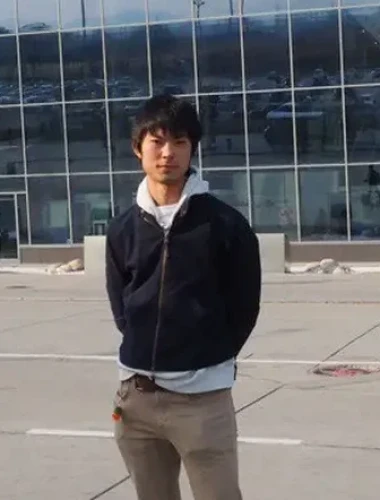
‘Please return this precious papa to his little daughter’: Wife of Japanese journalist jailed in Russia on espionage charges pleads for his release
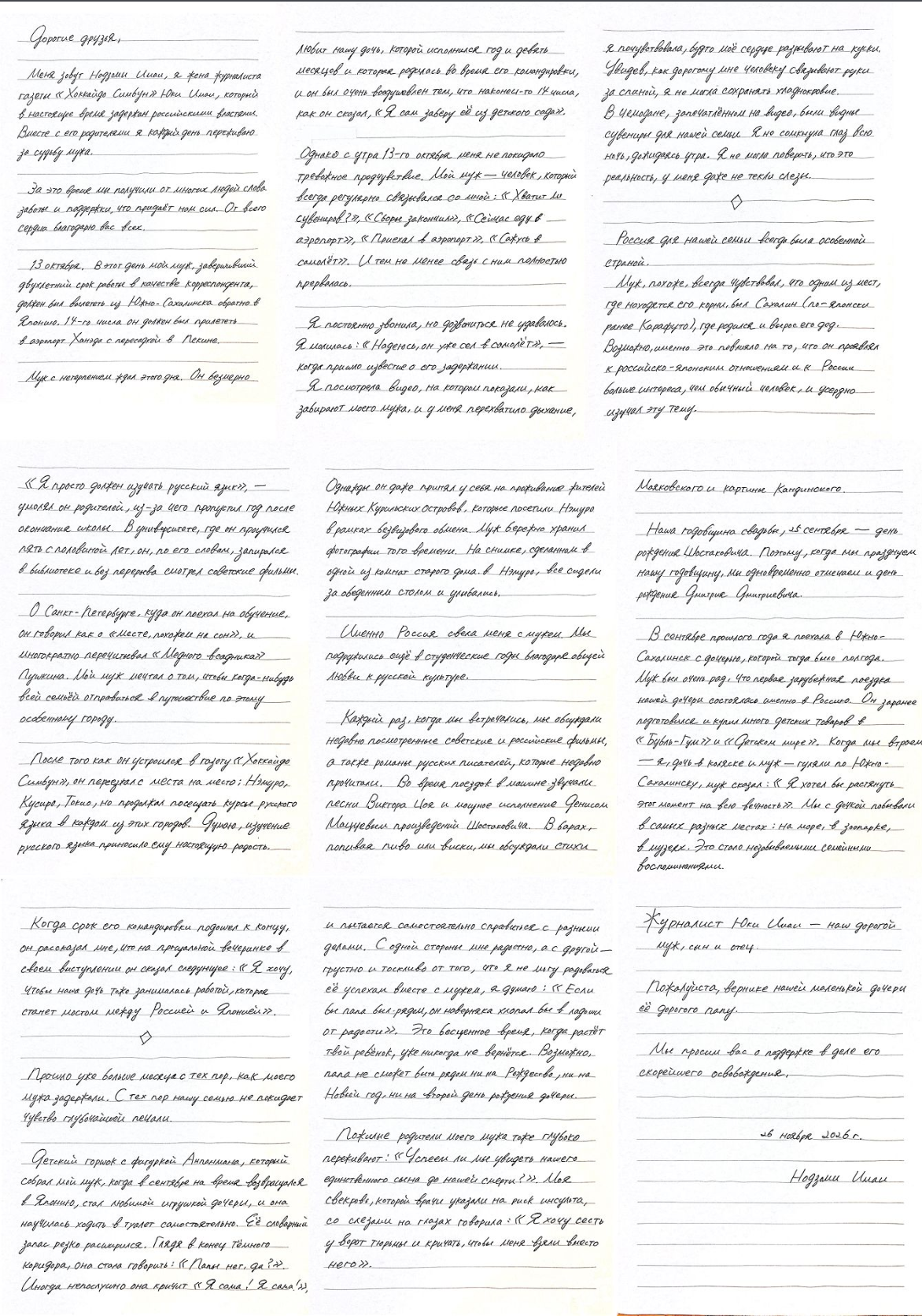
The Japanese newspaper Hokkaido Shimbun published a letter from Nozomi Imai, wife of the paper’s journalist Yuki Imai, who was arrested in Russia on espionage charges. In the letter, Nozomi describes how the family is coping with her husband’s arrest and calls for his release. The letter (available as a PDF) is handwritten in three languages: Japanese, English, and Russian, and is addressed “to everyone.”
At the start of the letter, Nozomi recounts the day her husband was detained. Yuki was due to return to Japan on October 14 after a two-year posting in Russia. But on October 13, the day before, he stopped responding, and the family soon learned he had been detained.
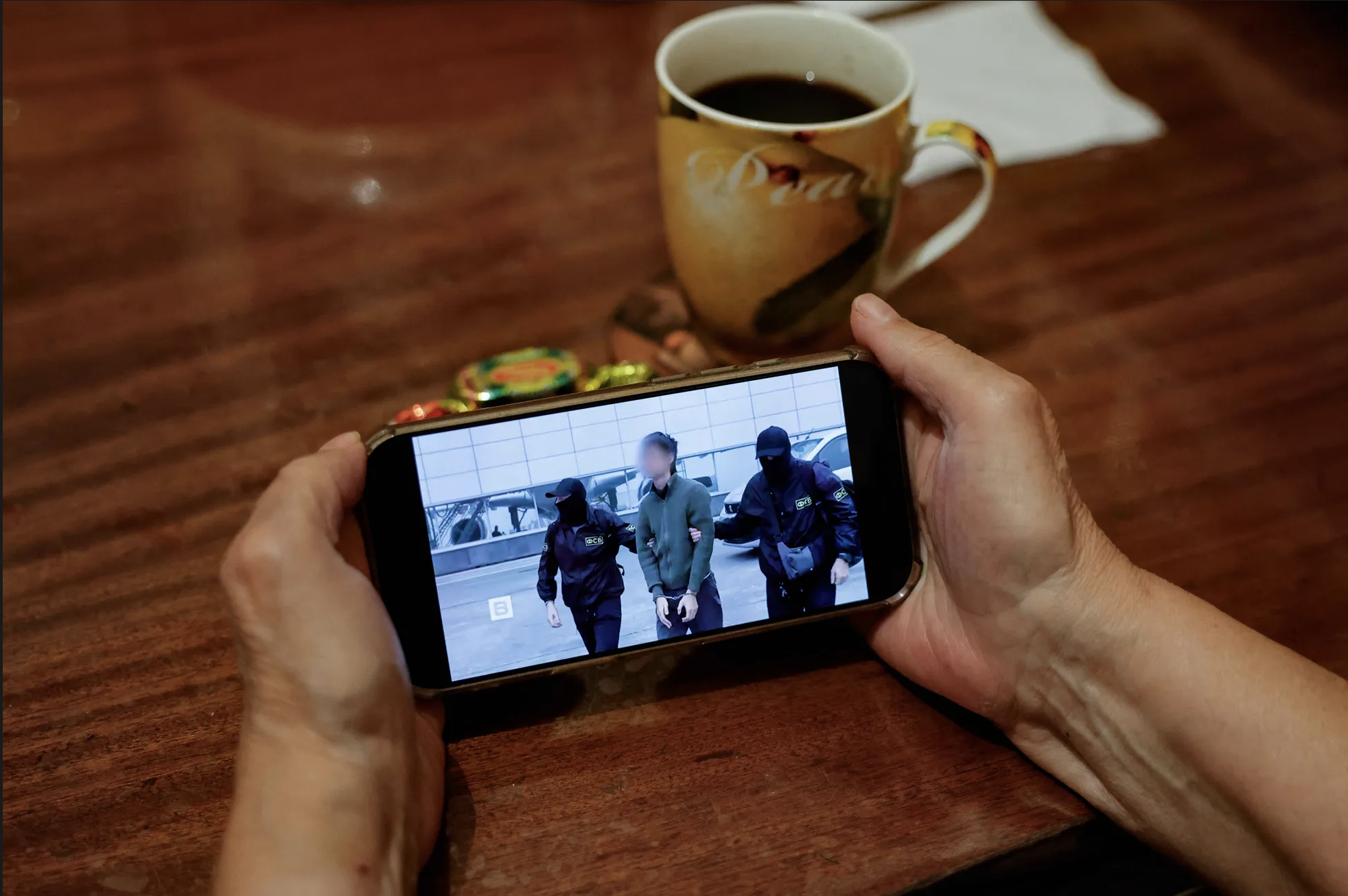
I saw the footage showing my husband being taken away. I could hardly breathe. It felt as if my heart were being ripped apart. No one could remain calm after seeing a beloved family member with his arms bound behind his back. In the video, I could even see the souvenirs in his suitcase — the gifts he was bringing home for us. I could not sleep even for a moment that night. When morning came, it still did not feel real. I could not even cry.
Nozomi writes that Russia has “always held a special place” for their family. Yuki was passionate about Russian culture, language, literature, and Soviet films, and so “cares so deeply about Russia and Japan-Russia relations.” She says one reason for this passion was her husband’s connection to Sakhalin, where his grandfather was born and raised.
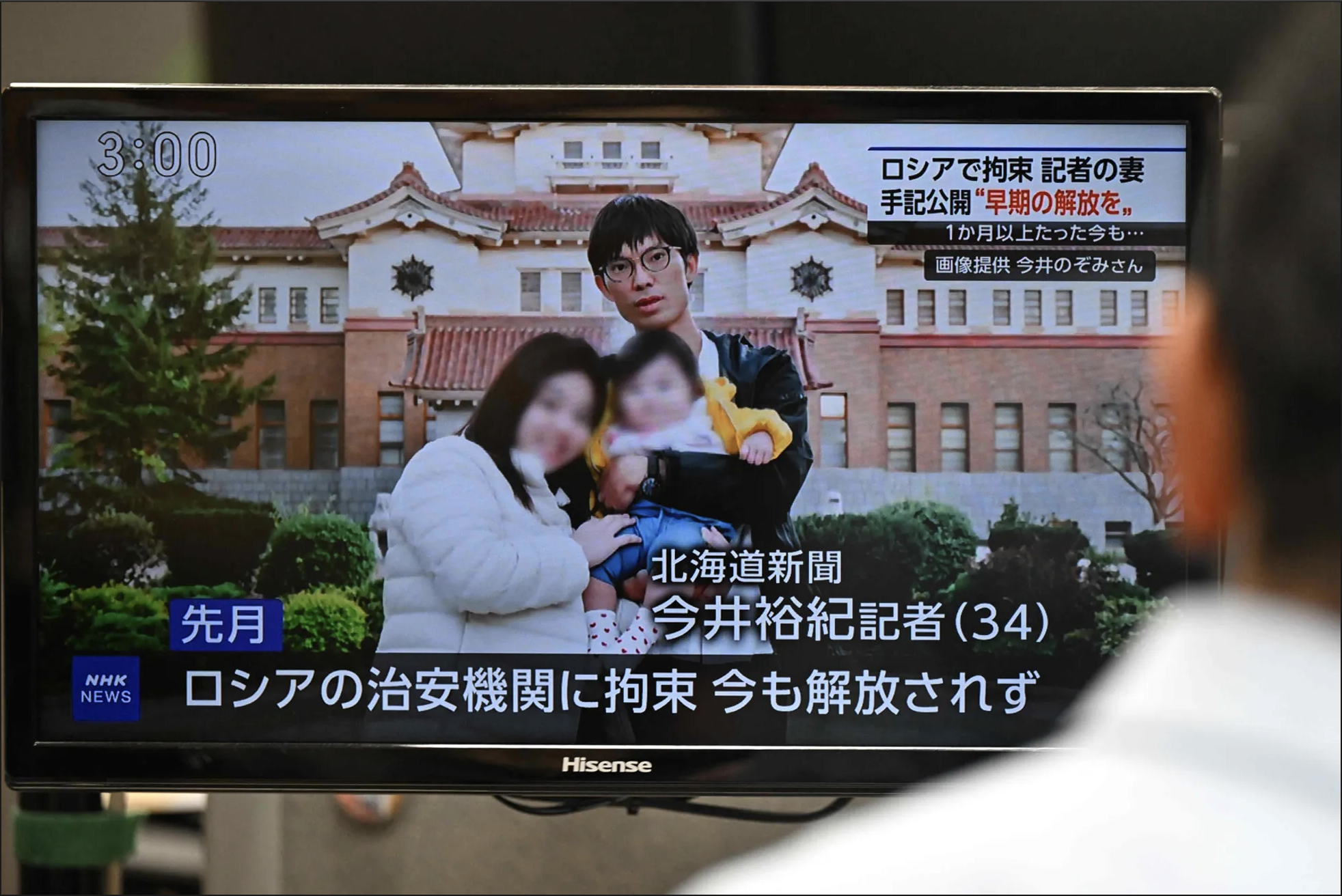
“Russia is also what brought my husband and me together. We became friends as students because we shared a love of Russian culture. Whenever we met, we would talk about Soviet and Russian films we had seen recently, or novels by Russian writers we had read,” the letter says.
The Imais’ daughter made her first trip abroad to Russia when the whole family gathered in Yuzhno-Sakhalinsk in September 2025. Together they dreamed of visiting St. Petersburg, where Yuki had already traveled and called the city “a dreamlike place.”
Toward the end of the letter, Nozomi describes how the family is coping with Yuki’s arrest: their daughter is growing up without her father, and his parents fear they may never see him again.
Sometimes [our daughter] looks down the dark hallway and says, “Papa’s not here.” Like any little child, she says, “Me do it! Me do it!” and insists on trying to do things by herself. It fills me with joy, but also with deep sadness and loneliness, because I know that if her papa were here, he would be clapping with delight at every new step she takes. The precious time in which a child grows up can never be returned to us. Christmas, New Year’s, our daughter’s second birthday — her papa may not be there for any of them.
My husband’s elderly parents are also living in deep fear. They worry whether they will ever see their beloved only son again in their lifetime. My mother-in-law, whose doctor has warned her of the risk of a subarachnoid hemorrhage, wept as she said, “I want to sit in front of the prison and cry out that they should take me instead of him.”
Yuki Imai is not only a journalist. He is a beloved son, husband and father. Please — please return this precious papa to his little daughter.
What is known about Yuki Imai’s arrest
The FSB said on October 13 that it had detained Hokkaido Shimbun journalist Yuki Imai, 34, on Sakhalin and accused him of espionage. According to the agency, Imai was acting on assignment from Japanese intelligence and gathering information on the Russian military, including the number of mobilized soldiers and volunteers from Kuril Islands residents who have fought in the war in Ukraine.
After Imai’s detention, Hokkaido Shimbun’s editors said its journalists do not work for the government. Japanese authorities said they do not conduct espionage activities in Russia.
The espionage charges carry a possible sentence of up to 20 years in prison. He is currently being held in Moscow’s Lefortovo pretrial detention center. Japanese diplomats were not able to visit him in custody until two weeks after his detention, Imai’s colleagues said.
Imai had traveled to Russia for many years while covering Russian-Japanese relations. Before his detention, he had published reports on elections to the State Duma on the unveiling of a monument in Khabarovsk commemorating the Soviet Union’s victory over Japan, and on strengthening ties between Russia and North Korea.
The journalist’s detention has been linked to Russia’s efforts to pressure Ukraine’s allies (Japan has supported sanctions against Russia) and to replenish what is known as the exchange fund, as well as to the deterioration in relations between the two countries following Vladimir Putin’s first trip to the Kuril Islands in August.
Last week, Putin and Japanese Prime Minister Sanae Takaichi discussed the journalist’s case on the sidelines of the Asia-Pacific Economic Cooperation (APEC) summit in China. Takaichi demanded Imai’s release and, after the meeting, said the two had had a “substantive discussion.” She added that the two sides agreed to continue the dialogue.