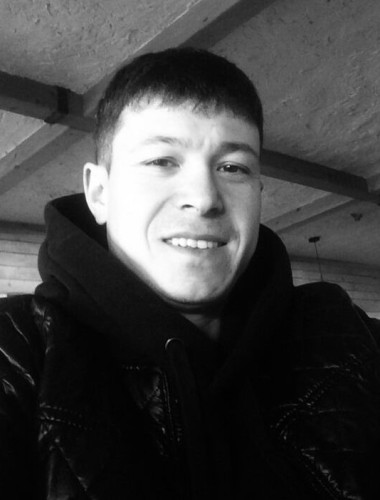
Tatyana Solntseva, Charaz Akimov and Aleksandr Krechetov are political prisoners
Residents of Barnaul, occupied Yalta, and Novokuznetsk have been charged with ‘collusion with foreigners’
The ‘Political Prisoners. Memorial’ human rights project, in accordance with international standards, considers Tatyana Solntseva, Charaza Akimov, and Aleksandr Krechetov political prisoners. The three individuals are being prosecuted on criminal charges of ‘collusion with a foreign state or organisation.’ The criminal prosecution of Solntseva, Akimov, and Krechetov violates their rights to a fair trial. We demand their release and that all criminal charges against them be dropped.
What are the charges against Solntseva, Akimov, and Krechetov?
In the autumn of 2022, Tatyana Solntseva from Barnaul allegedly received a message via a messaging app inviting her to get involved with the Free Russia Legion. She was asked to ‘find someone who would agree to set fire to government buildings.’ She continued the correspondence for a month. In March 2023, Solntseva was detained on charges of ‘collusion with foreigners’ (Article 275.1 of the Criminal Code of the Russian Federation). On 27 September 2023, she was sentenced to four years in a penal colony. The sentence was overturned on appeal, and a new sentence was handed down on 13 February 2024. The length of her new sentence is not known. However, it is known that she is serving her sentence in a penal colony.
According to the investigative authorities, in December 2023 Charaz Akimov, a citizen of Ukraine and Russia who lived in Yalta in Russian-occupied Crimea, contacted a Ukrainian military intelligence officer via Telegram and sent him a video of military vessels in Sevastopol. In 2024, Akimov was arrested on charges of ‘collusion with foreigners.’ On 3 April 2025, he was sentenced to five years in a penal colony. In October 2025, the sentence was overturned on appeal, and the case was returned to the prosecutor’s office. Subsequently, Akimov was charged with high treason (Article 275, CC RF). On 13 March 2026, he was sentenced to 18 years’ imprisonment.
On 2 August 2024, Aleksandr Krechetov from Novokuznetsk was arrested for the same offence. He had allegedly contacted representatives of the Ukrainian security service via Telegram and offered to help them organise arson or bombings. However, he did no more than send his interlocutors videos and photos of ‘military, transportation, and law enforcement facilities.’ His trial has been ongoing since May.
Why do we consider Tatyana Solntseva, Charaz Akimov, and Aleksandr Krechetov political prisoners?
The article of the Criminal Code on ‘collusion with foreigners’ contradicts the principle of legal certainty and must be rescinded, all related convictions quashed, and ongoing prosecutions dropped. You can read our opinion on this article of the Criminal Code here.
It is possible these three cases may be based on unlawful sting operations by the FSB, as often happens in prosecutions for ‘collusion.’ Solntseva was effectively sentenced to imprisonment for her correspondence. She committed no other actions. Akimov passed on unclassified information that would hardly have been of any value to Ukrainian intelligence. The same applies in the case of Krechetov. Evidently, the provocateurs failed to persuade him to commit arson, and therefore the charges were limited to a less serious offence.
At the same time, we do not consider communication with the Ukrainian Security Service — or even offering it assistance — a crime. Such sentences are handed down to intimidate the Russian public and to enable Russian intelligence agencies to create an impression of effective work.
Detailed descriptions of the cases of Tatyana Solntseva, Charaz Akimov and Aleksandr Krechetov are available on our website.
How can you help?
You can write to Tatyana Solntseva and Aleksandr Krechetov at the following addresses:
RU:
Российская Федерация, 658390, Алтайский край, с. Шипуново, ул. Заводская, д. 48А, ФКУ ИК-6 УФСИН России по Алтайскому краю, Солнцева Татьяна Александровна, 1979 г. р.
EN:
Tatyana Aleksandrovna Solntseva (born 1979), Penal Colony No. 6, Federal Penitentiary Service of Russia for Altai Krai, 48A Zavodskaya Street, Shipunovo, Altai Krai, 658390, Russia.
RU:
Российская Федерация, 650993, г. Кемерово, пр-т Кузнецкий, д. 174, ФКУ СИЗО-1 ГУФСИН России по Кемеровской области, Кречетов Александр Викторович, 1962 г. р.
EN:
Aleksandr Viktorovich Krechetov (born 1962), Remand Prison No. 1, Federal Penitentiary Service of Russia for Kemerovo Oblast, 174 Kuznetsky Prospekt, Kemerovo, 650993, Russia.
You can also send emails via ZT (for payment with all bank cards) and Memorial-France (free of charge).
Please note that letters in languages other than Russian are highly unlikely to reach the intended recipient.
If you have information as to the place of detention of Charaz Akimov, please let us know by email at [email protected]
You can donate to help all political prisoners in Russia.