
KEY FINDINGS
SCALE AND NATURE
The number of politically motivated prosecutions initiated in Russia remained stable throughout the year. At the same time, such prosecutions are becoming more severe in nature. The proportion of those prosecuted who have been sentenced to terms of imprisonment has increased, while articles of the Criminal Code that carry heavier penalties have been used more frequently.
POLITICAL REPRESSION IN RUSSIA IS UNDERGOINGA QUALITATIVE TRANSFORMATION
The proportion of cases that involve charges of crimes against state security and terrorism has grown. The FSB is becoming the main agency behind politically motivated prosecutions.
THE GROWING DIFFERENCE BETWEEN RUSSIA AND THE OCCUPIED TERRITORIES OF UKRAINE
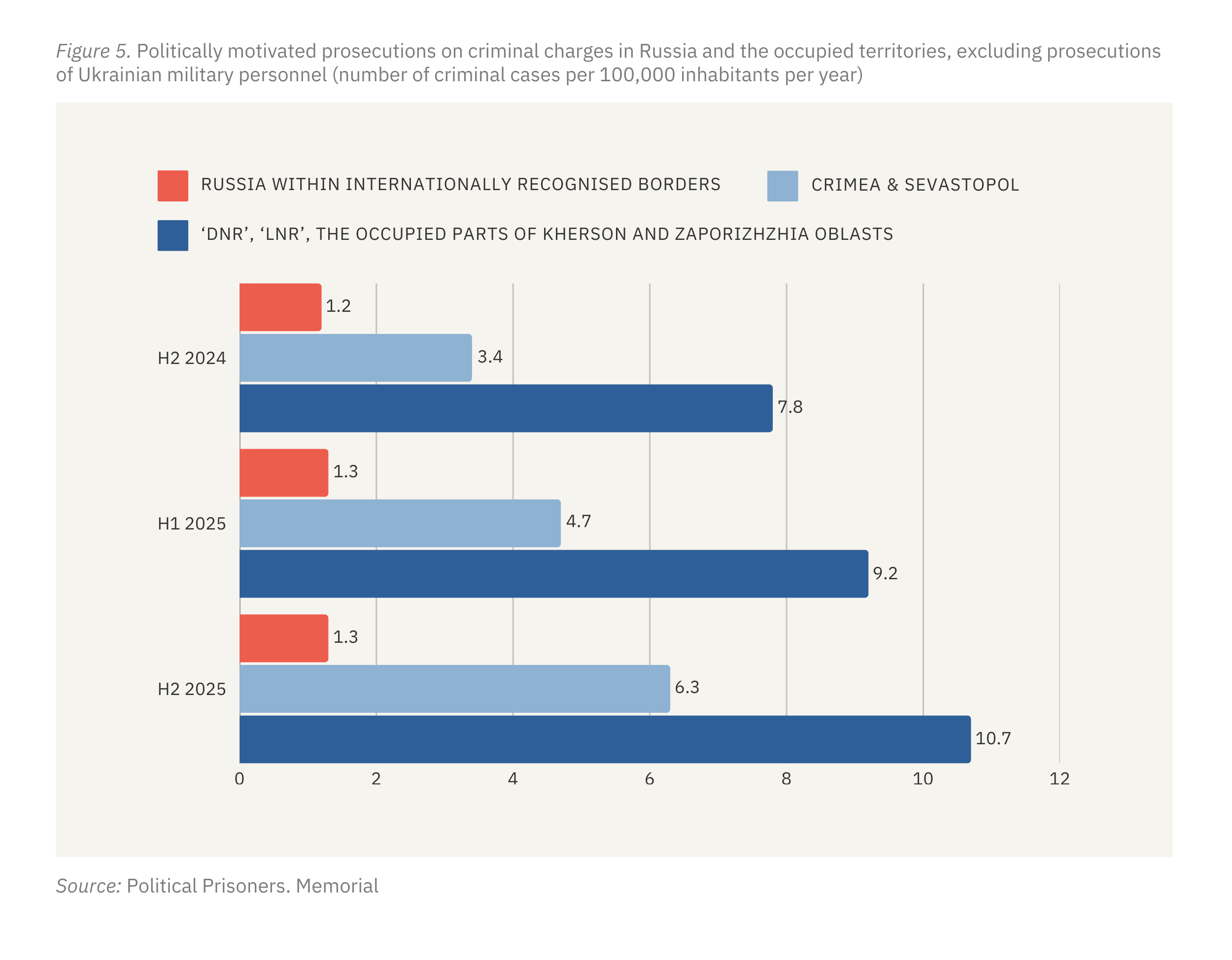
The difference between the scale and nature of repression in Russia within its internationally recognised borders and that in the occupied territories of Ukraine continued to widen throughout 2025. In the fourth quarter, the incidence of politically motivated prosecutions in Crimea and Sevastopol was almost five times higher than the Russian average, while in the ‘Donetsk People’s Republic’ [‘DPR’], the Luhansk People’s Republic ‘ [‘LPR’] and in the occupied parts of Kherson and Zaporizhzhia Oblasts it was more than eight times higher.
FURTHER CRIMINALISATION OF PARTICIPATION IN THE ARMED CONFLICT ON THE SIDE OF UKRAINE
Prosecution of Ukrainian armed forces personnel in 2025 became widespread, having a major impact on the overall statistics on repression. Criminal prosecutions of prisoners of war in Kursk Oblast once again demonstrated the Russian authorities’ complete disregard for international humanitarian law, effectively replacing the status of prisoner of war by that of ‘terrorist.’
View the full report (PDF) in your browser
ABOUT THIS REPORT
This is our latest quarterly review of political repression, covering the fourth quarter of 2025.
The report is based on data gathered by the ‘Political Prisoners. Memorial’ human rights project of criminal prosecutions in which there are indications of political motivation and illegality (hereinafter: politically motivated criminal prosecutions). Our sources include court records, press releases by law enforcement agencies, media publications, and communications received from victims of such prosecutions and their relatives, etc.
In this report, criminal prosecutions are assigned to a particular quarter on the basis of the date of their inclusion in the database. Usually, there is some delay in receiving information about the start of criminal proceedings. Often this delay is measured in days, sometimes weeks, and less often in longer periods. As a result, not all prosecutions assigned to a particular quarter were initiated during that period; some prosecutions began earlier. Our approach therefore reflects the reality of repression, but with some delay. At the same time, this approach, applied consistently, enables us to describe the situation as fully as possible.
THE OVERALL SCALE OF REPRESSION
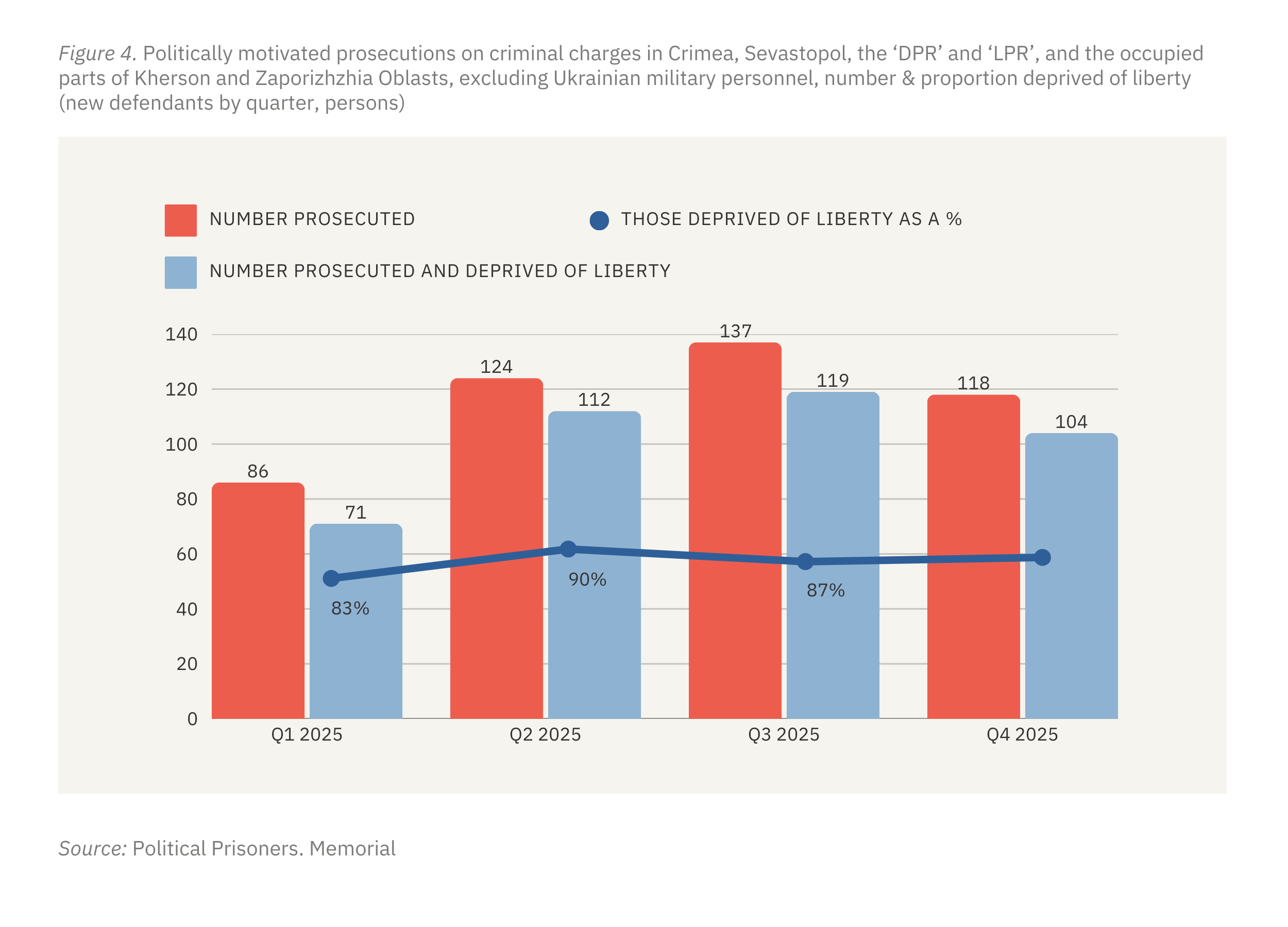
Throughout 2025, we recorded a steady increase in the number of politically motivated criminal prosecutions. The peak of new registered cases occurred in the third quarter. While the figures for the fourth quarter saw a slight decline, they nonetheless exceeded those for the first half of the year.
There was a similar trend in the proportion of those prosecuted who were deprived of liberty1. The maximum was reached in the third quarter, while in the fourth quarter the figure was slightly lower, but still significantly higher than at the beginning of the year.
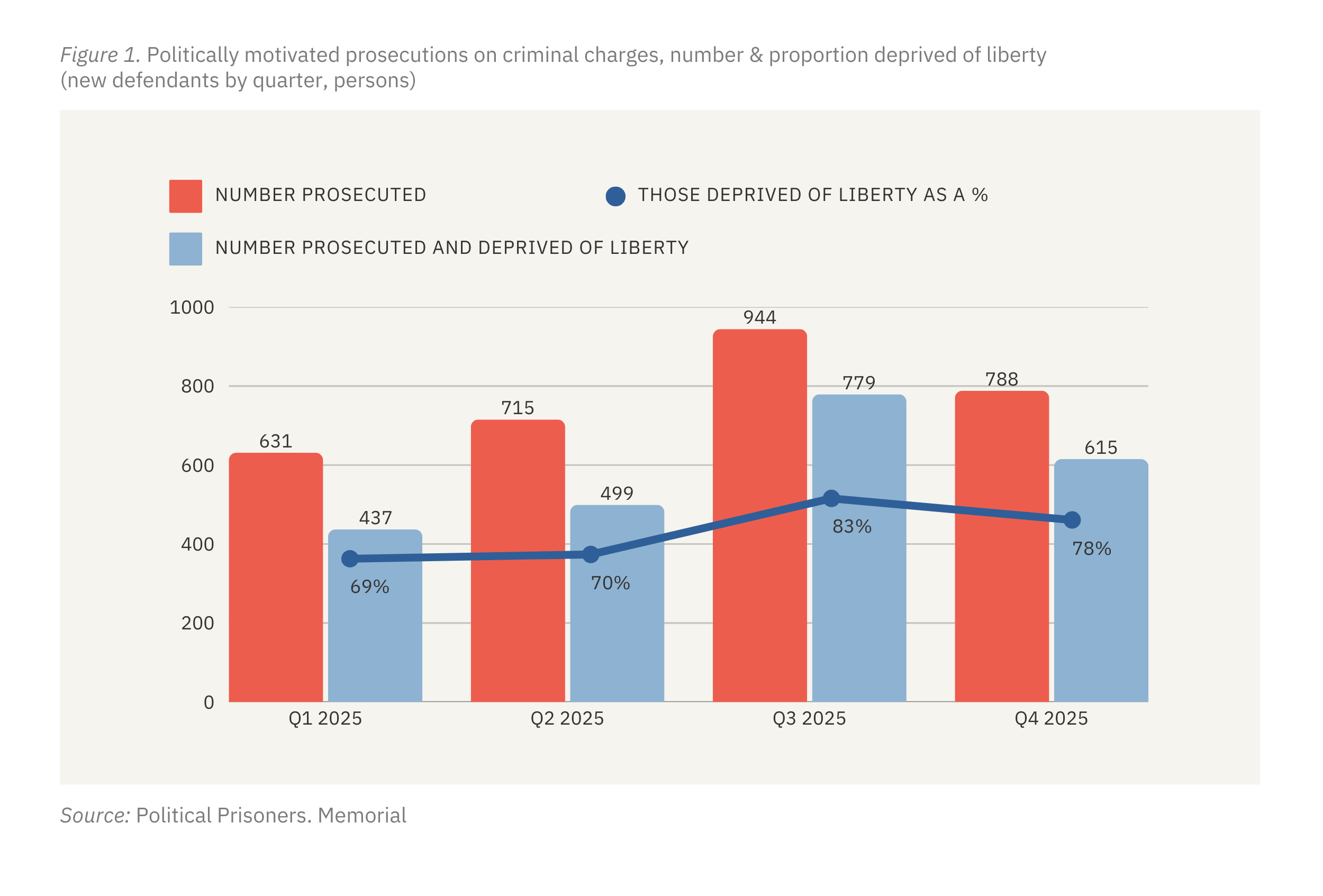
While the overall data indicate an increase in the use of the criminal law for purposes of political repression in general, this trend is not universal. The situation varies among different groups of prosecuted individuals.
As in the previous report, we divide all politically motivated criminal prosecutions into three groups:
- Prosecutions initiated in Russia
- Prosecutions initiated in the occupied territories of Ukraine
- Prosecutions initiated against Ukrainian military personnel
1. IN RUSSIA
Stagnation with increasing severity
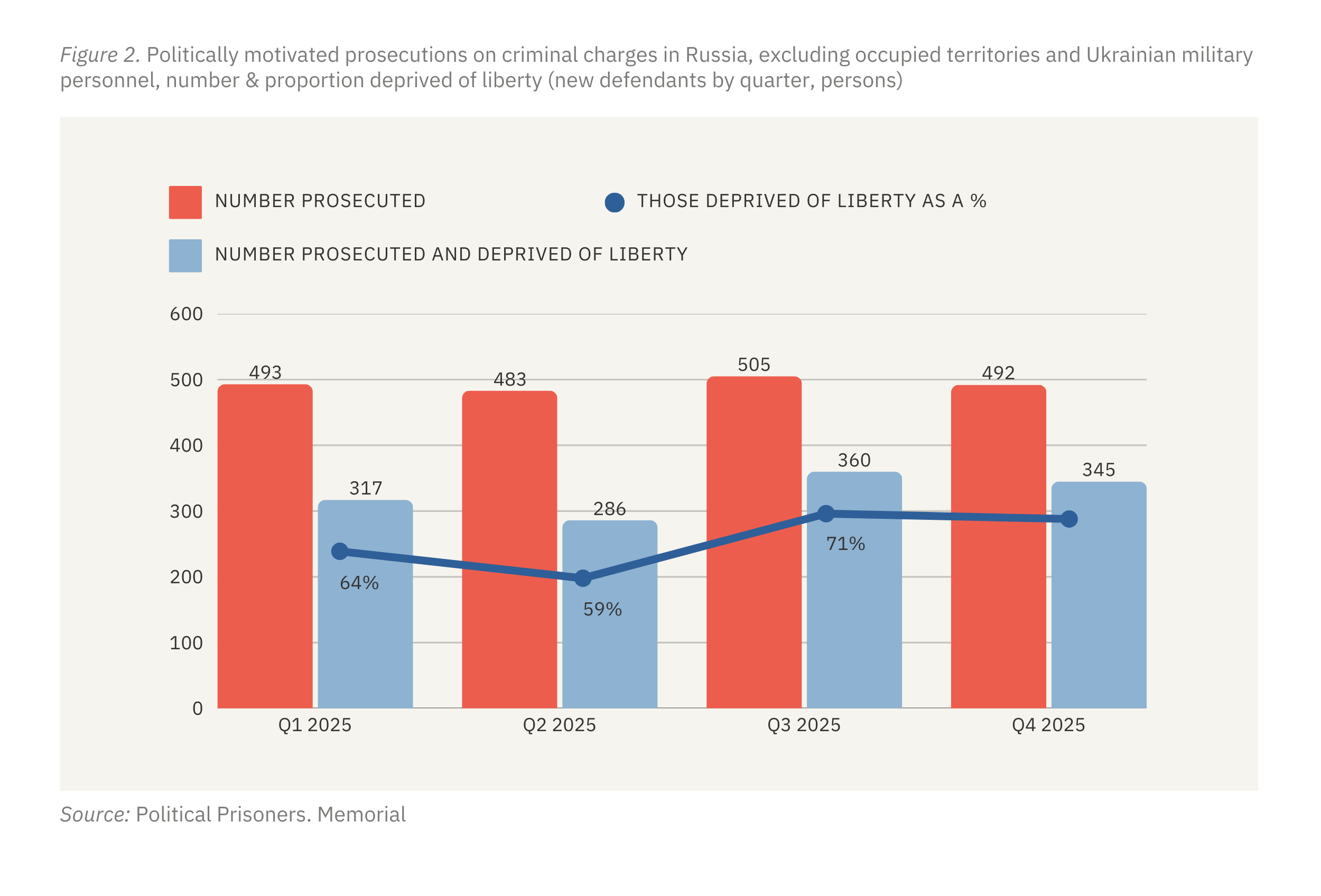
In 2025, the dynamics of politically motivated prosecutions in Russia (within the country’s internationally recognised borders) show remarkable stability. Throughout the year, we recorded about 500 new criminal prosecutions each quarter.
However, this apparent stability hides a qualitative radicalisation of repressive practices. The proportion of those prosecuted who were deprived of liberty has grown. Without expanding its quantitative reach, the repressive machine has systematically adopted harsher measures.
The geography of repression: the ‘Kaliningrad phenomenon’
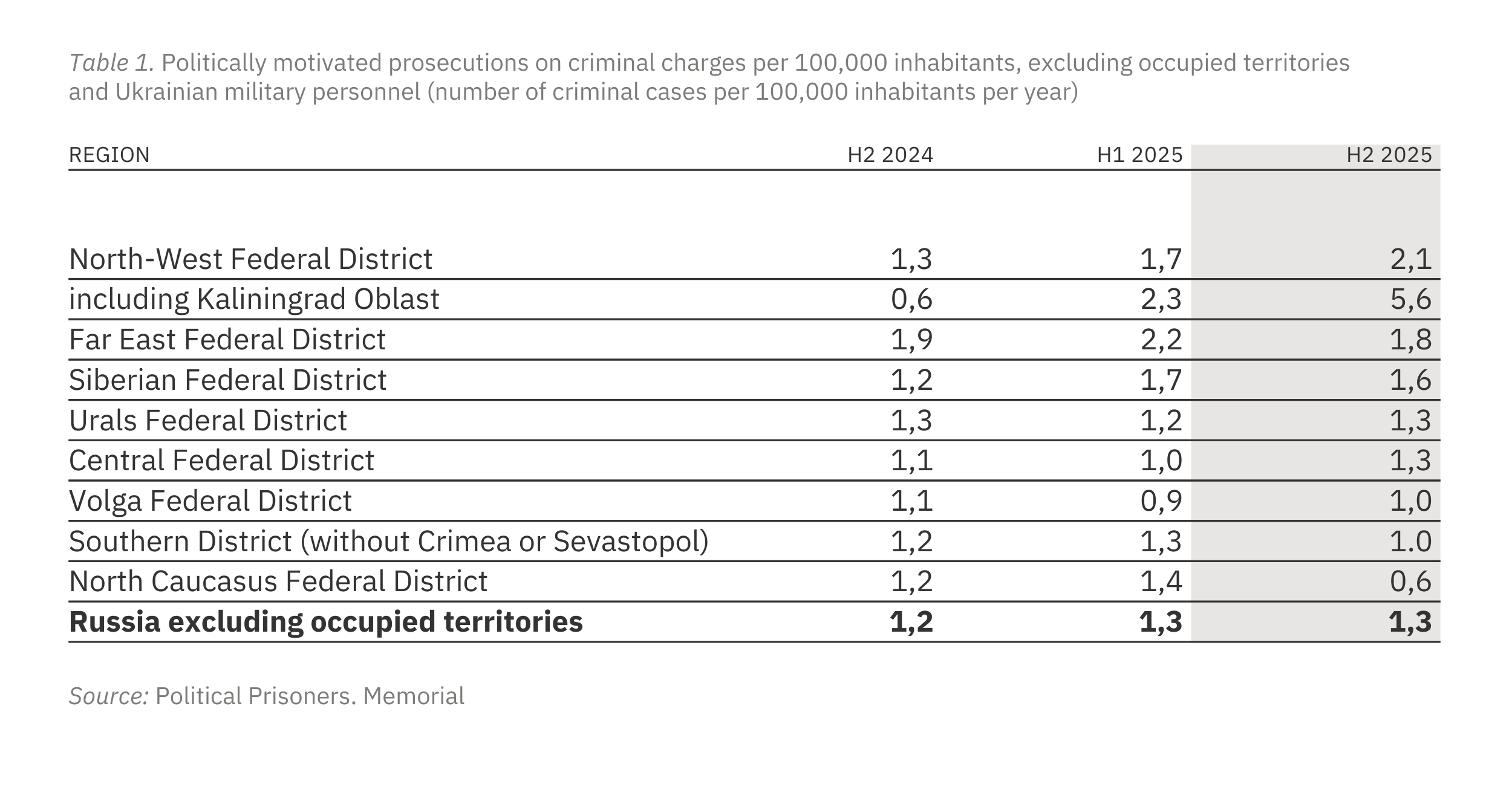
In the second half of 2025, there was a change in terms of the relative numbers of politically motivated prosecutions per capita among the federal districts of the Russian Federation. While the Far Eastern Federal District led in terms of per capita figures at the end of 2024 and in the first half of 2025, by the end of the year the North-Western District had taken the lead. The increase in the scale of prosecutions in the North-Western District was noted in our report for the third quarter. It is now this federal district that has the highest number of politically motivated criminal prosecutions per capita.
This shift was mainly the result of a surge in activity by law enforcement agencies in Kaliningrad Oblast. The increase in the number of politically motivated prosecutions in the region was very marked, indeed shocking: from 0.6 prosecutions per 100,000 inhabitants in the second half of 2024 to 5.6 prosecutions per 100,000 at the end of 2025. Such a radical change may indicate a change in the leadership of the region’s security forces or a change in the degree of repression demanded of the region. Possibly, this may indicate preparations underway for future developments concerning the enclave.
Tools of repression: from ‘speech’ to ‘treason’
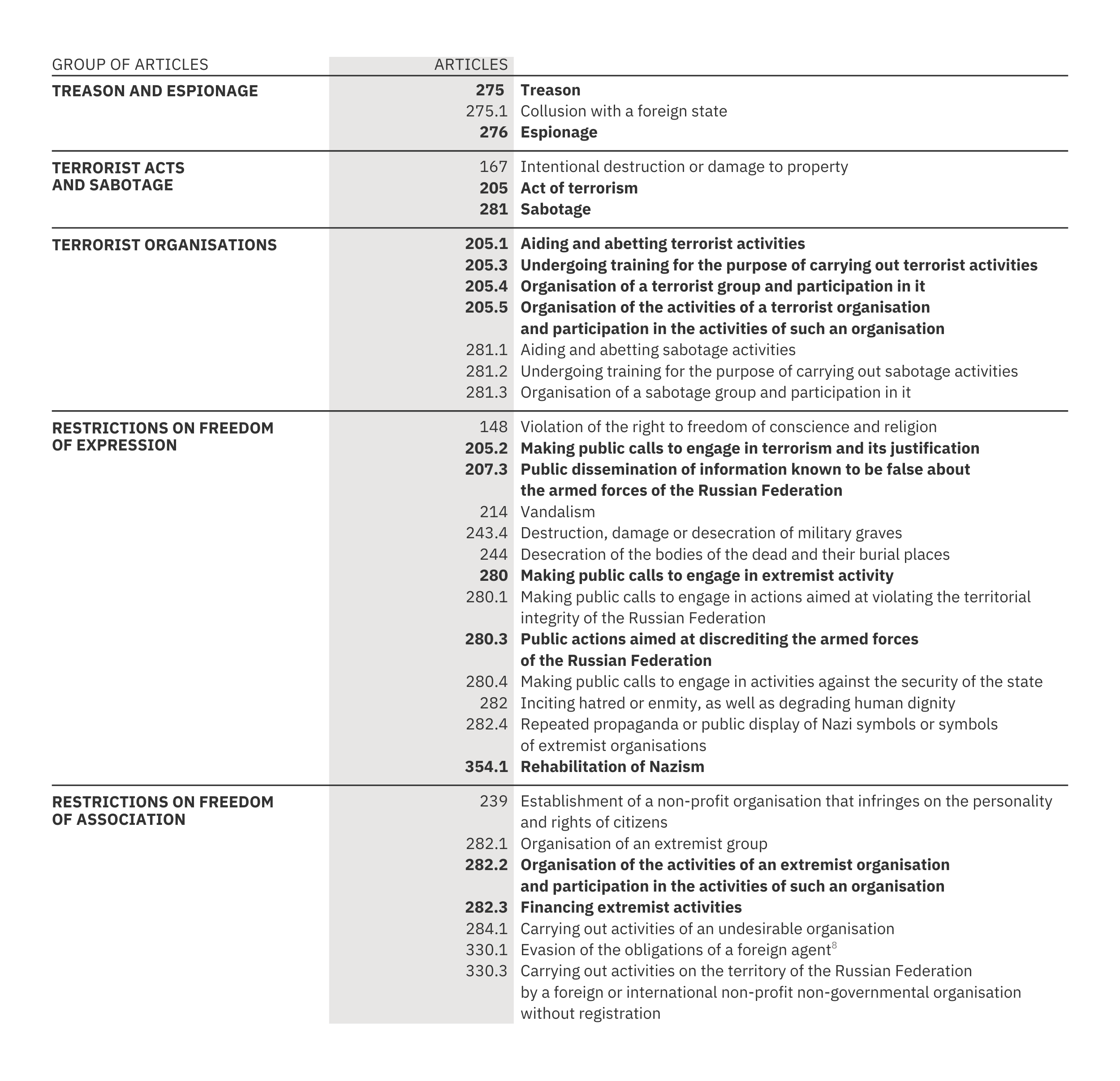
In this report, we move from analysing the application of individual articles of the Criminal Code of the Russian Federation [CC RF] to analysing them by group. This allows us to see more clearly how the priorities of the repressive machine are changing.
We have divided the most frequently used articles into five key groups, which cover 90% of all politically motivated prosecutions recorded in 2025:
- ‘TREASON AND ESPIONAGE’
Treason, espionage and collusion with foreigners - ‘RESTRICTIONS ON FREEDOM OF EXPRESSION’
A wide range of articles penalising ‘incorrect’ speech or symbolic gestures. - ‘TERRORIST ACTS AND SABOTAGE’
Charges related to acts of violence (arson, explosions, etc.). - ‘TERRORIST ORGANISATIONS’
Participation in structures designated as terrorist in the Russian Federation (Russian Volunteer Corps, Free Russia Legion, Azov Battalion, etc.) or classified as terrorist or sabotage groups in specific criminal cases. - ‘RESTRICTIONS ON FREEDOM OF ASSOCIATION’
Prosecutions for participation in organisations designated as ‘extremist,’ ‘undesirable’ or such like, or for assisting such organisations (ranging from religious associations to the Anti-Corruption Foundation)2.
Details of the groups can be found in Appendix 1.
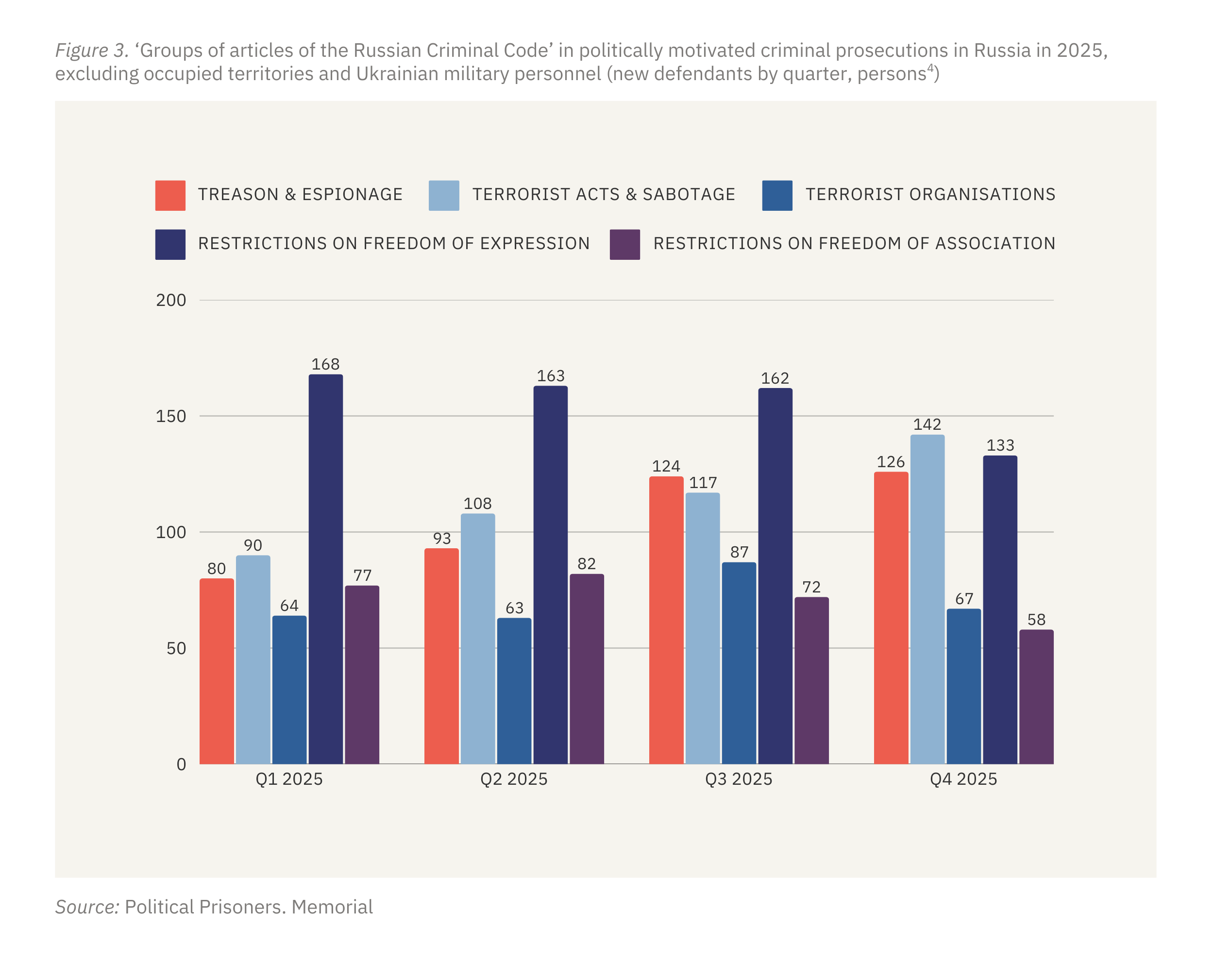
An analysis of law enforcement in 2025 confirms the trend towards increased severity of punishments. We see an alarming development towards increasingly harsh repression.
- STABILISATION AND THEN REDUCTION OF PROSECUTIONS FOR ‘SPEECH’
Prosecution for speech in general remains the most widespread form of repression over the year, but its scale has stabilised and in the fourth quarter of 2025 there was a noticeable reduction. - INCREASE IN PROSECUTIONS FOR ‘TREASON’ AND ‘TERRORISM’
Against this backdrop, the categories of ‘treason and espionage’ and ‘terrorist acts and sabotage’ show an alarming dynamic. The number of defendants prosecuted on such charges grew steadily throughout the year. - BANNED ORGANISATIONS3 — NO OBVIOUS GROWTH
The number of prosecutions on charges of participation in terrorist organisations did not show any significant increase. The number of prosecutions for participation in various ‘extremist’, ‘undesirable’ and other such organisations even decreased slightly during the year.
The FSB is becoming the main law enforcement agency engaged in politically motivated prosecutions in Russia. It is this agency that investigates crimes against state security and most crimes of terrorism. In the fourth quarter of 2025, the number of charges brought in the ‘Terrorist acts and sabotage’ group exceeded the number related to ‘Restrictions on freedom of expression’ for the first time, and the number of prosecutions classified as ‘Treason and espionage’ was only slightly lower.
Russian political repression is undergoing a qualitative transformation. If the emerging trend continues, then in 2026 the ‘typical’ individual convicted in a politically motivated prosecution will no longer be someone convicted for publications on the Internet. Instead, the ‘typical’ such individual will be someone convicted on charges of treason or terrorism, whose trial was held in camera and whose prison sentence is far longer. The repressive system is becoming ever more demonstratively cruel and less transparent.
2. THE OCCUPIED TERRITORIES
Where repression is most intense
In contrast to the relative stability of the level of political repression within the borders of the Russian Federation, in 2025 there was a steady increase in the level of repression in the occupied territories.5
Prosecutions in these regions show a high proportion of cases involving deprivation of liberty. While in Russia 70% of defendants were deprived of liberty by the end of the year, in the occupied territories this figure reached 88%. In practice, a criminal prosecution where there is evidence of political motivation almost guarantees imprisonment in such cases.
The growing gap: ‘The repression coefficient’
The difference in the level of repression between Russia and the occupied regions continues to widen rapidly. A comparison between the number of new prosecutions per capita shows:
- CRIMEA AND SEVASTOPOL
In the second half of 2024, the level of prosecutions exceeded the Russian average by a factor of 2.8. By the end of 2025, this ratio had increased to 4.9. - OTHER OCCUPIED TERRITORIES
The situation here is even more dramatic. While at the end of 2024 repression here was 6.5 times higher than in Russia, in the second half of 2025 it was 8.2 times higher.
A number of explanations that are not mutually exclusive may explain the dynamics of repression in the occupied territories.
It is possible we are witnessing a partial ‘legalisation’ of extrajudicial practices. In this view we are seeing a reduction in the number of abductions and months-long detention ‘in basements’ (without legal status or rights) and an increase in official criminal prosecutions. In other words, those who previously simply disappeared are now more often being officially registered as defendants. However, if that is the case, it is not entirely clear why there has been an increase in repression in Crimea, where abductions were not widespread.
Another possible explanation concerns the purpose of repression. The level of resistance in the occupied territories is obviously greater, which leads to a higher level of repression. At the same time, the nearly 11 years that have passed since the annexation of Crimea have yielded results, and a lower level of repression is required on the peninsula than in territories occupied after 2022, albeit greater than in Russia. In this view, the continued increase in the level of repression in 2025 should probably be interpreted as a consequence of the occupying authorities’ attempt to find an optimal level of repression. Since resistance continues, the authorities are intensifying the repression. What then is the reason for the increase in repression in Crimea? Possibly the full-scale invasion strengthened resistance to Russian occupation in Crimea, and this has led to an increase in repression.
A third possible explanation is the internal logic of the repressive machine itself. It is clear that law enforcement agencies, and especially the FSB, have been granted special powers in the occupied territories. This is why the practice of abductions has become so widespread. It is also why torture is used much more frequently in the occupied territories (see our report ‘Torture in politically motivated criminal prosecutions’). There is every reason to believe that it has become easier for the security forces to fabricate criminal charges, obtain confessions and, in general, bring criminal prosecutions. Inevitably, this has had an impact on the number of criminal cases initiated.
The regime of total lawlessness created in the occupied territories has led to a higher level of repression. Moreover, in the territories occupied after 2022, there are fewer restrictions on the activities of the security forces than in Crimea, while in Crimea there are probably fewer than in Russia. Security forces that face fewer restrictions in their behaviour act more aggressively and prosecutions are more widespread. It would seem that the maximum level of repression has not yet been reached in these regions.
Occupied territories as a ‘testing ground’ for repressive practices
The pattern of politically motivated prosecutions in 2025 shows a deep divide between the methods used in Russia and those in the occupied territories. The main difference is in the degree of involvement of the FSB and the severity of the charges brought.
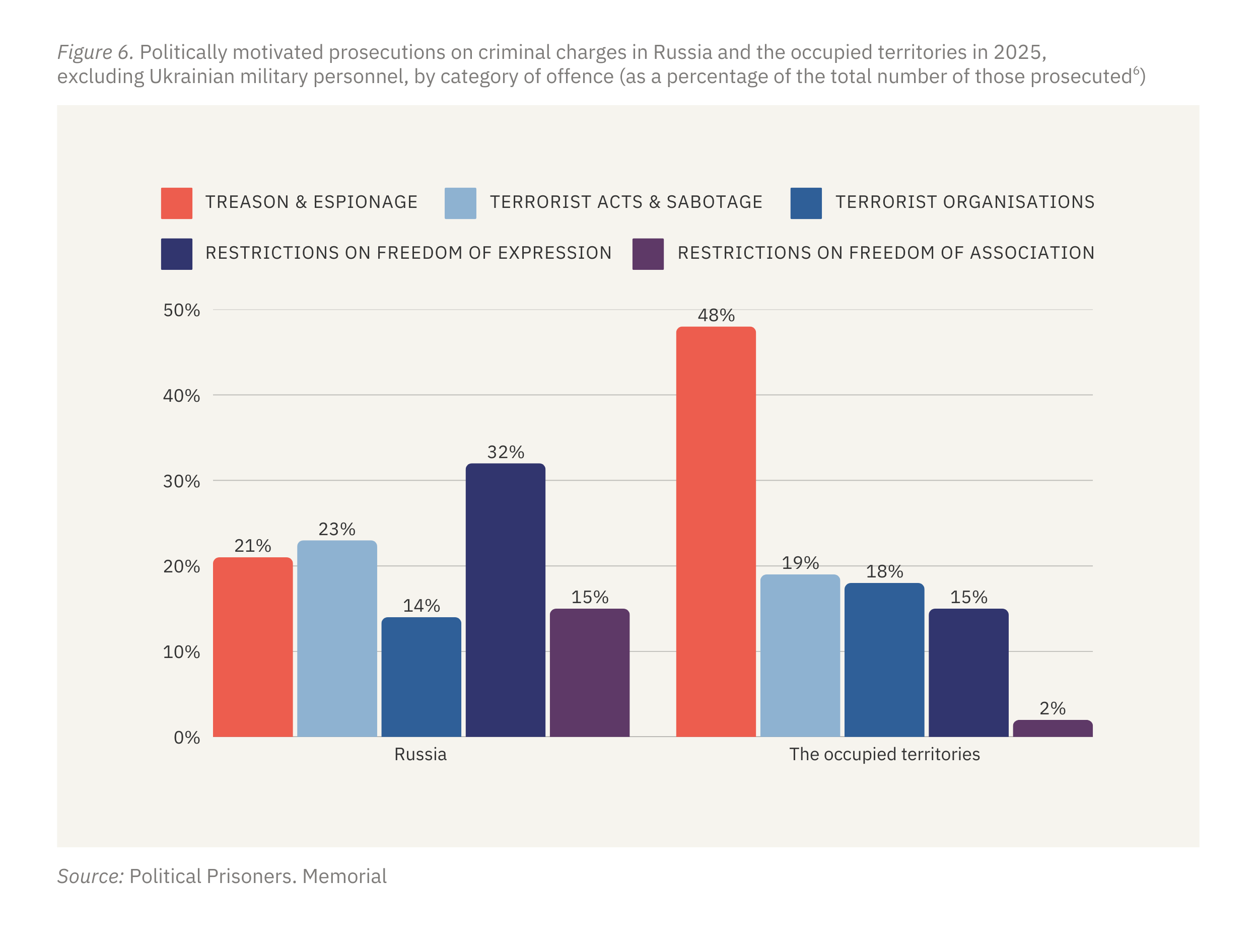
Data for 2025 show a radically different focus in terms of criminal cases:
- IN THE OCCUPIED TERRITORIES
Charges related to state security appear in half of all cases, while in Russia this applies to only one fifth of all cases. Repression in the occupied territories is extremely severe. - IN RUSSIA
The majority of politically motivated prosecutions (almost half) still relate to ‘restrictions on freedom of expression’ and ‘restrictions on freedom of association.’ In the occupied territories, the share of such relatively ‘mild’ political charges is 17%.
These figures confirm that in the occupied territories the FSB is the key agency of political repression, while in the rest of Russia the Ministry of Internal Affairs and the Investigative Committee still play a significant role.
We noted above the growing role of the FSB in politically motivated prosecutions in Russia. In this context, the occupied regions are to be seen as a kind of ‘testing ground’ for repressive practices. In the occupied regions, the FSB is the dominant actor in politically motivated prosecutions. If the role of the FSB in the conduct of political repression within Russia continues to grow, further changes in the practice of repression in Russia should be expected in line with the model established in the occupied territories.
3. THE UKRAINIAN MILITARY
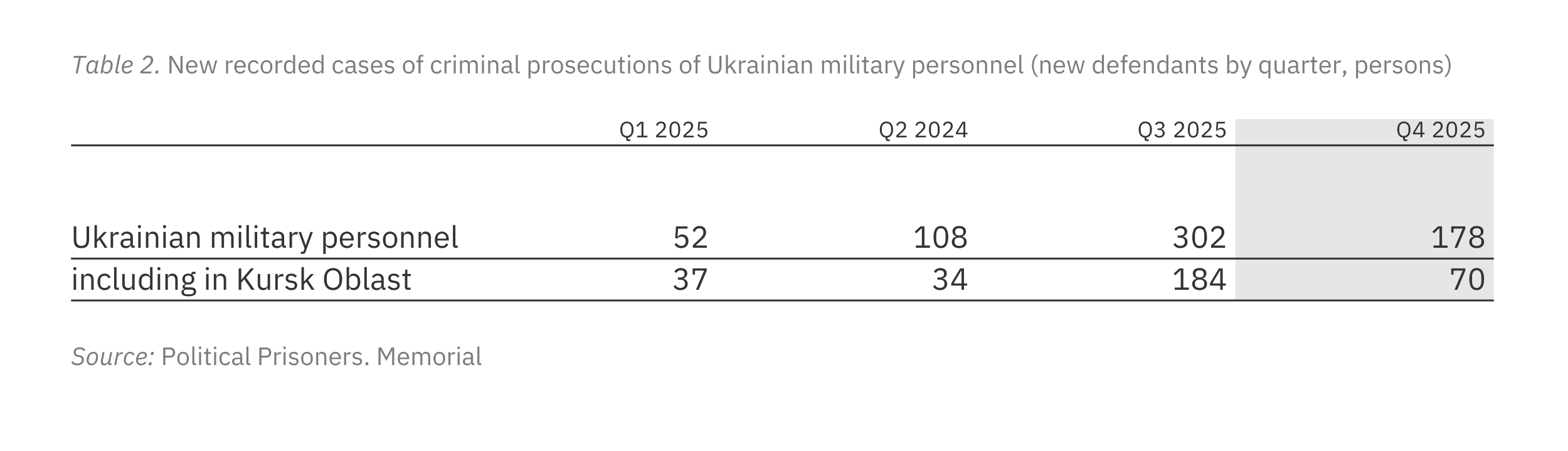
In 2025, prosecutions of Ukrainian military personnel7 made a significant contribution to the overall increase in the statistics of repression. While the figures remained stable within Russia, the increase in new prosecutions against combatants (together with prosecutions in the occupied territories) significantly changed the overall picture. On average, one-fifth of all new defendants in the year were Ukrainian military personnel; in the peak third quarter the proportion was one-third.
The events in Kursk Oblast proved a major source of this increase. Here the harsh reaction of the Russian authorities well illustrated the repressive practices adopted in 2025. All Ukrainian military personnel captured in Kursk Oblast automatically became subject to criminal prosecution.
The standard instrument of prosecution in such cases was Article 205 CC RF (‘Terrorist act’). It should be emphasised that Ukrainian prisoners of war were not charged with committing any war crimes that could be classified under Articles 356, 356.1, and 360 CC RF. From the point of view of the Russian law enforcement and judicial systems, mere participation in hostilities on the territory of Kursk Oblast constituted ‘terrorism.’ This law enforcement practice clearly and flagrantly violated the provisions of the Geneva Convention, which has been ratified by both Russia and Ukraine.
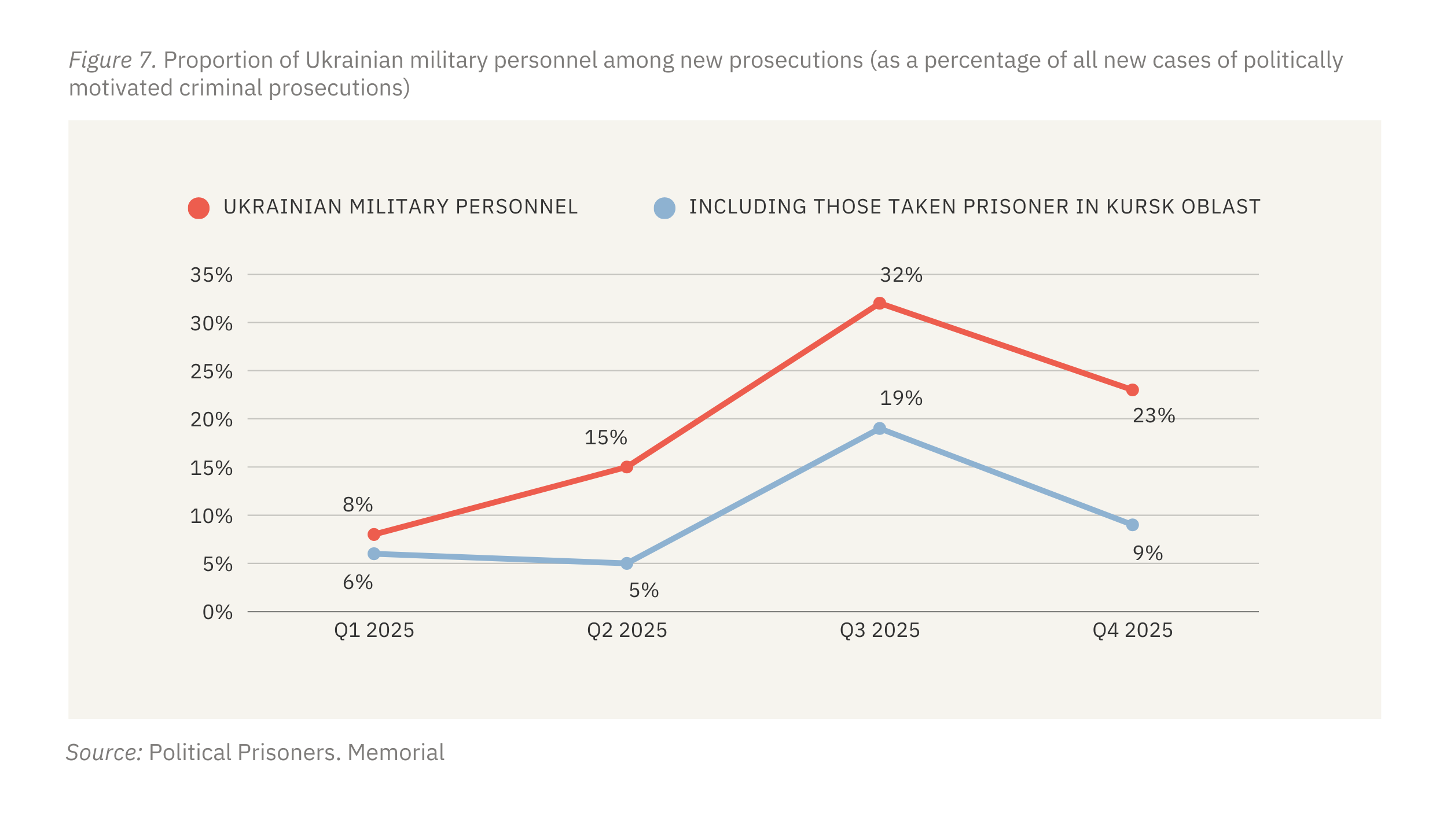
In the fourth quarter of 2025, there was a noticeable decrease in the number of new prosecutions in this category. However, this was not an indication of a softening of policy. Rather, it was a result of having largely exhausted the supply of the requisite Ukrainian military personnel to prosecute:
- Most of the prosecutions of prisoners captured during the active phases of fighting in Kursk Oblast had already been initiated and registered by our project.
- Official Russian sources reported more than 500 prisoners captured in this region. Our project has currently recorded 325 such cases.
Even if we disregard the possibility that official Russian sources may have exaggerated the number of such prisoners, most of these prosecutions are already known to us. Information about the remaining Ukrainian service personnel captured in Kursk Oblast will be taken into account by our project in the coming months as new data becomes available.
LEGAL DEVELOPMENTS
In the fourth quarter, relatively few changes in legislation relating to political repression were introduced. Three developments, however, are significant:
- SIMPLIFIED CRIMINAL LIABILITY FOR FOREIGN AGENTS
On 26 October 2025, amendments to Article 330.1 CC RF (‘Evasion of the obligations of a foreign agent’) came into force. It is now easier to bring criminal charges under this article. Previously, in order to initiate criminal proceedings for violation of the Russian law on foreign agents, it was necessary to have been convicted of two offences under Article 19.34 CAO RF [the Code of Administrative Offences of the Russian Federation] (‘Violation of the procedure for the activities of a foreign agent’) within a year. Now, any repeat violation following a conviction under administrative law, or having a criminal record for evading the duties of a foreign agent, will suffice. - CRIMINAL LIABILITY FOR TERRORIST AND SABOTAGE OFFENCES HAS BEEN MADE MORE SEVERE
On 17 November, amendments were made to a number of articles of the Russian Criminal Code. In particular:- the age of criminal responsibility for a number of crimes was lowered to 14 years, including Article 205.1 CC RF (‘Aiding and abetting terrorist activity’), Article 281 CC RF (‘Sabotage’), Article 281.1 CC RF (‘Aiding and abetting sabotage activities’), Article 281.2 CC RF (‘Undergoing training for the purpose of sabotage activities’), Article 281.3 CC RF (‘Organisation of and participation in a sabotage group’)
- statutes of limitations have been abolished; it is prohibited to impose a lighter punishment than that provided for by law; and obtaining parole has been made more difficult for those convicted of organising sabotage groups, as well as for minors involved in sabotage activities
- penalties have been increased (up to life imprisonment) for engaging minors in terrorist and sabotage activities
- NEW RESTRICTIONS FOR RUSSIANS PROSECUTED IN ABSENTIA
In December 2025, new bills were introduced into the State Duma to introduce restrictions for Russians abroad who have been convicted and sentenced for a number of offences, including for violating the rules governing the activities of foreign agents. In line with these changes, it will, in particular, become impossible for the individuals concerned to receive many consular services, and new restrictions on their ability to use their property and monetary resources will be introduced.
Appendix 1
Distribution of offences under the Criminal Code by groups
Footnotes:
- By ‘deprived of liberty’ we mean those prosecuted who have been remanded in custody or placed under house arrest, as well as those sentenced to terms of imprisonment or compulsory work or sent for compulsory psychiatric treatment.
- This group does not include prosecutions of organisations designated as ‘terrorist.’
- This refers to two groups of articles: ‘terrorist organisations’ and ‘restrictions on freedom of association.’
- It should be noted that some of those prosecuted were charged under articles from more than one group.
- Here we consider only criminal cases, excluding other widely used forms of repression, such as abductions and deprivation of liberty outside formal legal procedures.
- It should be noted that some of those prosecuted were charged with offences from more than one group.
- The term ‘Ukrainian military personnel’ in this context refers to prisoners of war who have become defendants in criminal prosecutions, as well as individuals charged in connection with service in Ukrainian military units prior to 2022. We note that we refer here only to criminal prosecutions. Prisoners of war who have not been charged with criminal offences are not included.
- While most cases under this article target individuals labelled as ‘foreign agents’, the prosecutions are in effect intended to limit public and civic activity. We therefore include this article in this category.