
Key Findings
- Russia: the scale of politically motivated prosecutions remains unchanged. The intensity of repression in Russia, within its internationally recognised borders, remains at the same level of about 500 victims each quarter. A slight decline in the figure during the first quarter of 2026 appears to have been seasonal in nature.
- Russia: fewer prosecutions for treason but more in the Far East. Following a significant rise in the proportion of cases involving threats to state security in 2025, there was a decline in the first half of 2026. It is not yet clear to what extent this is a significant trend or what factors are behind it. The Far Eastern Federal District once again topped the ranking of macroregions in terms of the intensity of politically motivated prosecutions.
- Russia: believers, supporters of Navalny and of Maltsev. The overall trend in politically motivated criminal repression in the Russian Federation in 2026 has seen expanding campaigns against Jehovah’s Witnesses, donors to the Anti-Corruption Foundation, and supporters of Vyacheslav Maltsev’s ‘Artpodgotovka’ movement.
- Occupied territories: a stabilisation in scale with continuing levels of demonstrative brutality. The increase in the scale of politically motivated prosecutions in the occupied territories, recorded throughout most of 2025, has now ceased. Nevertheless, the intensity of repression remains several times higher in the occupied territories than in Russia. Charges for offences related to treason and espionage predominate.
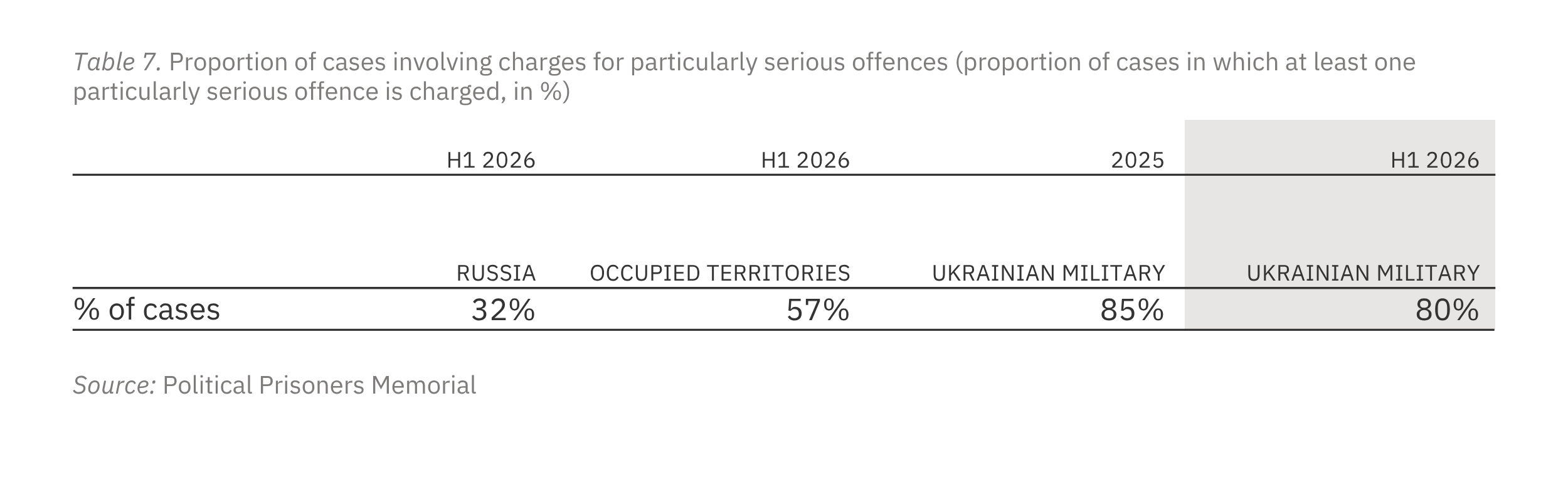
- Ukrainian prisoners of war: maximum severity of criminal prosecutions. By mid-2026, the campaign of mass criminal prosecutions of prisoners of war captured in Kursk region had stabilised at around 15 new cases per quarter. However, the number of criminal cases against prisoners of war has not returned to pre-Kursk levels. Prisoners of war remain subject to the greatest pressure. The proportion of charges for particularly serious offences against this group reaches 80%, significantly higher than the figures for both the occupied territories and Russia.
- Reform of the Criminal Code has been put on hold, and other methods of exerting pressure are being sought. In the first half of 2026, there were only minimal adjustments to the criminal law used in political repression. The authorities presumably believe the Criminal Code in force meets their current needs. Consequently, the focus of legislative activity has shifted towards alternative means of exerting influence. In particular, priority has been given to developing non-criminal measures of putting pressure on opponents of the regime who live in exile.
How this report was prepared
This, our latest quarterly review of political repression, covers the second quarter of 2026.
The review is based on our database of criminal cases that show signs of political motivation and unlawfulness (hereinafter: politically motivated criminal cases) maintained by the ‘Political Prisoners Memorial’ project. Our sources include court records, press releases from law enforcement agencies, media publications, appeals from those being prosecuted and their relatives. The data is current as at 30 June 2026.
In this review, we assign criminal cases to a particular quarter based on the date they were added to our database. We usually learn of the initiation of criminal proceedings in a case with some delay, which may be measured in days, weeks, or less frequently a longer period. Consequently, not all cases attributed to a particular quarter were actually initiated at that time. Some prosecutions began earlier. Our approach therefore reflects the reality of repression with a certain time lag. At the same time this approach, when applied consistently, allows us to describe the situation as comprehensively as possible.
Data for one and the same period may vary slightly across different quarterly reports. This is because of updates to information regarding those subject to prosecution, as well as possible adjustments to the methodology used in calculating individual indicators.
Key indicators of the project ‘Political Prisoners Memorial’
Political prisoners
Political prisoners are individuals currently deprived of liberty and recognised as political prisoners by the Memorial Human Rights Centre or (from April 2022) by the project ‘Political Prisoners Memorial.’
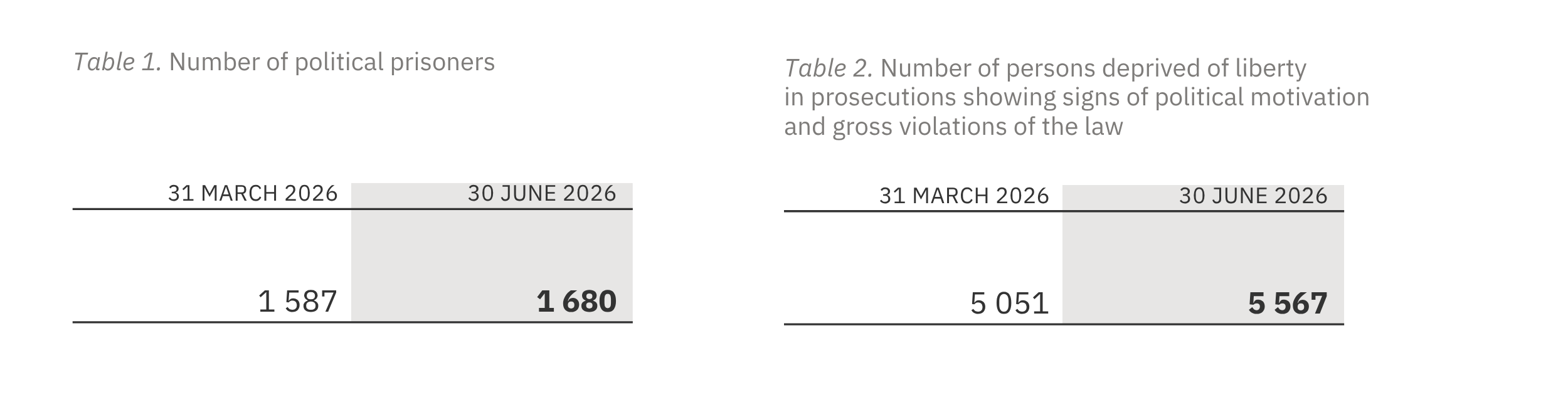
Over the past quarter, the number of people we recognise as political prisoners has increased by 93. At the end of the second quarter of 2026, we recognised 1,680 prosecuted individuals as political prisoners.
Persons deprived of liberty in cases with signs of political motivation and unlawfulness
We also maintain a list of persons subject to criminal prosecution whose cases most likely involve signs of political motivation and gross violations of the law. This includes both those recognised as political prisoners and those whose cases have not yet been decided.
As of 30 June 2026, our list of persons deprived of liberty in cases involving political motives and gross violations of the law contained 5,567 people. Over the past quarter, this number has increased by 516.
The overall scale of repression
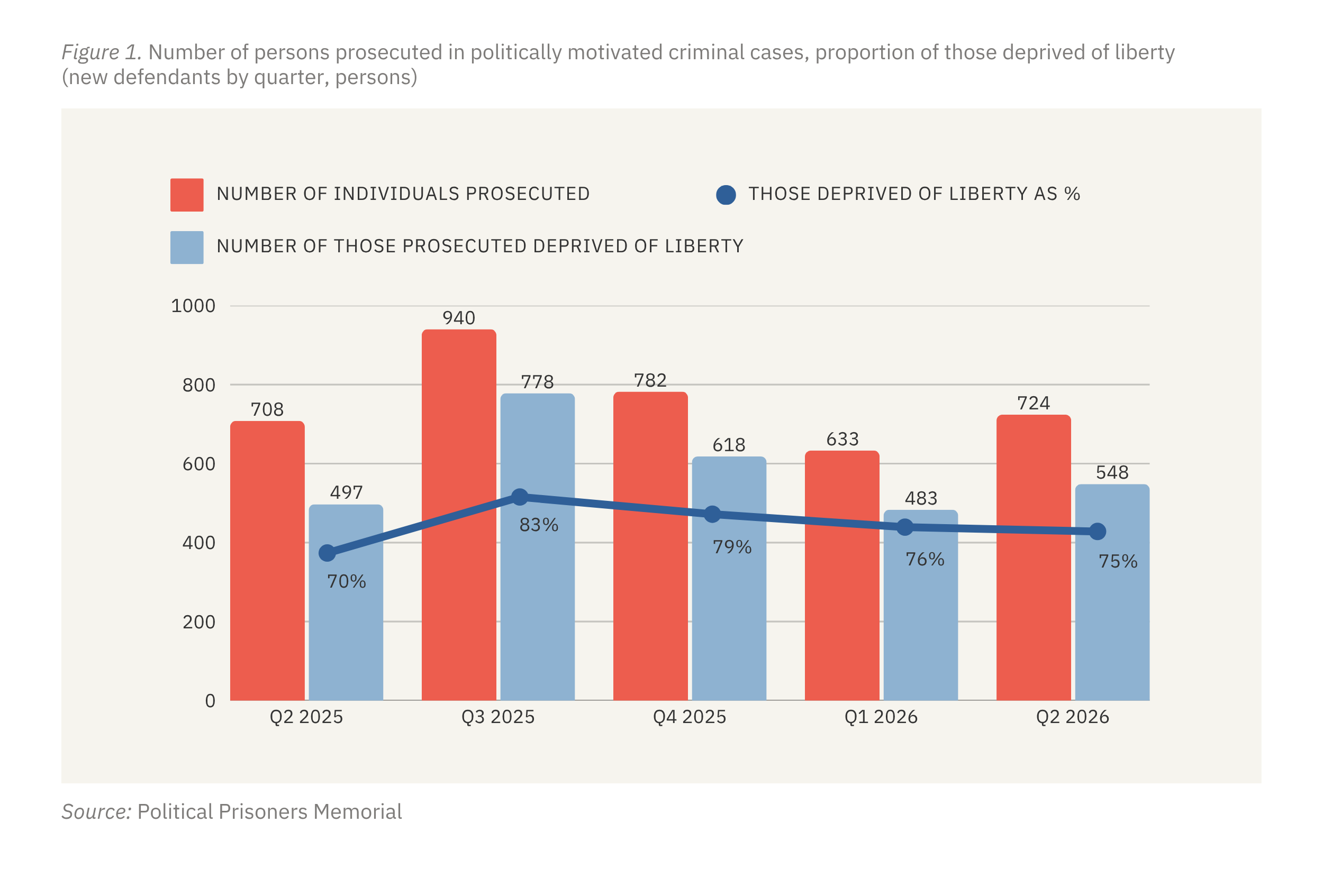
The second quarter of 2026, as we had anticipated, showed that the decline in the number of politically motivated criminal cases during the first three months of this year was temporary. The following two reasons are most likely responsible for the reduction in the number of recorded cases of criminal prosecutions in the first quarter: 1) the conclusion of the campaign targeting Ukrainian military personnel taken prisoner in Kursk region; and 2) the long New Year holidays, during which the security services were less likely to report new criminal cases.
The number of new cases of criminal prosecution recorded in the second quarter of 2026 is comparable to the figures for 2025. It should be noted, however, that the number of criminal cases against Ukrainian armed forces personnel taken prisoner in Kursk region declined in 2026 and no longer had a significant impact on the statistics. More detail on the trends in the prosecution of Ukrainian prisoners of war will be provided below.
It is worth noting here that, as early as our review for the fourth quarter of 2025, we recorded that criminal cases had been initiated against a majority of the Ukrainian armed forces personnel taken prisoner in Kursk region, and these cases have been included in our statistics.
Consequently, the impact of this campaign is diminishing, as the criminal prosecution of almost all captured participants in this operation has already been recorded.
The proportion of those facing prosecution deprived of liberty[1] remained virtually unchanged in the past quarter compared with the first quarter of 2026. The noticeable decline in this figure compared with the fourth and, in particular, the third quarters of 2025 is also linked to the conclusion of the campaign against Ukrainian prisoners of war from Kursk region.
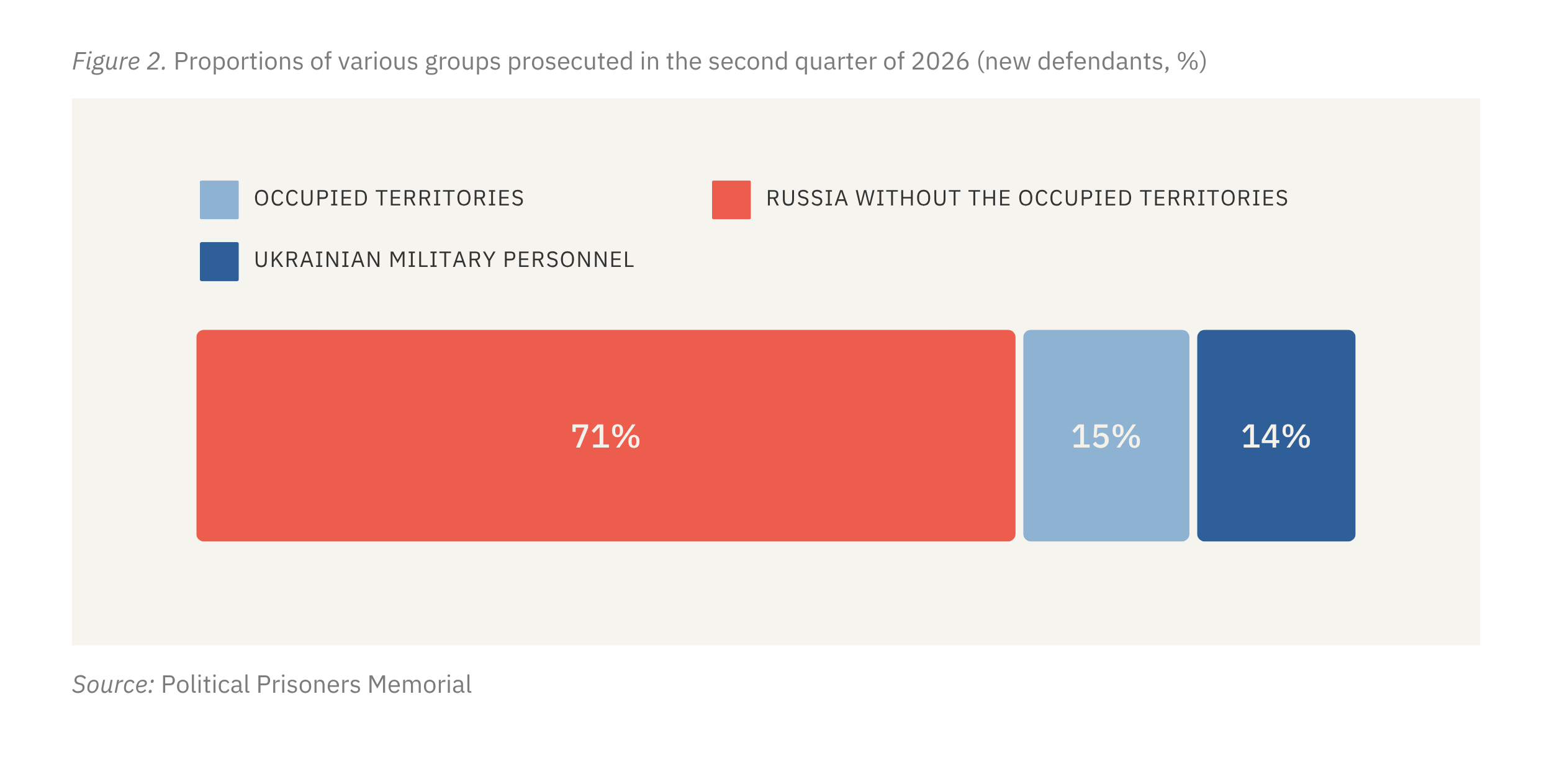
In these reports, we divide those prosecuted into three groups:
- residents of Russia within its internationally recognised borders;
- residents of the occupied territories of Ukraine;
- Ukrainian military personnel.
Within Russia
A stable level of repression
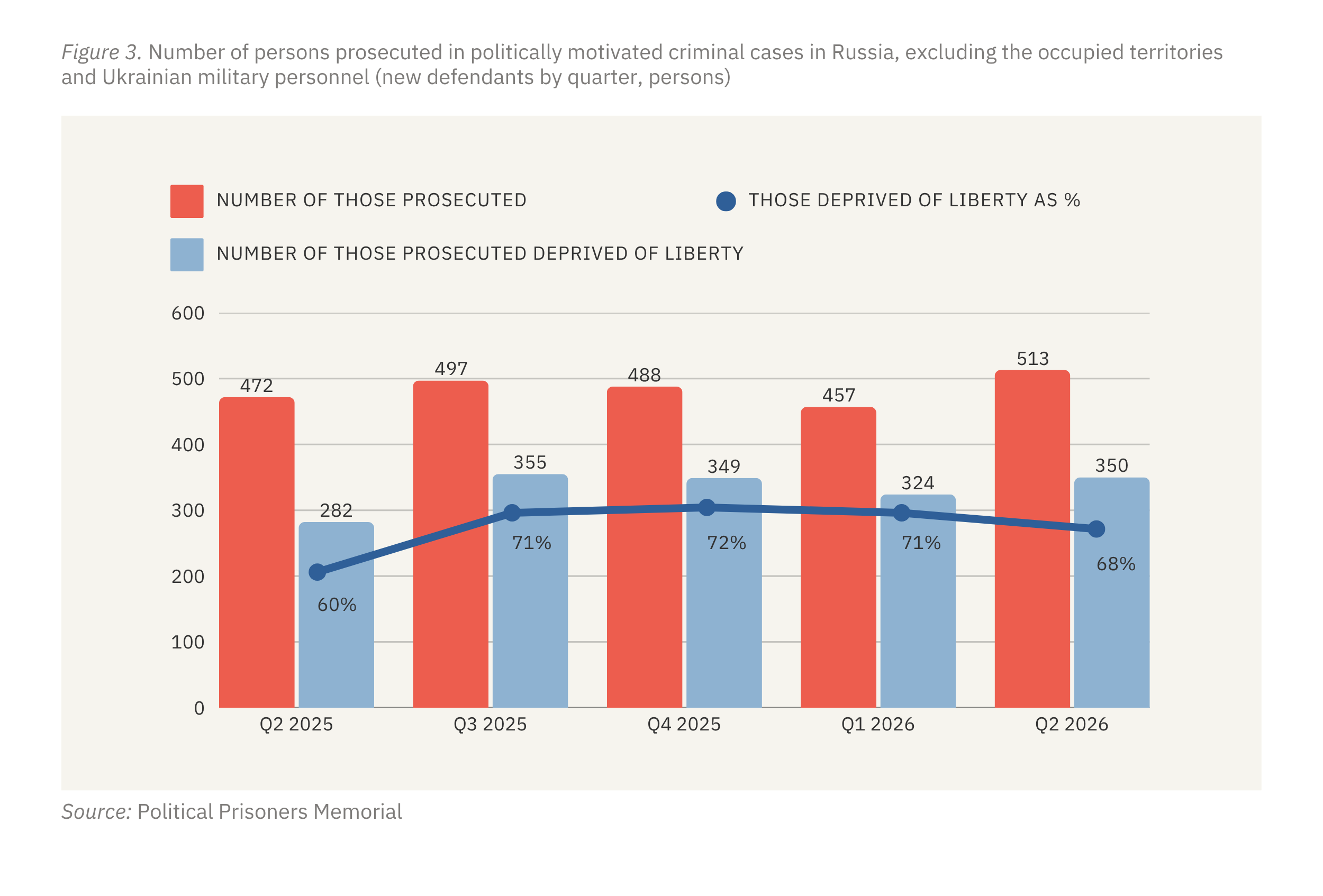
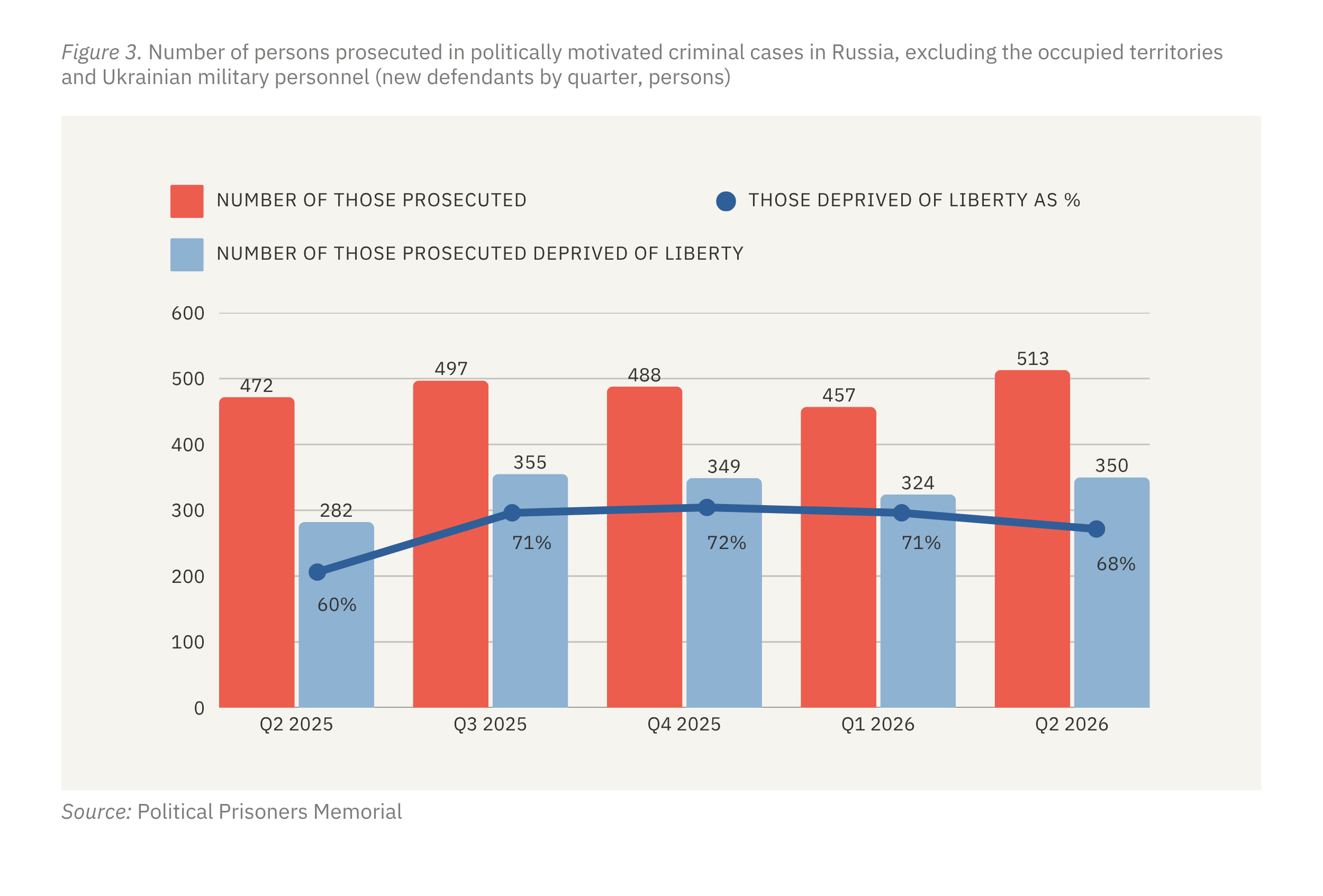
Repression involving politically motivated criminal cases within Russia’s internationally recognised borders in the second quarter of 2026 once again demonstrated that the scale of such repression remains unchanged.
Each quarter, we learn of approximately 500 new cases of politically motivated prosecution, that is, roughly five people a day. Following a slight decline at the start of this year, this figure has returned to its usual level and even slightly exceeded it.
The proportion of those deprived of liberty in the second quarter fell slightly compared with the figure recorded during the second half of 2025 and early 2026. However, the figure remains significantly higher than in the second quarter of last year. A possible explanation for this is that there have been changes in the general pattern of repression, although this is not entirely clear at present.
Changes in the overall pattern of repression
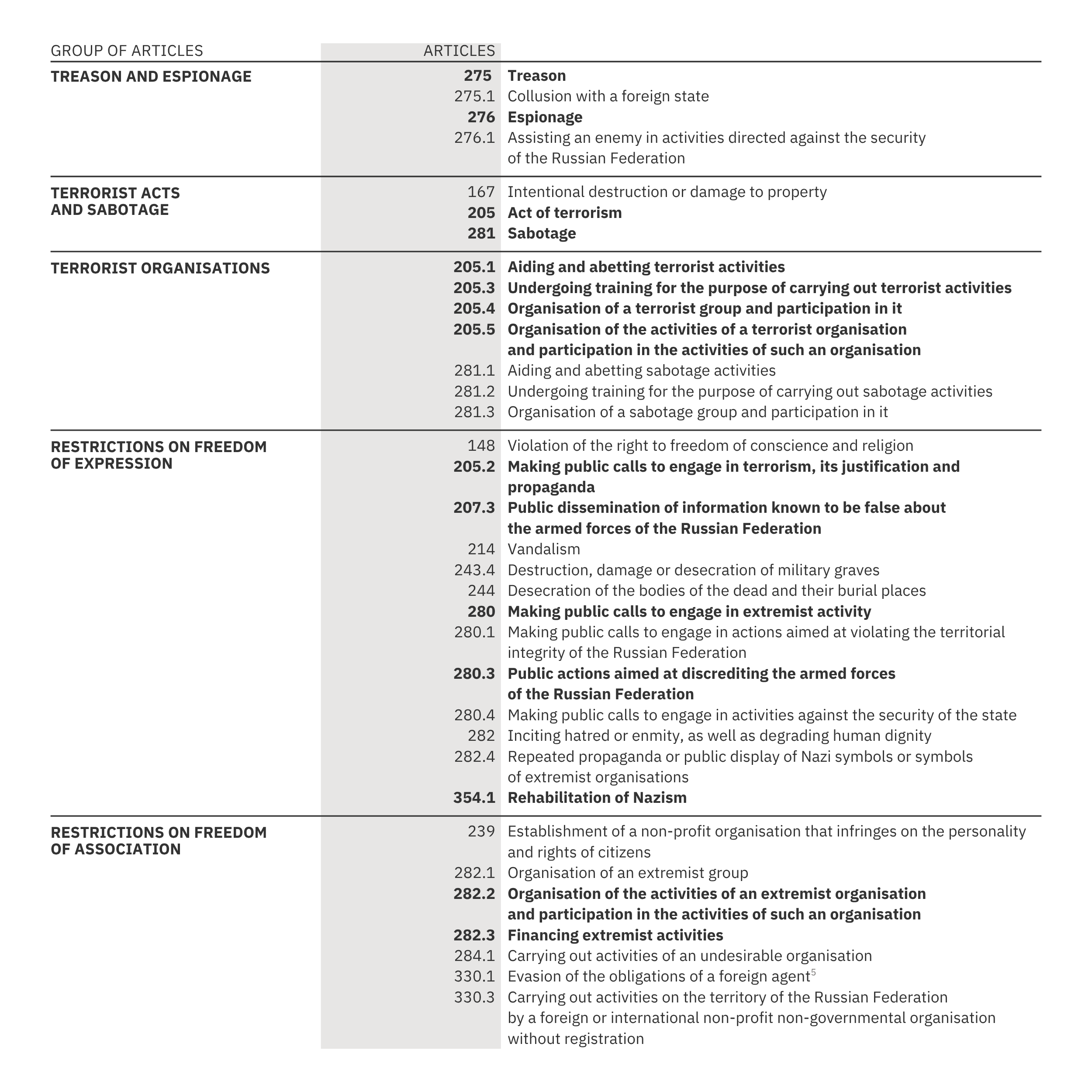
It should be noted that, when analysing the overall pattern of repression, we use the following categorisation of articles of the Criminal Code most frequently encountered in politically motivated criminal cases:
- ‘Treason and espionage’,
- ‘Terrorist acts and sabotage’,
- ‘Terrorist organisations’,
- ‘Restrictions of freedom of expression’,
- ‘Restrictions of freedom of association’.
These categories account for around 90% of all cases showing signs of political motivation. Further information about this categorisation can be found in Appendix 1. To track longer-term trends, this review will examine data grouped in six-month periods.
A clear and consistent trend over the past year and a half (and indeed over a longer period) has been a decline in the proportion of those prosecuted for statements (the ‘Restrictions on freedom of expression’ category). However, over the last six months, the rate at which this proportion has been falling within the total number of prosecutions has slowed.
In 2025, there was a significant increase in the number of cases involving charges for crimes against state security, terrorism and sabotage. In the first half of 2026, by contrast, there has been a slight reduction in the proportion of such charges within the overall structure of politically motivated prosecutions. We noted this trend as early as the first quarter, but at the time assumed it was a random fluctuation. However, the picture has not changed by the end of the half-year. It is currently unclear what is causing this or how long-term this trend may prove to be.
There has been a steady increase in the proportion of defendants charged with aiding and abetting terrorist activities (Art. 205.1 of the Criminal Code of the Russian Federation [hereafter CC RF]) and participating in the activities of a terrorist organisation (Art. 205.5 CC RF), as well as in relation to other articles within the ‘Terrorist organisations’ category.
One of the significant, though not immediately obvious, reasons for this trend has been the expanding campaign of prosecutions against supporters of Vyacheslav Maltsev’s ‘Artpodgotovka’ movement. While in the first half of 2025 we recorded eight cases linked to this organisation, in the second half of 2025 there were 17. In the first half of this year the figure has already reached 23.
The number of prosecutions on charges from the ‘Restrictions of freedom of association’ group is also rising. This is primarily related to the ongoing campaigns against Jehovah’s Witnesses and supporters of Aleksei Navalny. To prosecute believers, Art. 282.2 CC RF (‘Organisation of and participation in the activities of an extremist organisation’) is being used; Art. 282.3 CC RF (‘Financing extremist activities’) is used against donors to the Anti-Corruption Foundation.
As noted in our review of the first quarter, although Jehovah’s Witnesses were designated an extremist organisation back in 2017, we currently see a significant intensification in their persecution. For the whole of last year, we recorded 51 believers charged under Art. 282.2 CC RF; the figure for the first half of this year has already reached 76. A characteristic feature of this campaign is the use of group prosecutions, in which several people connected to one another — often family members — find themselves accused. It is also worth noting the clear geographical pattern of prosecutions of Jehovah’s Witnesses. More than 70% of cases registered in 2026 occurred in the Siberian and Far Eastern Districts. By way of comparison, in 2025, 45% of the movement’s followers who were prosecuted lived in these macro-regions.
A similar trend can be observed in the prosecutions of Aleksei Navalny’s supporters. In 2025, we registered 91 individuals charged with financing extremism (Art. 282.3 CC RF) for donations to the Anti-Corruption Foundation. In the first half of this year, there have already been 87 such cases.
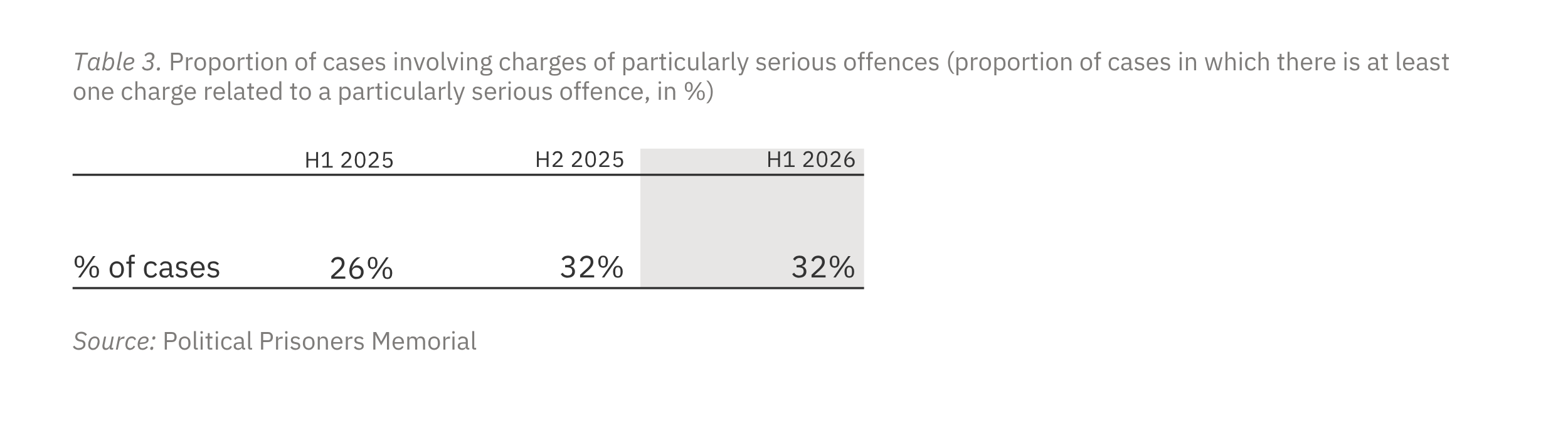
Despite changes in the overall pattern of repression and a slight reduction in the number of cases brought under articles of the Criminal Code related to state security, terrorist acts and sabotage, the proportion of charges related to particularly serious crimes[3] is not decreasing. There is no reduction in the severity of politically motivated prosecutions; there has merely been a shift from one set of particularly serious offences to another.
Geography of repression
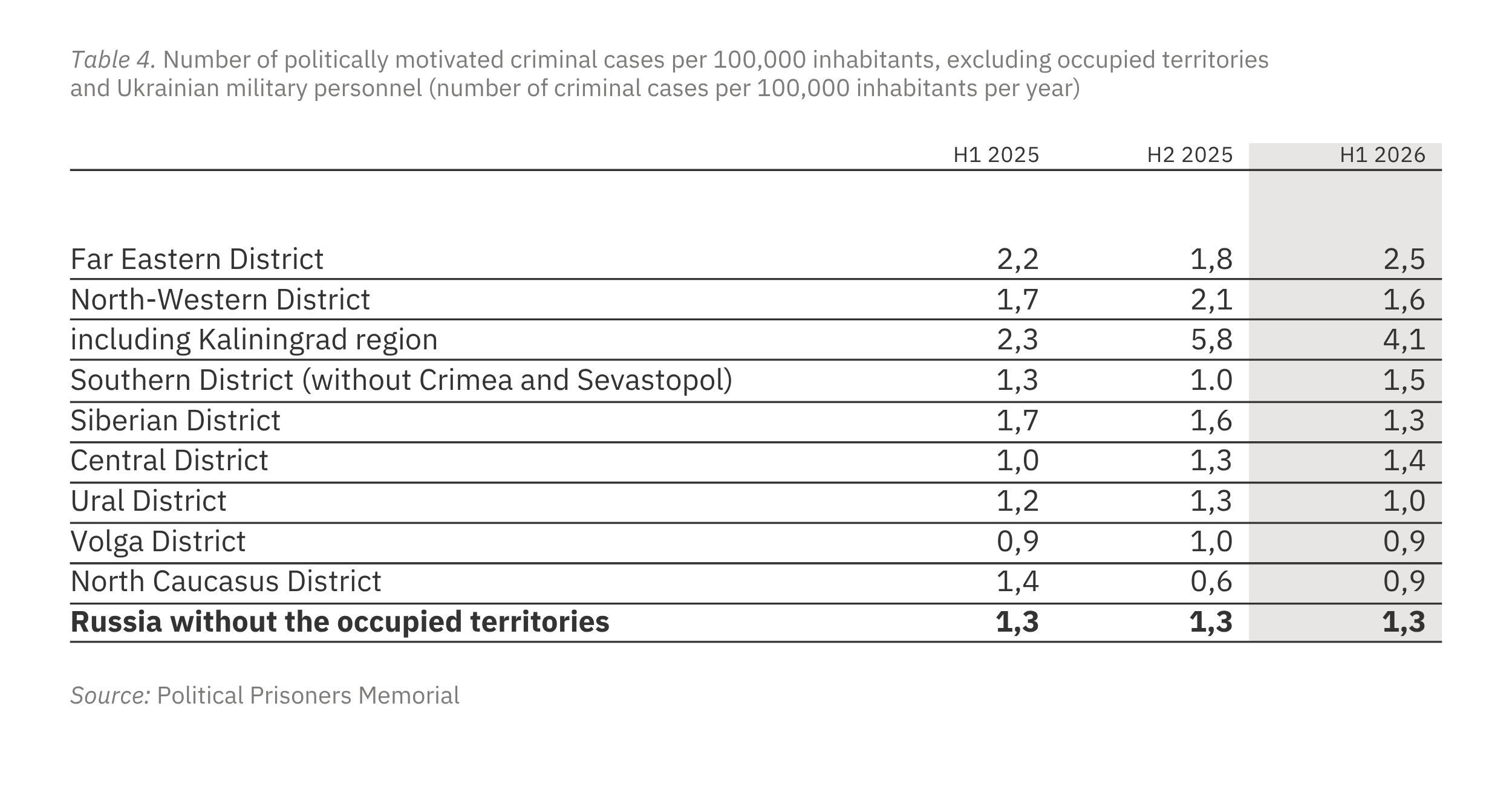
In the first half of 2026, the Far Eastern Federal District once again topped the ranking for the number of politically motivated criminal cases per capita. The Far Eastern Federal District had been in the top position in the second half of 2024 and in the first half of 2025. The North-West region, which had overtaken it, has since slipped back to second place.
As noted in our review of the fourth quarter of last year, the North-West Federal District’s rise in the ranking was largely a result of the ‘Kaliningrad phenomenon,’ which saw a sharp increase in the activity of the security forces in the region. Data for the first half of 2026 show this trend is continuing. While 5.8 cases per 100,000 inhabitants were recorded in Kaliningrad region in the second half of 2025, the figure for the first half of 2026 is 4.1. Despite this slight decrease, the rate for the region still significantly exceeds the Russian average. Nonetheless, the decline in the frequency of prosecutions in Kaliningrad and certain other regions of the North-West Federal District has resulted in the district slipping to second place.
The high number of prosecutions in the Far Eastern Federal District is partly related to repression against Jehovah’s Witnesses in the region. In 2026, 26% of politically motivated cases in the macro-region were brought against believers, while in Russia as a whole the figure was only 8%.
Occupied territories
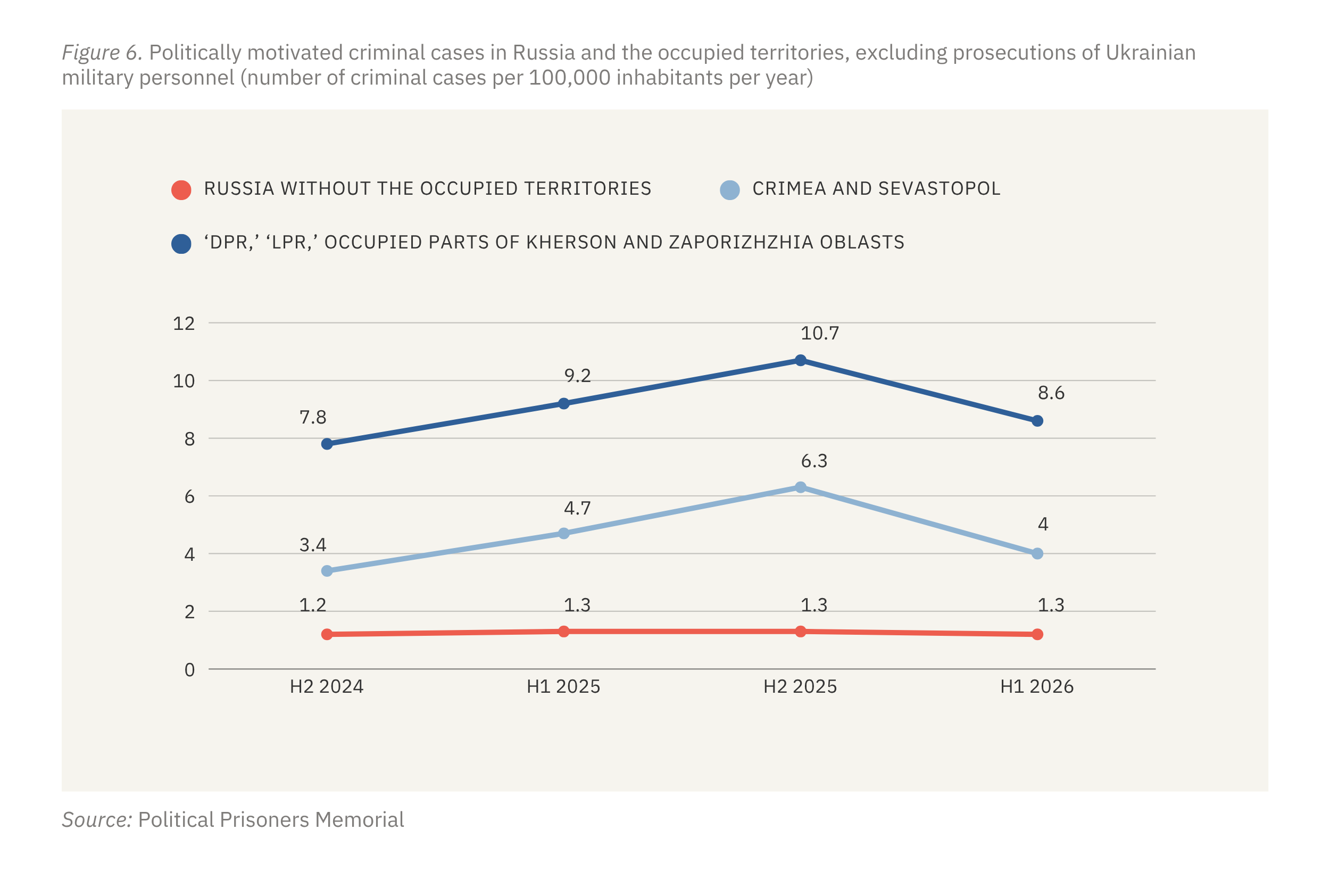
The increase in criminal prosecutions in the occupied territories of Ukraine, observed throughout most of 2025, has come to a halt. The decline in the scale of repression[4] in the first quarter of this year was clearly seasonal in nature; figures for the second quarter indicate that the situation has stabilised. Most likely this trend had been present as early as late 2025, but data for a single quarter was insufficient to support such a conclusion. Currently, just over a hundred new criminal cases are recorded each quarter, or just over one new prosecution each day.
At the same time, the proportion of those deprived of liberty has also returned to a level close to that of 2025. Deprivation of liberty is imposed in at least nine out of ten cases. This figure exceeds the national average for Russia by approximately 20%.
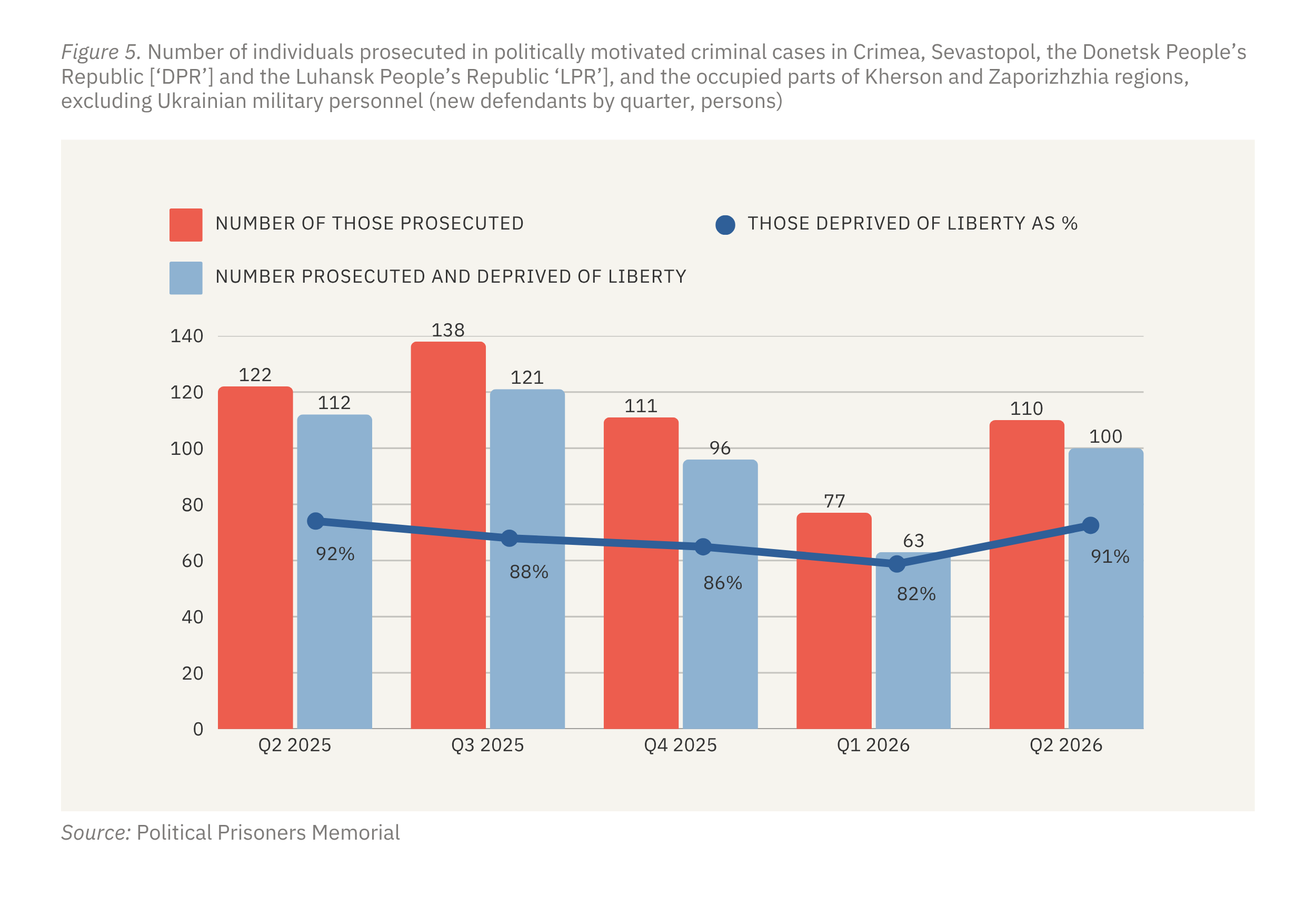
As previously noted, the scale of repression in the occupied territories is several times higher than in Russia. In the past quarter, the level of repression in Crimea was more than three times higher than in Russia, and in other occupied territories more than six times higher. When reviewing the results for the first half of 2026, it is important to bear in mind that the overall figures have shifted downwards because of a seasonal downturn in the first quarter. If the current trend continues, there is every reason to believe that the average figures will increase in the second half of the year.
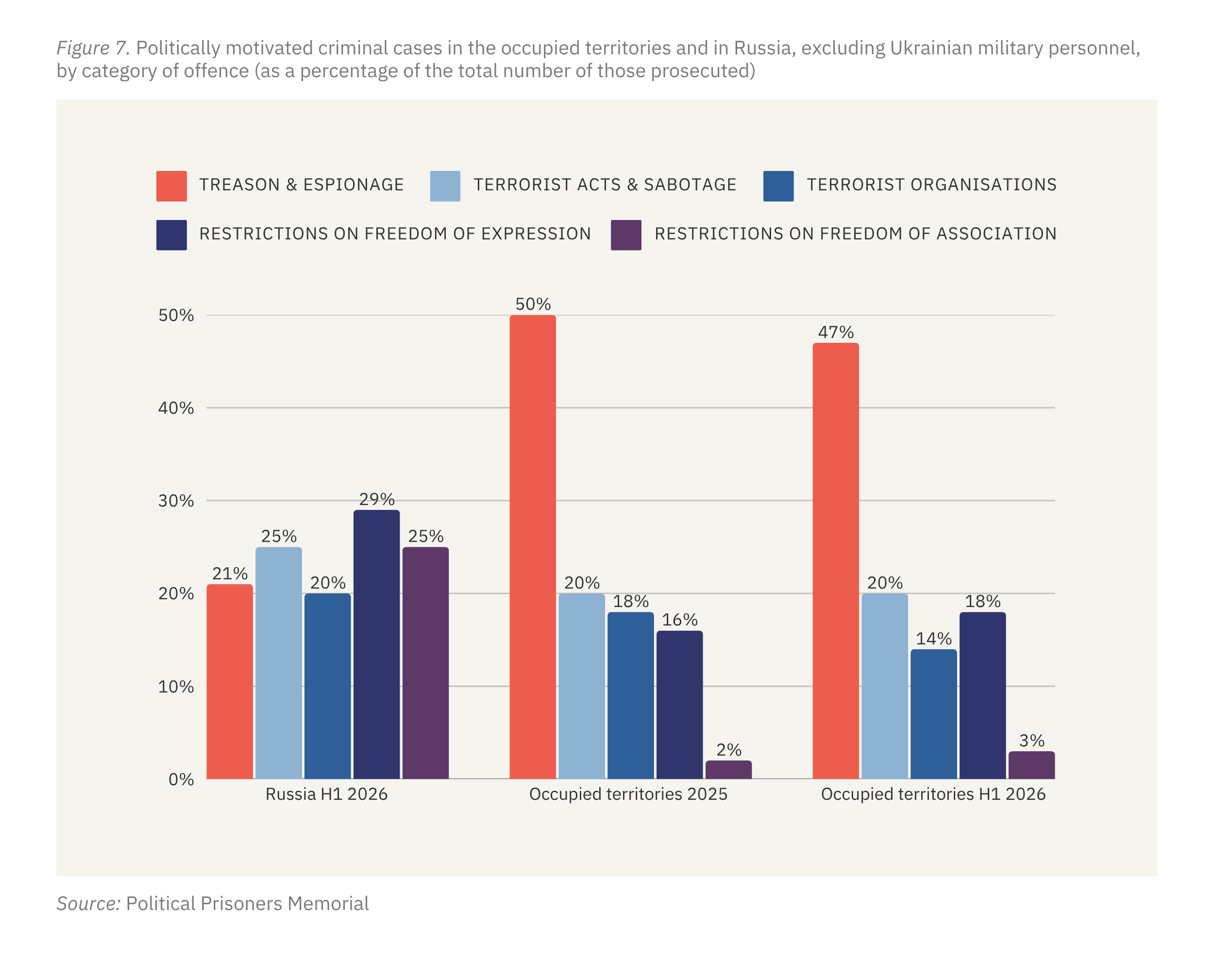
The overall pattern of politically motivated criminal cases in the occupied territories in the first half of 2026 has not changed significantly. During the first half of 2026, charges of treason or espionage featured in almost half of all cases — more than double the proportion recorded in Russia. At the same time, the proportion of charges relating to terrorist attacks, sabotage and membership of terrorist organisations was broadly comparable to that in the Russian Federation. However, there were noticeably fewer cases concerning freedom of expression, while prosecutions for activities involving extremist, undesirable and similar organisations (the ‘freedom of association’ category) were almost non-existent.
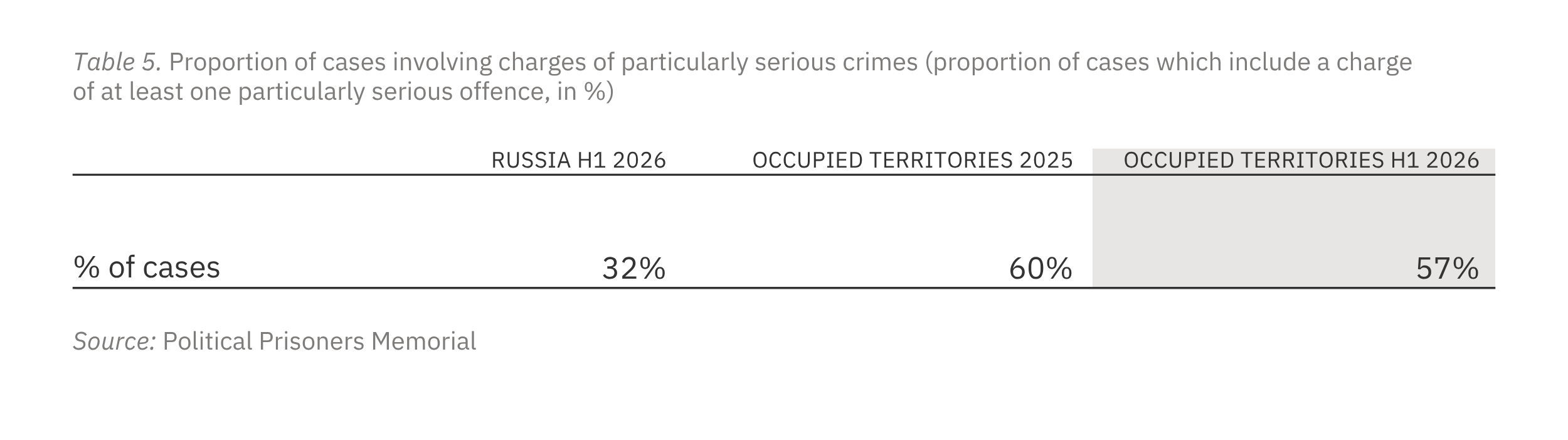
The skewed pattern of repression, with a focus on articles of the criminal code relating to state security, as well as the lower number of cases involving ‘speech’ and participation in extremist organisations, means that charges for particularly serious crimes account for more than half of all cases in the occupied territories, almost twice as often as in Russia.
Ukrainian military personnel
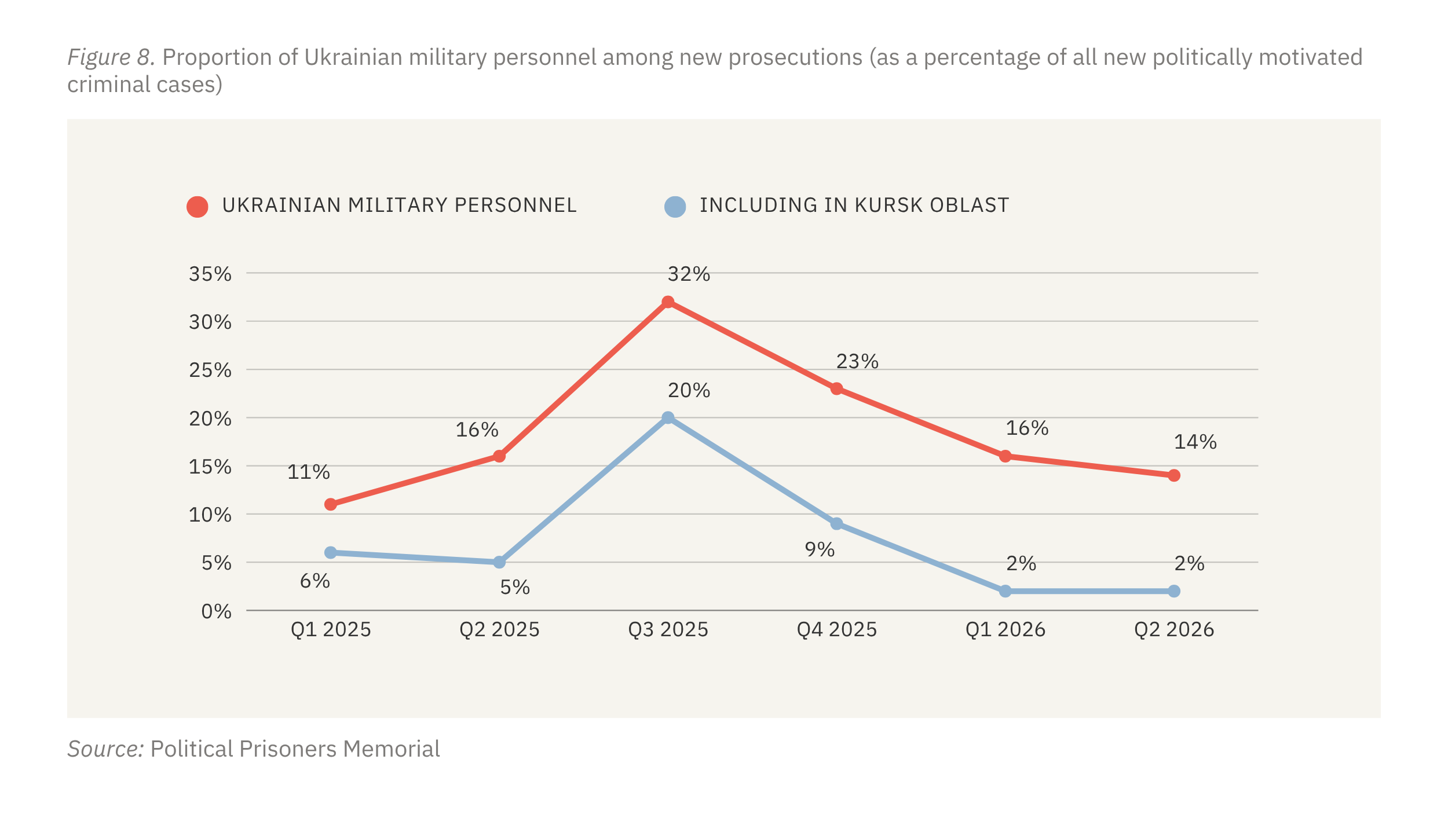
The year 2025 saw a period of intense prosecutions of Ukrainian military personnel.[5] At its peak, in the third quarter, one in three politically motivated criminal cases recorded by us involved criminal charges against a Ukrainian serviceman. The reason for this increase was that the Russian authorities were bringing terrorism charges against all Ukrainian armed forces personnel who were taken prisoner in Kursk region. It is worth noting that this campaign was in clear violation of the Geneva Convention of 12 August 1949 relative to the Treatment of Prisoners of War, which has been ratified by both countries.
In 2026, new cases related to the Ukrainian armed forces’ operation in Kursk region declined significantly. This is because criminal cases against the majority of prisoners of war had already been entered into our database. In both the first and second quarters of this year, we recorded approximately 15 new cases.
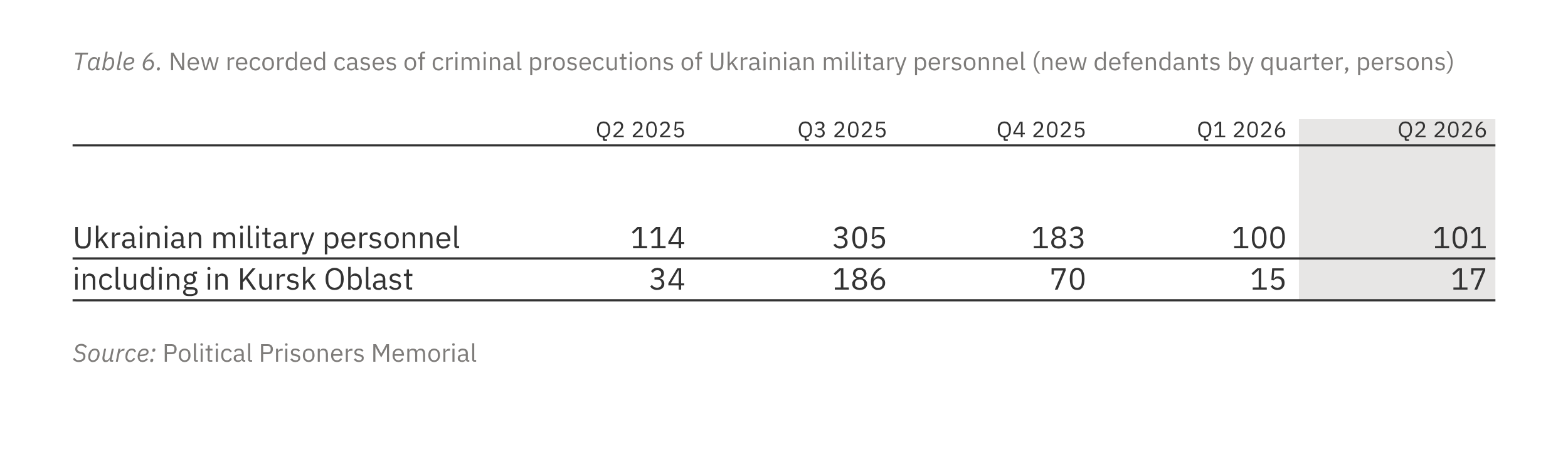
However, as noted in our report on the first quarter of this year, despite the end of the campaign to prosecute military personnel captured on Russian territory, the proportion of Ukrainian military personnel in the total number of prosecutions has not returned to pre-Kursk levels. Throughout 2025 and the first quarter of 2026, there has been a trend towards an increase in criminal prosecutions of both prisoners of war and civilians who served in the Ukrainian armed forces even before the start of the full-scale invasion. However, data for the second quarter of 2026 do not confirm a strengthening of this trend. Only time will tell how the situation will develop in the future.
Prosecution of Ukrainian military personnel is extremely harsh in nature. Leaving aside for the purposes of this analysis the extrajudicial pressure and abuse to which the prisoners of war are subjected, we note only that the proportion of charges for particularly serious offences under the Russian Criminal Code in this group stands at around 80%. This is at least 20% – 25% higher than in the occupied territories, and 50% higher than in Russia.
Legal developments
In the second quarter of 2026, no significant changes were made to articles of the Russian Criminal Code used in politically motivated prosecutions. In this regard, the only notable development was the entry into force of a law establishing criminal liability for denying the fact of the genocide of the Soviet people and for desecrating the memory of its victims.
At the same time, systematic and consistent efforts continued throughout the second quarter to tighten non-criminal legislation aimed at countering critics of the regime, including those abroad. In this review, we highlight only some of the most notable amendments to non-criminal legislation.
1. Denial of the genocide of the Soviet people and insulting the memory of the victims of genocide
On 20 April 2026, amendments to two articles of the Criminal Code of the Russian Federation came into force:
- Art. 243.4 CC RF (‘Destruction, damage or desecration of military graves…’) was extended to cover graves, monuments and other memorial sites commemorating ‘victims of the genocide of the Soviet people’. Subsequently, Part 3 was added to the article, establishing a maximum penalty of up to five years’ imprisonment for such acts;
- Art. 354.1 CC RF (‘Rehabilitation of Nazism’) introduced liability for ‘for denying the genocide of the Soviet people or condoning the genocide of the Soviet people’ and ‘insulting the memory of the victims of the genocide of the Soviet people.’
With these changes, the Russian leadership continues its campaign for ‘historical truth.’ In practice, such provisions are typically used to restrict freedom of expression in matters of history and government policy. The law creates additional grounds for criminal prosecution for public statements and publications.
2. Expanding the scope under administrative law for prosecution of Russians abroad and seizure of their property
An important legal development in the second quarter, albeit one not related to the criminal law, has been a new law providing additional grounds for the administrative-law prosecution of Russians who left the country for ‘offences against the interests’ of the state. The law was signed on 10 June and will come into force on 1 September 2026.
The law permits administrative proceedings against individuals outside the country under 12 articles of the Code of Administrative Offences of the Russian Federation [CAO RF]. These include, for example, Art. 19.34 CAO RF (‘Violation of the procedures for the activities of a foreign agent’), Art. 20.3.3 CAO RF (‘Discrediting the armed forces of the Russian Federation’), and Art. 20.3.4 CAO RF (‘Making calls for the imposition of restrictive measures against the Russian Federation’). At the same time, courts are prohibited from imposing unenforceable penalties (administrative-law jail terms, compulsory work, etc.). As a precautionary measure, even before a court rules on the merits of a case, property, including immovable property, may be seized. However, the value of the property subject to seizure is not limited to the amount of the fine imposed on the person charged under the relevant article of the Code of Administrative Offences of the Russian Federation.
In practice, this may mean that, for example, in the event of administrative proceedings being brought for ‘discrediting the Russian army,’ for which the maximum fine is 50,000 roubles, if the ‘offender’ does not have this amount in their bank account then their apartment, house or plot of land may be seized, with a ban on any registration actions relating to these properties. A decision to seize property can be issued by a judge under a simplified procedure, at the request of a prosecutor or other official, without notifying the person subject to administrative liability.
3. New restrictions on foreign agents
In June, bills introducing amendments regulating state oversight of compliance with the legislation on foreign agents were adopted by the State Duma and approved by the Federation Council. In particular, the changes mean the ban on placing advertisements on foreign agents’ websites will be extended to include public service announcements; challenging the designation of ‘foreign agent’ status will become even more difficult; and official checks on the activities of foreign agents will be streamlined.
[1] In reality, the proportion of persons subject to prosecution and deprived of liberty is slightly higher than the figure we have recorded. We simply have no information about some prosecutions.
[2] It is worth taking into account that some of those being persecuted have been charged under articles of the Russian Criminal Code that are in different categories.
[3] Under the Criminal Code of the Russian Federation, particularly serious offences are defined as intentional acts punishable by a prison sentence of more than 10 years.
[4] Here we consider only criminal cases, excluding other widely used forms of repression, such as abductions and deprivation of liberty outside formal legal procedures.
[5] The term ‘Ukrainian military personnel’ here refers to prisoners of war who have been subject to criminal prosecution, as well as individuals charged in connection with their service in Ukrainian military units prior to 2022. To clarify once again, this refers solely to criminal prosecutions. Prisoners of war against whom no criminal charges have been brought are not included here.
[6] Although most prosecutions under this article of the Criminal Code are brought against individuals designated as ‘foreign agents,’ by its very nature prosecution under this article is aimed at obstructing public civic activity. We therefore deem it most appropriate to classify this article within this group.