
Key findings:
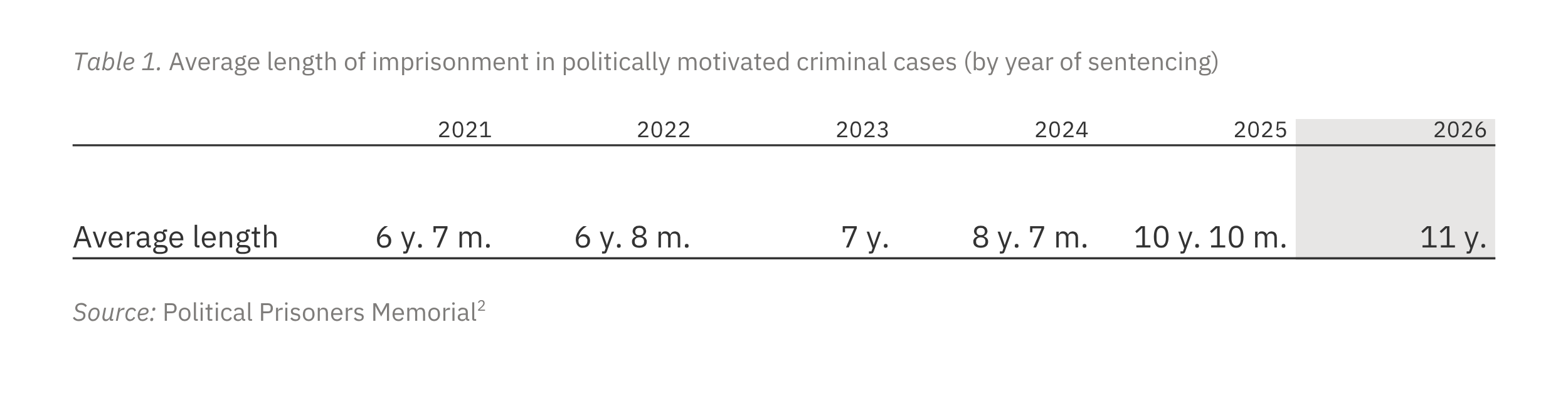
- Since the start of the full-scale invasion of Ukraine, political repression has not only increased in quantity but has also changed in nature. Sentences in politically motivated prosecutions have become much harsher, increasing from an average of six years and seven months in 2021 to an average of 11 years in 2026.
- The harsher sentences result from a variety of mutually reinforcing measures that include a tightening of legislation, the use of more serious offences in the Russian Criminal Code for prosecution, an increase in the number of charges in a single criminal case, and the imposition of harsher sentences for offences that previously attracted lighter penalties.
- The authorities treat those subjected to politically motivated prosecutions with demonstrative harshness, effectively singling them out into a separate group. In such cases, the authorities go beyond the scope of standard criminal prosecution. Defendants are treated not as ordinary criminals subject to trial but as enemies posing a threat to the very existence of the regime.
The full-scale invasion of Ukraine opened a new chapter in the history of Russian political repression. In 2022, on the one hand, the authorities faced a new challenge as anti-war sentiment and protests posed a threat to the regime’s political stability. On the other hand, the war gave the authorities free rein and allowed them to significantly tighten their grip on society at minimal cost to themselves. This combination of a problem and an opportunity to resolve it could not help but lead to an intensification of political repression.
As a result, not only did the scale of political repression increase in quantitative terms, but a qualitative transformation took place. In this report, we focus on just one aspect of these changes — the harshening of punishments. We show the specific mechanisms by which the system achieved significantly harsher sentences.
Changes in the average length of prison term
The change in the average length of imprisonment handed down in politically motivated criminal prosecutions is the broadest indicator of the severity of the use of the criminal law in political repression. According to the database [1] of the ‘Political Prisoners. Memorial’ project, this indicator has seen a dramatic increase since the start of the full-scale war. Moreover, when considering the increase in the average prison sentence, it is worth noting that often those who would previously have received a fine or a suspended sentence began to be sentenced to terms of imprisonment. Such sentences were, of course, relatively short, but even taking them into account, the average length of sentence has risen dramatically.
In general, the Russian authorities’ approach can be described as follows: there is no need to imprison many people; a limited number should be imprisoned, but with terms as demonstratively harsh as possible. In this way, the authorities seek to maintain their grip on public discontent and dissent by prosecuting a limited number of individuals. Implementing this scenario has required a variety of mutually reinforcing measures, as discussed below.
Tightening legislation
Legislation used in political prosecutions has undergone a major overhaul. Sergei Davidis, head of the ‘Political Prisoners. Memorial’ project, discusses this in more detail in his article ‘From “Discrediting the Military” to High Treason and Terrorism.’ The legislative changes introduced to intensify the repression are diverse. Here we briefly outline some of the changes made to the Criminal Code of the Russian Federation.
New Articles of the Criminal Code
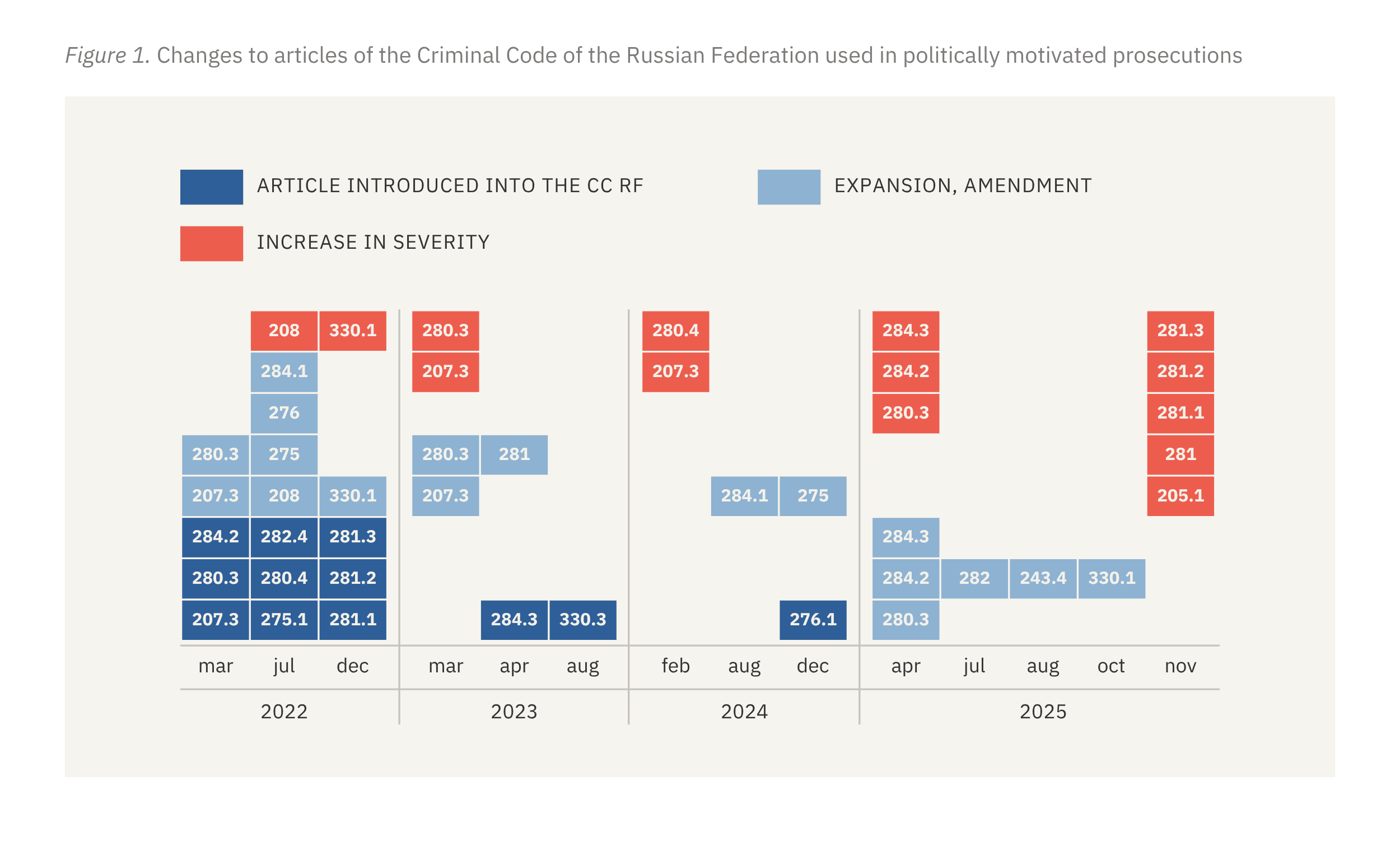
Between 2022 and 2025, 12 new articles were introduced into the Criminal Code of the Russian Federation, used (or intended to be used[3]) in politically motivated prosecutions.
Amendments, expansion
Another aspect of changes to the Criminal Code involves the expansion of the provisions of articles, often using intentionally vague and evaluative wording. This makes the articles ‘flexible,’ effectively allowing any undesirable act to be declared a crime. Since the full-scale invasion, at least 12 articles of the Criminal Code used in politically motivated prosecutions have undergone such changes, with some— such as Art. 207.3, Art. 280.3, Art. 275, and Art. 330.1 — being amended twice or more.
Tougher Penalties
In addition, amendments were made to articles of the Criminal Code that directly increased penalties. A requirement for an initial conviction under administrative law prior to criminal prosecution was removed, fines were replaced with imprisonment, and prison terms were lengthened. Confiscation of property was also introduced, and procedures for parole were made more complex. The increase in severity of penalties was achieved both through amending articles of the Criminal Code used in politically motivated prosecutions and by introducing changes to the General Section of the Criminal Code, which defines the general rules of criminal liability and sentencing. In total, penalties were increased in at least 13 articles used for purposes of political repression.
The following examples illustrate these measures. In 2023, the first parts of Art. 207.3 CC RF (dissemination of ‘fake news’ without aggravating circumstances) and Art. 280.3 CC RF (repeated discrediting without aggravating circumstances) were reclassified as offences of medium severity. The maximum sentence was increased from three to five years. The maximum term of imprisonment under Art. 280.3, Part 2, CC RF (discrediting with aggravating circumstances) was increased from five to seven years. Life imprisonment was introduced as a punishment for treason (Art. 275 CC RF) — previously, the maximum punishment for this offence was 20 years in a penal colony. The maximum sentence for sabotage without aggravating circumstances (Art. 281, Part 1, CC RF) was increased from 15 to 20 years.
In 2024–2025, amendments were introduced that made it possible to confiscate property under Art. 207.3 CC RF (dissemination of ‘fake news’ about the armed forces of the Russian Federation), Art. 280.3 CC RF (discrediting the armed forces of the Russian Federation), Art. 284.2 CC RF (calls for sanctions against the Russian Federation), Art. 284.3 CC RF (assisting in the implementation of decisions by international organisations in which the Russian Federation does not participate).
In 2025, for offences related to sabotage, it became possible to hold individuals criminally responsible from the age of 14; statutes of limitation were abolished; it was prohibited to impose a lighter sentence than that provided by law; and parole was made more difficult both for those who organised subversive groups and for minors involved in subversive activities.
This is by no means a complete list of penalties that were made more severe. Following the start of the full-scale invasion, the Criminal Code was substantially amended and adapted to facilitate political repression under the new conditions. Two directions of this transformation are evident.
First, lawmakers expanded the scope of application of the Criminal Code as far as possible. Through the introduction of new offences, amendments to existing offences, and the addition of deliberately vague and ambiguous wording, law enforcement agencies can now interpret virtually any public dissent against the authorities’ actions as a crime, especially where it concerns the war. In this way, all legal means of expressing alternative views were eliminated. In fact, the only safe strategy for Russian citizens is not to challenge the official viewpoint.
Second, there has been a significant increase in penalties. In many cases, these have taken on a demonstratively harsh and intimidating character.
Tougher charges (reduction in the use of less serious offences)
A significant factor in the ongoing intensification of politically motivated prosecutions is the trend toward tougher charges. In some cases, law enforcement officials have tended, over time, to classify one and the same act as a more serious crime.
This leads to the use of more serious offences of the Criminal Code. As a result, there is a reduction in the use of lesser offences in favour of more serious ones.
A good example of this practice is the history of the application of Art. 207.3 CC RF (dissemination of ‘fake news’ about the armed forces of the Russian Federation). An important advantage in terms of the analysis of data about this article is that we treat all related prosecutions as politically motivated. Therefore, we use data from the Judicial Department of the Supreme Court of the Russian Federation without concern that it might include some cases that are not politically motivated.
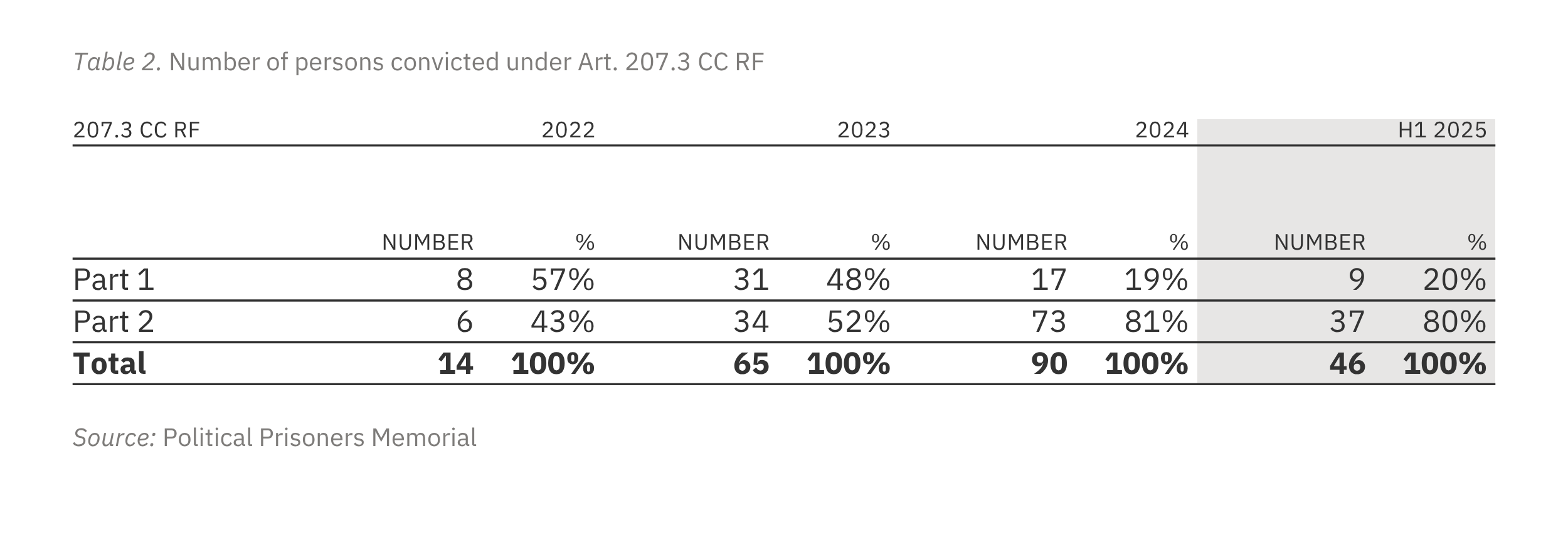
Art. 207.3 CC RF was introduced into the Criminal Code in March 2022, along with Art. 280.3 CC RF on discrediting the armed forces of the Russian Federation. The first part of Art. 207.3 CC RF on ‘fake news’ initially provided for a maximum penalty of three years’ imprisonment, while the second part provided for imprisonment up to 10 years.
Initially, Art. 207.3, Part 1, CC RF was applied no less frequently than Part 2. However, as law enforcement agencies became more familiar with this new tool, they began to make more frequent use of the harsher Part 2. In March 2023, the maximum sentence under Art. 207.3, Part 1, CC RF was increased to five years of imprisonment. Nevertheless, this did not reverse the trend. Use of Part 2 became increasingly prevalent, and today approximately 80% of convictions under Art. 207.3 CC RF are handed down under Part 2. This figure is achieved mainly through the application of Part 2 [e], which provides for a motive of political, ideological, or other hatred or enmity.
This process not only affects the least serious offences within specific articles of the Criminal Code. A similar process is taking place throughout the Criminal Code, where less serious articles are being replaced by harsher ones. The most obvious example is the application of Art. 167 CC RF (intentional destruction or damage to property). In 2022, when arson attacks on military enlistment offices and facilities became widespread, those detained were often charged with this offence, which appeared justified in law, with a maximum penalty of five years’ imprisonment. However, this practice was subsequently almost entirely replaced by the use of far more serious charges under Art. 205 CC RF (terrorist act) and Art. 281 CC RF (sabotage), for which the maximum penalty is life imprisonment.
A similar process is taking place in relation to Art. 275.1 CC RF (collusion with a foreign state). Instead of prosecution under this article, cases are being initiated under the much harsher Art. 275 CC RF (treason). Moreover, numerous cases have been reclassified from an original charge under Art. 275.1 CC RF to one under Art. 275 CC RF.
The phenomenon of ‘reclassification’ is observed primarily in cases where there is no established law enforcement practice, for example, when new articles are introduced into the Criminal Code. However, in some cases, there are grounds to assert that reclassification is the result of a deliberate policy by the authorities to intensify repression and intimidation. It is probable that the refusal to apply Art. 167 CC RF and the classification of nearly all arson cases as either terrorist acts or sabotage has been the result of such a decision.
Increase in the average number of charges
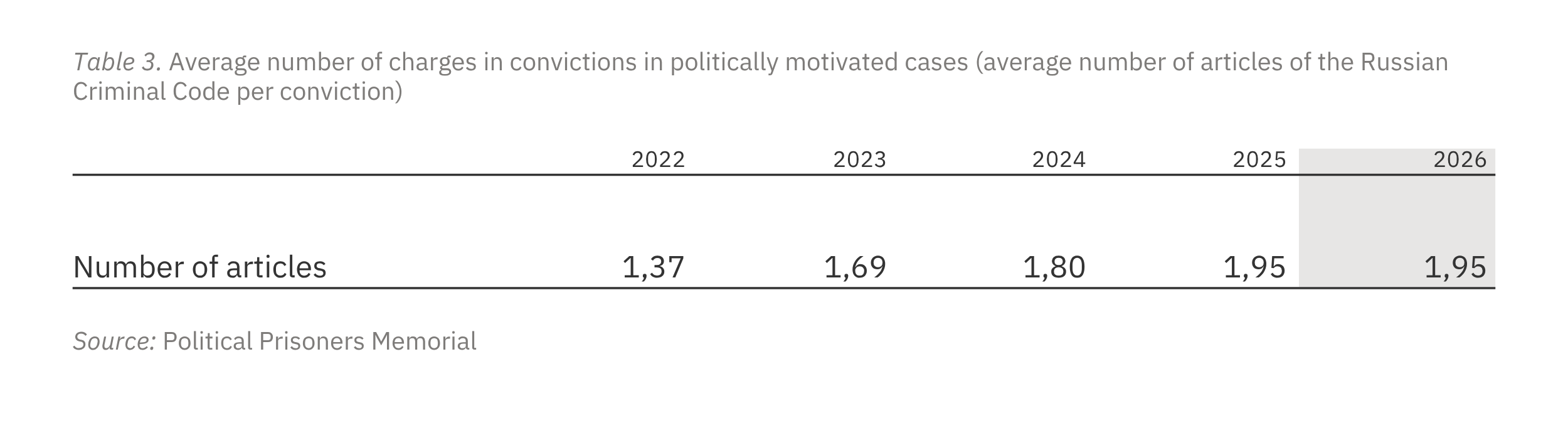
Another change in the practice of politically motivated prosecutions has been a steady increase in the number of sections of the Criminal Code cited in any one case. A greater number of charges leads to cumulative sentencing and, consequently, a harsher sentence. Law enforcement agencies are increasingly bringing a number of charges in relation to a single act.
The nature of repression and its intensification
The most significant factor influencing the nature of politically motivated prosecutions has been the change in the degree of repression. Repression, which reached a new level following the launch of the full-scale war, has not developed linearly. On the contrary, the dynamics and forms of repression have been directly dependent on the changing situation in the country.
The proportion of prosecutions for ‘inappropriate’ statements has fallen slightly. At the same time, the proportion of charges relating to state security, terrorism and sabotage increased significantly. This has led to a substantial increase in the proportion of especially serious charges in politically motivated prosecutions, which, in turn, has resulted in harsher punishments.
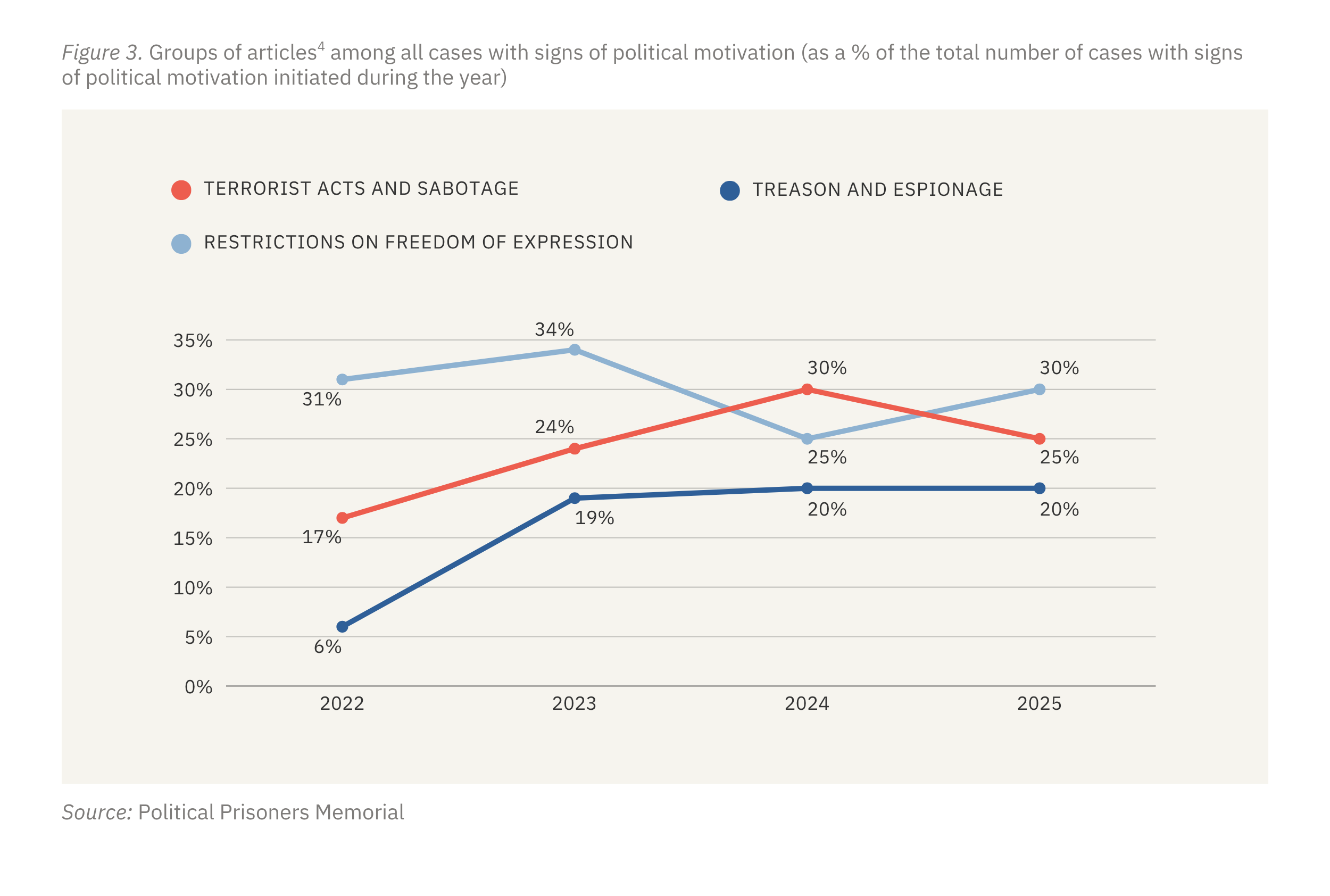
Charges for especially serious offences are used increasingly in political repression. In 2024 and 2025, the percentage of cases in which at least one such charge was present approached 40%.[5]

The reasons for changes in repression are probably related to the threats that are perceived by the authorities as most pressing. Responses to these threats determine the changes in the tools of repression employed.
Threat 1. Anti-war protests
Immediately after the start of the full-scale war, the Russian authorities faced various anti-war protests that included demonstrations, public statements and open letters. The regime perceived these protests as a threat, and its response was to introduce new articles into the Criminal Code, primarily concerning ‘fake news’ and the discrediting of the armed forces, and the launch of a campaign of prosecution for anti-war demonstrations. This legislation became a key part of the first wave of wartime repression in 2022.
The authorities probably assessed these repressive measures as effective, and the level of control achieved as satisfactory. The proportion of charges brought for speech-related offences stabilised and even declined slightly.
Threat 2. Aid to Ukraine and radical actions
Other anti-war actions, including those aimed at supporting Ukraine, some of which were of a radical nature, were less anticipated and were perhaps initially not perceived as of equal danger.
In the first half of 2022, money transfers in support of Ukraine did not generally lead to the initiation of criminal proceedings. In such cases, the FSB often limited itself to preventive interviews.
Arson attacks on military enlistment offices, as mentioned above, were often classified as damage to property, though they were sometimes treated as terrorist acts. The offence of sabotage was initially hardly ever invoked.
While the initial focus of the authorities was on the danger posed by anti-war demonstrations and other protests, it was only later that they came to view various forms of aid to Ukraine as a threat. A policy on how to counter this development was developed over the following months. In July 2022, amendments relating to crimes against national security were introduced into the Criminal Code. In December that year, a group of sabotage offences was introduced into the Criminal Code. Responsibility for countering this threat was given to the FSB.
This has led to a rapid increase in the number of cases investigated by the FSB. Treason charges, as well as charges for terrorism and sabotage, have become more common than prosecutions for ‘inappropriate’ speech.
The level of repression, with the FSB as its main enforcer, has intensified. Radical actions and support for Ukraine are still perceived by the authorities as a key threat, and this trend is unlikely to change until hostilities end. At the same time, it is important to note that the FSB does not merely investigate actual offences, but also actively resorts to sting operations and the fabrication of criminal cases. This is the subject of our report, ‘Fraudsters from the FSB: How Law Enforcement Agencies Fabricate Prosecutions for Terrorism and Treason.’
Threat 3. Independent media
Another threat to the regime of increasing relevance, against the backdrop of a deteriorating socio-economic situation and a protracted unpopular war, is criticism of the authorities from abroad, primarily from the Russian diaspora.
The campaign against independent media and public figures living in exile relies relatively little on criminal prosecution. In most cases, the authorities’ opponents are outside Russian jurisdiction and convictions in absentia are generally unable to silence them. Attempts to sever communication between the diaspora and the domestic public play a major role here, including the blocking of various internet resources. The regime also seeks to make opposition to the authorities as costly as possible in the most literal sense by depriving critics of income from within Russia, restricting their ability to manage their property, and sometimes seizing it.
It is probable that, against the backdrop of the deteriorating situation in the country, this threat will be perceived as increasingly serious. Unable to silence the Russian diaspora, the authorities may decide to target not the producers, but the consumers of ‘undesirable information’ within the country. This issue will become increasingly important, and its impact will depend in part on how effective internet blocking measures prove to be.
Harsher sentences for the same offences
In politically motivated criminal cases, there appears to be a direct trend towards harsher sentences. Despite the inertia of established judicial practice, there are grounds to believe that sentences in politically motivated cases are becoming increasingly severe, even when the same articles of the Criminal Code are applied.
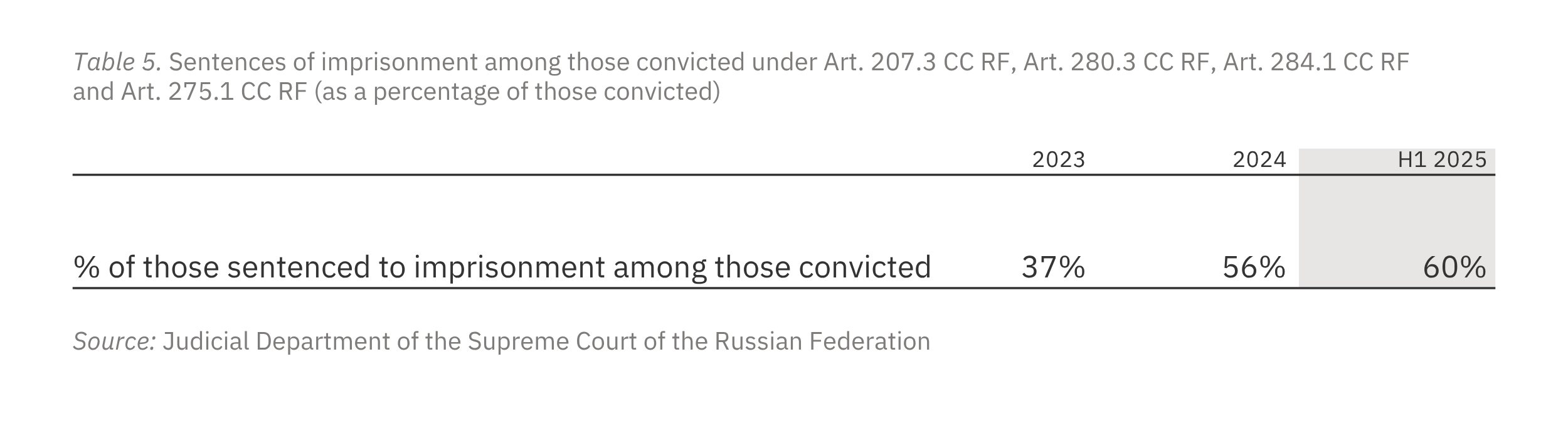
This is evident regarding articles of the Criminal Code that we consider unlawful. Some of the new articles introduced into the Criminal Code after the start of the full-scale war are themselves unlawful, and consequently all prosecutions based on them are politically motivated. These include Art. 207.3 CC RF (dissemination of ‘fake news’ about the Russian armed forces), Art. 280.3 CC RF (discrediting the Russian armed forces), Art. 284.1 CC RF (carrying out the activities of an undesirable foreign organisation), Art. 275.1 CC RF (collusion with a foreign state). This approach allows us to use official sentencing statistics in our analysis. According to data from the Judicial Department of the Supreme Court of the Russian Federation, the proportion of custodial sentences under these articles is steadily increasing.
Data from the ‘Political Prisoners. Memorial’ project on prison terms in politically motivated criminal cases also confirms that, over time, penalties for identical offences have become harsher. Table 6 presents data on the average length of imprisonment for offences for which the highest number of convictions were handed down. Only cases where the defendant was charged with a single article of the Criminal Code were considered.
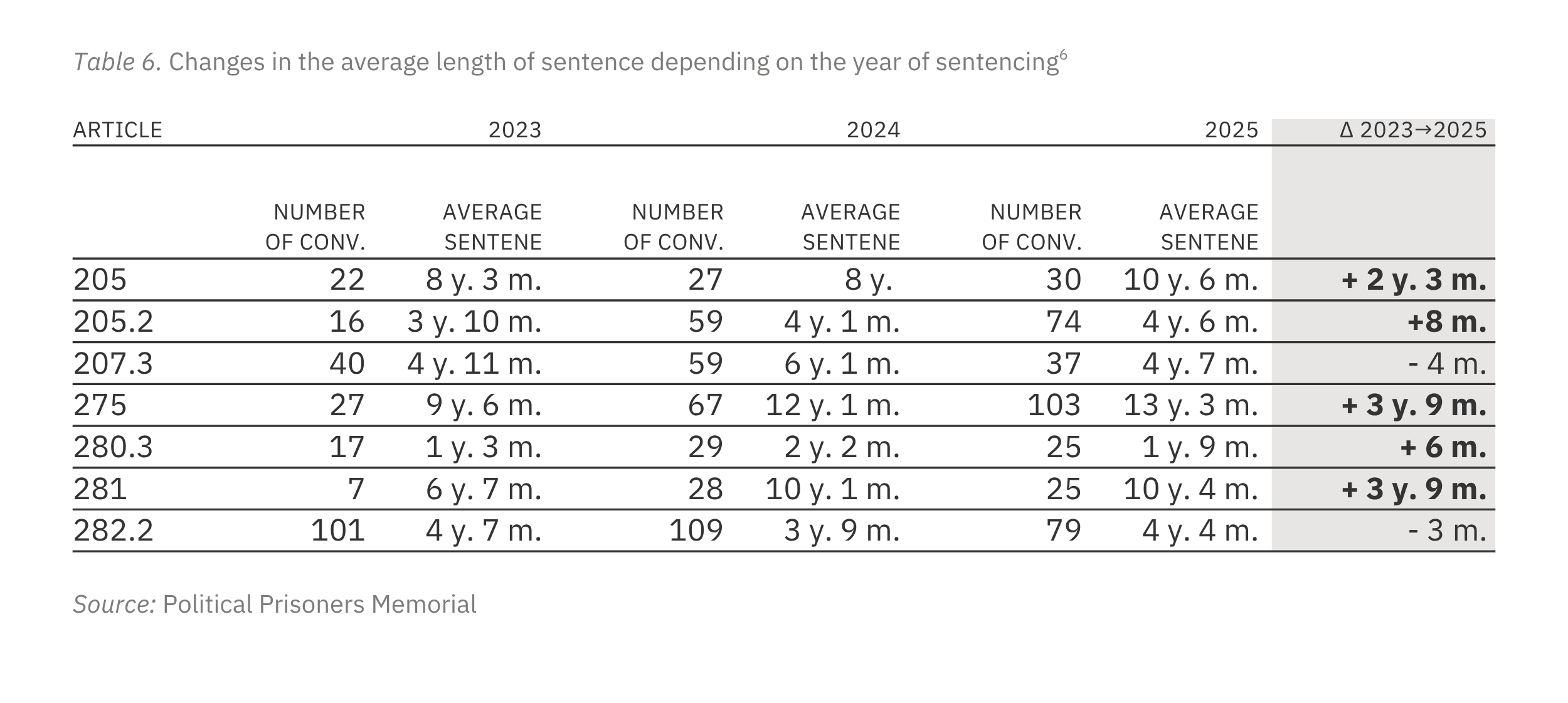
In most instances, there has been an increase in the average length of imprisonment. However, sentences under Art. 207.3 CC RF (dissemination of ‘fake news’ about the armed forces of the Russian Federation) and Art. 282.2 CC RF (organisation of and participation in the activities of an extremist organisation) do not follow the general trend. It should also be noted that the proportion of sentences under Art. 207.3 CC RF involving imprisonment, according to data from the Judicial Department, rose from 14% in 2022 to 76% in the first half of 2025. Offences where those prosecuted were previously sentenced to a fine are now being punished by imprisonment. Under this article, punishments have also been made more severe, although this is not reflected in the average term of imprisonment. In the case of Art. 282.2 CC RF, the use of official statistics is less informative since not all related criminal prosecutions are politically motivated. However, here too there is an increase in sentences involving imprisonment: from 43% in 2022 to 59% in the first half of 2025.
Enemies, not criminals
The last few years, then, have seen an intensification in the level of political repression. This has only partly been a result of formal changes in the law. Changes in law enforcement practice have played a major role in terms of an increase in the severity of charges (a reduction in the use of less serious charges), the application of a greater number of criminal charges, and the increase in severity of punishments for one and the same charge. The authorities’ perception of the threats facing them has changed, which has also made the repression more severe. Overall, repression is a deliberate policy by a regime that feels threatened and is raising the ‘costs’ of disloyalty.
These actions by the authorities starkly highlight political persecution against the backdrop of general law enforcement practice. Overall, in Russia, both the number of convictions and the proportion of convicted persons deprived of liberty are falling. At the same time, politically motivated cases, where sentences have increased manyfold, show that the country’s leadership perceives such ‘crimes’ not merely as a breach of the law, but as a threat to its own power, against which any means are acceptable.

It is important to note that convictions and sentences handed down by the courts are only part of the activities of the repressive machinery of the state, albeit the most visible and officially recorded. Other instruments of repression are more sinister and largely hidden from public view.
There are today large groups of ‘prosecuted’ individuals, regarding whom the provisions of Russian law are, in effect, not applied. In the occupied territories of Ukraine, abductions and detention without charges or procedural status are widespread. Moreover, those abducted are held in appalling conditions and subjected to brutal torture.
Torture against certain groups of prosecuted individuals has effectively been legalised. As we noted in our report ‘Torture in Politically Motivated Criminal Prosecutions’, torture is used not only to build a ‘case’ and extract confessions, but also as a form of punishment. At times, its sole purpose is to make a person suffer. In addition to physical violence, deliberate psychological humiliation has become an integral part of this system, including, for example, the recording of forced confessions and ‘repentance videos.’ Such methods are designed not merely to inflict pain but to symbolically destroy a person’s sense of identity, stripping them of their dignity and agency. The intention is to make the punishment yet harsher, and the ‘price’ of committing ‘political’ crimes as high as possible.
It can be said that the realm of politically motivated repression is turning into a separate, isolated world, where the demonstrative severity of judicial verdicts is combined with extrajudicial violence, the legalisation of torture and, often, complete lawlessness.
[1] The database of criminal cases showing signs of political motivation and illegality (hereinafter: politically motivated criminal cases) from the ‘Political Prisoners. Memorial’ project. Sources of information include court records, press releases by law enforcement agencies, media publications, appeals from those being prosecuted, their relatives and others.
[2] Here and below, data from the ‘Political Prisoners. Memorial’ project database as of 31 May 2026.
[3] Some of the articles introduced into the Criminal Code of the Russian Federation, clearly intended for political repression, are practically never used. For example, our database contains not a single case of prosecution under Art. 284.2 CC RF (‘Calls for sanctions against the Russian Federation’), Art. 284.3 CC RF (‘Assisting in the implementation of decisions by international organizations in which the Russian Federation does not participate’), Art. 330.3 CC RF (‘Conducting activities on the territory of the Russian Federation by a foreign or international non-profit non-governmental organization’).
[4] We divide all the articles of the Russian Criminal Code used in political prosecutions into five categories, namely ‘treason and espionage’, ‘terrorist acts and sabotage’, and ‘restrictions on freedom of expression’. You can find out more about this classification here.
[5] Especially serious offences are those for which the penalty is more than 10 years’ imprisonment.
[6] The data includes convictions for preparation to commit a crime and for attempting to commit a crime.