Full description
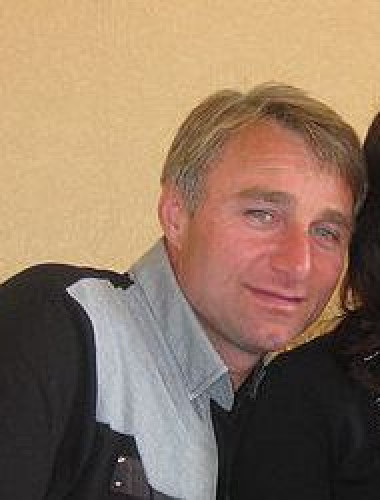
Khalil Kurtamet is a businessman from Novooleksiyivka in the Kherson region, owner of the Ai-Petri Hotel on the Arabat Spit in the northeastern part of the Crimean Peninsula, and head of the Novooleksiyivka religious community. Khalil’s son, 19-year-old Appaz Kurtamet, disappeared in July 2022 while attempting to travel from the occupied part of the Kherson region to Crimea to visit relatives. In October 2022, after several months of illegal detention, Appaz Kurtamet was charged with financing an illegal armed group (Part 1 of Article 208 of the Russian Criminal Code). The criminal case was based on a transfer of 500 hryvnias to a friend, a serviceman in the “Crimea” battalion. In April 2023, a Crimean court sentenced the young man to seven years in prison. Our project has recognized Appaz Kurtamet as a political prisoner. After his son’s disappearance, Khalil Kurtamet organized an active search for him and later continued his efforts to assist Appaz during the investigation and trial. The family appealed to the authorities in Turkey, Ukraine, and Russia to resolve the situation.
The detention of Khalil Kurtamet and his brother Radvan became known in January 2023. According to the Crimean Tatar Resource Center, the brothers were kidnapped on January 8. A month later, on February 8, 2023, Khalil’s release was reported. His legal status during that month, and whether any charges were brought against him, is unknown.
On November 6, 2023, Khalil Kurtamet was again detained and remanded in custody. He was charged with a crime under Part 2 of Article 208 of the Russian Criminal Code (“Participation on the territory of a foreign state in an armed formation not provided for by the legislation of that state, for purposes contrary to the interests of the Russian Federation”).
According to security forces, and unofficial sources, Khalil Kurtamet joined the Noman Çelebidžihan Battalion in 2015. His active involvement in this formation included providing his hotels for Battalion members to stay in. Investigators also believe the businessman “donated money for the establishment of a battalion base in the village of Chonhar in the Kherson region.”
The paucity of information about Khalil Kurtamet’s case is explained by the fact that his trial took place in the occupied territory of the Kherson region. It is likely that on October 16, 2024, the Russian-controlled Henichesk District Court of the Kherson region sentenced Khalil Kurtamet to eight years’ imprisonment in a maximum-security penal colony, with the first year to be served in prison and a subsequent one-year restricted freedom sentence. The sentence was appealed by the defense, but there is no reliable information about the outcome of the appeal.
On December 14, 2023, Khalil Kurtamet was added to the Rosfinmonitoring List of Terrorists and Extremists.
Grounds for Recognizing a Political Prisoner
Context of the Criminal Case
The case of Khalil Kurtamet is the latest in a stream of cases brought under Part 2 of Article 208 of the Russian Criminal Code against citizens allegedly involved in the activities of the Noman Çelebidžihan Battalion. We are aware of more than 35 convictions under this article against real or alleged members of this volunteer organization, for which the defendants are already in prison. It is difficult to say how many such cases have been brought against people currently in Ukrainian-controlled territory. However, there are periodic reports of searches in Crimea of relatives of Ukrainian citizens in criminal cases brought under this article, as well as of Crimean courts issuing in absentia convictions under this article. The overwhelming majority of those arrested and convicted in cases related to the activities of the Noman Çelebidžihan Battalion are Crimean Tatars.
According to the Russian FSB, members of this organization participated in the so-called civilian food blockade of Crimea, which was organized in late 2015 along the border between the peninsula and mainland Ukraine, which was formed after the occupation. Furthermore, in the verdict against one of the defendants, Osman Kadyrov, the court, without citing any sources, asserts that the Battalion possesses various types of weapons and that its goal is “the violent change of the foundations of the constitutional order and the violation of the integrity of the Russian Federation, including through armed struggle aimed at separating the Republic of Crimea from the Russian Federation.” As the only example of such activity, the court cites the blowing up of power transmission towers by its members, which extend to Crimea from other regions of Ukraine (this episode will be discussed in more detail below).
In September 2015, Ukrainian MP Mustafa Dzhemilev, Chairman of the Mejlis of the Crimean Tatar People, Ukrainian MP Refat Chubarov, and Vice President of the World Congress of Crimean Tatars, businessman Lenur Islyamov, announced at a press conference in Kyiv the launch of an initiative to organize a civil blockade of Crimea and put forward political demands to the Russian authorities. These demands included the release of Ukrainian and Crimean Tatar activists detained by Russian authorities, such as Nadiya Savchenko, Oleh Sentsov, Akhtem Chiygoz, Mustafa Degermendzhi, and others; an end to the persecution of Crimean Tatars; the creation of free conditions for Ukrainian media and foreign journalists to work in Crimea; and the lifting of the entry ban on Crimean Tatar leaders.
Simultaneously, Lenur Islyamov announced the creation of the Noman Çelebidžihan Battalion. The ultimate goal of this volunteer organization, according to Islyamov, was to participate in the liberation of Crimea from the Russian invaders. However, initially, the Battalion’s members actively engaged in direct action on the Crimean border to enforce the food blockade.
This blockade began as a civic initiative and consisted of activists preventing freight transport from crossing the “border” created after the seizure of the peninsula and trading with businesses in occupied Crimea. However, on November 23, 2015, Ukrainian President Petro Poroshenko approached the government with a proposal to consider cutting off freight transport and trade with Crimea. That same day, Ukrainian Prime Minister Arseniy Yatsenyuk convened an extraordinary government meeting to discuss energy supplies and food supplies to Crimea. Ultimately, the Ukrainian government temporarily banned freight traffic across the Crimean border.
On December 16, 2015, the Ukrainian government issued a ban on the supply of goods, services, and labor to and from Crimea. The decree did not apply to the supply of goods from Crimea to Ukraine that were strategically important for the economy and national security, subject to approval by the Ministry of Economic Development and Trade, nor to the import of humanitarian aid to Crimea provided by international humanitarian organizations in accordance with the list approved by the Ministry of Social Policy.
Accordingly, the Crimea blockade, as a civic initiative, was implemented for a short period of time from September to December 2015, after which the situation and border crossing rules were regulated by Ukrainian authorities. The Noman Çelebidžihan Battalion gained notoriety precisely for its active participation in the Crimea blockade during this initial stage. Later, members of the Battalion (or rather, the Asker Public Association, created on its basis and officially registered) jointly patrolled the border and checkpoints with the Ukrainian Border Service.
The Battalion was based on the border of mainland Ukraine with Crimea in the village of Chongar. Some sources, primarily Russian
Charges under Part 2 of Article 208 of the Russian Criminal Code and evidence of involvement in the Noman Çelebidžihan Battalion
As already stated, little is known about the criminal case against Khalil Kurtamet. We have no reliable information about how the prosecution proves the businessman’s participation in the Noman Çelebidžihan Battalion. But even if we assume that Kurtamet did provide his hotels for Battalion members to stay in and also provided the organization with funds for its needs, this cannot serve as evidence for the charge under Part 2 of Article 208 of the Russian Criminal Code. Providing aid and assistance to an “illegal armed formation” (even if the Battalion is considered such) does not constitute participation in its activities. Participation in an armed formation is considered complete upon joining the formation in accordance with the established procedure for service. Based on the available information, it is clear that Khalil Kurtamet did not join the Battalion or serve in it.
Furthermore, our experience analyzing such cases demonstrates the generally low level of evidence against charges of participation in the Noman Çelebicihan Battalion. Often, the primary evidence consists of the testimony of “serial” and secret witnesses who provide carbon copies, dubious identifications, and online videos in which none of the convicted individuals have been identified. An example of such a criminal case, about which a little more is known, is that of Lenur Khalilov. Details of this criminal case, as well as other cases involving charges of participation in the Noman Çelebicihan Battalion, can be found on our website. With the growing wave of arrests and convictions, fellow villagers or relatives detained in the newly occupied territories or in Crimea have increasingly begun testifying against each other.
It is worth noting that Khalil Kurtamet and his brother were first detained in January 2023. For a month, Kurtamet was held by Russian security forces without any official status and was released without charge. Such actions by security forces may indicate that they were tasked with finding any basis for criminal prosecution against Kurtamet: after failing to find him the first time, Khalil was released, but they continued to search for a pretext for his official prosecution.
Unfounded application of Article 208 of the Russian Criminal Code to members of the Noman Çelebidžihan Battalion
Regardless of whether Khalil Kurtamet was a member of the Battalion and how exactly he assisted it, we declare the inadmissibility of applying Article 208 of the Russian Criminal Code to him, as well as to all actual or alleged members of this group. We believe that, despite the fact that the Battalion’s creation was not legally established and the volunteer organization was not assigned a military unit number, its activities in Ukraine cannot be considered illegal, since the state, having been aware of this organization’s existence and active activities for a long time, took no measures to stop them. In any case, the formalization of the status of a volunteer battalion operating on Ukrainian territory is an internal matter for that state. Article 208 of the Criminal Code of the Russian Federation provides for punishment for participation in an armed group operating contrary to the laws of the state in which it was formed. This clearly does not apply to the activities of the Noman Çelebidžihan Battalion, whose activities were not only not suppressed by the Ukrainian state but also had a clearly pro-Ukrainian and patriotic character. The investigation provided no evidence of violations of Ukrainian law in the Battalion’s creation and activities.
It is also worth critically examining the prosecution’s assertion that the Noman Çelebicihan Battalion’s activities were aimed at goals contrary to the interests of the Russian Federation. In our view, the annexation of Crimea, as well as Russia’s direct armed intervention in the conflict in eastern Ukraine, clearly contravenes international law and Russia’s obligations, and has had direct negative consequences for many areas of the country’s life. The aggressive actions taken by the Russian Federation leadership against Ukraine have resulted in numerous casualties, war crimes, and crimes against persons and property in the occupied territories. The long-term negative consequences of the criminal decisions of the Russian leadership related to armed aggression against Ukraine since 2014 allow us to characterize these actions as contrary to the interests of the Russian Federation. At the same time, actions to counter the aggressive foreign policy of the current Russian leadership can be viewed as being for its own benefit.
In addition, it is necessary to take into account the fact that the Noman Chelebidzhikhan Battalion was formed by the Crimean Tatars to defend the right to live in their historical homeland in that state, citizens
Other Circumstances
Shortly before Russia’s full-scale invasion of Ukraine, Khalil Kurtamet went to court to defend his property. An unofficial review site for the Kherson Court of Appeals now contains a post from February 15, 2022, which reads: “I, Kurtamet Khalil Apasovich, a sole proprietor and Chairman of the ISLAM Religious Community, was surprised by the Kherson Judicial Panel consisting of:
Ignatenko P.Ya, Polekarpova O.N., Vorontsova L.P.
The panel of judges renders a decision dated February 3, 2022, against me, annulling the decision of the Henichesk District Court, which groundlessly favors bandits who are engaged in corporate raids.
When judges disregard all the supporting evidence I provide as an entrepreneur and taxpayer, who pays taxes on their salaries.
I feel like we’ve returned to the 1990s. Seriously, what kind of justice are we talking about when a panel of judges rules against me on my property, which took me 19 years to acquire?
Why bother studying the law, drafting lawsuits, collecting evidence, and presenting arguments when judges simply cite non-existent, thuggish verbal arguments?
Why was it necessary to hold three court hearings within two months if everything had already been decided…
After such a court decision, I lost faith and trust in the justice system.
I’m attaching a video of the corporate raid as evidence.” (No video was attached to the message.)
We currently do not have access to the Ukrainian court database, so we cannot find any records of court cases involving Kurtamet. However, based on the information we have, it is quite possible that he did write this message.
According to the Crimean Tatar Resource Center, Khalil Kurtamet’s business was confiscated after the occupation of the Kherson region, so it is possible that the criminal prosecution of the Kurtamet family could have been a way to expedite and simplify the seizure of their property.
Illegality of the application of Russian legislation in the occupied territories
The general illegality and groundlessness of the persecution of Crimean Tatars (regardless of whether they are citizens of Ukraine or Russia) under Article 208 of the Russian Criminal Code in connection with accusations of their participation in the Battalion named after Noman Çelebicihan’s actions are exacerbated by the application of the Russian Criminal Code in the occupied territories and the use of Russian-controlled courts established in these territories for repressive purposes.
On October 12, 2022, the UN General Assembly condemned the attempted annexation of the Donetsk, Luhansk, Zaporizhzhia, and Kherson regions of Ukraine. The corresponding resolution was supported by 143 of the 193 UN member states. Only five, including Russia, voted against. Currently, the territories of Ukraine under the effective control of the Russian Federation are considered occupied territories.
This characterization of the situation is consistent with the definition of an occupation regime in international humanitarian law (the Convention Respecting the Laws and Customs of War on Land, adopted in The Hague on 18 October 1907, Regulations Respecting the Laws and Customs of War on Land, Art. 42), as well as the practice of international courts (ICTY, Prosecutor v. Mladen Naletilic and Vinko Martinovic, IT-98-34-T, Trial Chamber, Judgment of: March 31, 2003, para. 217; Armed Activities on the Territory of the Congo (Democratic Republic of the Congo v. Uganda), Judgment, I.C.J. Reports 2005, p. 168, para. 173).
In this regard, Russia, as the occupying power, is obligated to comply with the Geneva Convention relative to the Protection of Civilian Persons in Time of War (hereinafter GC IV), as well as the norms of customary humanitarian law governing the occupation regime, in particular those contained in the Regulations Respecting the Laws and Customs of War on Land.
Under international humanitarian law, Russia is limited in its legislative and administrative powers. According to the provisions of GC IV and customary humanitarian law, the administration of the occupied territory must be carried out by the local authorities in force at the beginning of the occupation, and local courts are authorized to hear cases of criminal violations. Although the occupying power may establish separate bodies and military courts to more effectively administer the territory, it may not, under any circumstances, simply abolish the previously existing system of authorities and replace it with a new one without compelling grounds (GC IV, Article 64).
Likewise, Russia does not have the right to completely repeal the criminal legislation in force at the beginning of the occupation and replace it with its own. Limited legislative powers are granted to the occupying power only for the purpose of amending legislation whose application threatens security or impedes the implementation of international humanitarian law, as well as for the more effective administration of the occupied territory.
Criminal prosecution of Crimean Tatars living in the occupied territories of the Ukrainian
17.09.2025 г.