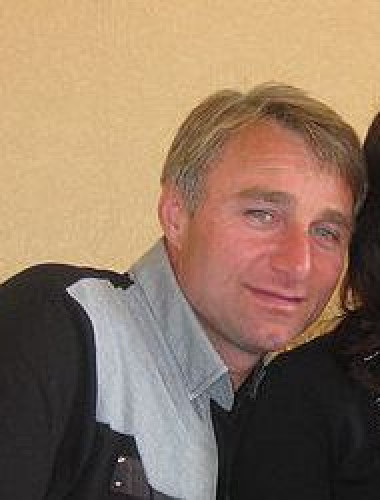
Khalil Kurtamet is a political prisoner
A businessman from Ukraine’s Kherson Oblast has been sentenced to eight years in a strict regime penal colony on a charge of participating in the Noman Çelebicihan Battalion
The ‘Political Prisoners. Memorial’ human rights project, in accordance with international standards, considers Khalil Kurtamet a political prisoner. Kurtamet was convicted of participation in an illegal armed group for allegedly assisting the Noman Çelebicihan Battalion. Kurtamet’s criminal prosecution and conviction violated his right to a fair trial. We demand the immediate release of Khalil Kurtamet and that all criminal charges against him be dropped.
What were the charges against Khalil Kurtamet?
Khalil Kurtamet is an entrepreneur from Novooleksiivka in Ukraine’s Kherson Oblast, an owner of hotels in Crimea and the head of a local religious community. His son, 19-year-old Appaz Kurtamet, was kidnapped by Russian security forces in 2022 and, in 2023, was sentenced to seven years’ imprisonment on a charge of financing an illegal armed group for transferring 500 hryvnia to a friend who was a soldier serving in the Crimea Battalion.
Khalil Kurtamet was detained twice. In January 2023, he and his brother were kidnapped, and he spent a month, before being released, in the hands of security forces without any procedural status or charges being brought against him. On 6 November 2023, he was detained again and accused of participating in an illegal armed group (Article 208, Part 2, of the Criminal Code of the Russian Federation). The investigative authorities claimed that in 2015 Kurtamet had provided accommodation in his hotels for members of the Noman Çelebicihan Battalion and transferred funds for its needs.
On 16 October 2024, a Russian-controlled court in Henichesk sentenced Khalil Kurtamet to eight years’ imprisonment, with the first year to be served in a cell-type prison and the rest in a strict regime penal colony.
Why do we consider Khalil Kurtamet a political prisoner?
Khalil Kurtamet was accused of providing accommodation and funds to activists of the Azov Battalion. Even if that had been the case, this could not be considered ‘participation’ in an armed group. Kurtamet did not join the Battalion nor do military service there.
If Kurtamet had indeed been a member of the Noman Çelebicihan Battalion, this would not constitute a crime. This association was created in September 2015 after the leaders of the Mejlis of the Crimean Tatar people announced a civil blockade of Crimea. The Battalion did not participate in hostilities and was in fact not an armed formation, but a public association.
At the same time, the activities of the Çelebicihan Battalion were not illegal. This is evidenced by the joint border patrols the Battalion conducted with the Ukrainian Border Guard Service. Furthermore, the formal status of a formation operating on the territory of Ukraine is an internal matter for the Ukrainian authorities. At the same time, it is not the activities of the Crimean Tatar association that contradict Russia’s interests, but Russia’s illegal seizure of Ukrainian territories.
The Kurtamet family business was transferred to new owners after the occupation began. We have reason to believe that commercial interests may have been an additional motive for the prosecution of Khalil Kurtamet.
Kurtamet was tried and convicted in the occupied territory of Ukraine under Russian law. This is a gross violation of international humanitarian law.
A detailed description of Khalil Kurtamet’s case and of our position is available on our website.
How can you help?
If you have information as to the detention centre or penal colony where Khalil Kurtamet is being held, please let us know by email: [email protected]
You can donate to help all political prisoners in Russia.