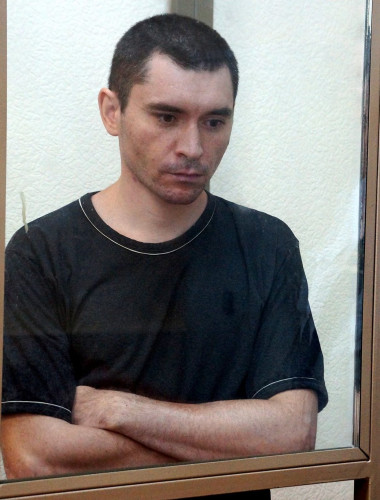
Memorial recognizes Rostov-on-Don resident of left-wing views as political prisoner
Maksim Smyshlyaev, a student by correspondence and a resident of Rostov-on-Don who has
left-wing views, has been charged with an offence under Article 205.1, Part 3, of the Russian
Criminal Code (‘Aiding and abetting preparation of a terrorist act’). He is accused of having
allegedly, in the autumn of 2015, assisted a citizen of Ukraine, Artur Panov, at that time a minor,
in the preparation of a terrorist act that in the upshot did not take place. Maksim Smyshlyaev has
been held on remand since 22 April 2016.
The materials of the case to which we have access demonstrate convincingly that Smyshlyaev is
innocent of having prepared an act of terrorism. The criminal investigation has no evidence that
Smyshlyaev perceived his communications with the seventeen-year-old teenager as a preparation
for acts of terrorism, and searches revealed no banned objects (weapons, explosive substances or
parts of a short-barrelled sniper’s rifle). In practice, the investigation has relied exclusively on
the fact that Smyshlyaev and Panov had been in communication, initiated by the latter when he
proposed that Smyshlyaev take part in illegal activity.
Panov, on the basis of his behaviour in proposing to people he knew but little that they take part
in terrorist activity, publicly declaring himself to be the successor to the activity of the German
radical left-wing organization Red Army Faction that was dissolved in 1998, being a minor at the
time of his communication with Smyshlyaev and other people of oppositionist views in the
Southern Federal District, and having been previously convicted in Ukraine on charges of giving
a false warning about an explosion, evidently could not be treated seriously by his interlocutors.
The investigation is clearly trying to link Panov with left-wing activists in the south of Russia in
order to make it possible to talk of the existence of links between Russian oppositionists and
Ukrainian radical groups.
Recognition of an individual as a political prisoner, or of a prosecution as politically motivated,
does not mean that the Memorial Human Rights Centre shares or approves of an individual’s
views, statements or actions.
For more information about this case, please see here.