Urdash Abdullaev, Zurab Dzhabrailov, Parviz Zeynalov, Mukazhan Ksyupov and Yevgeny Tarasov are political prisoners
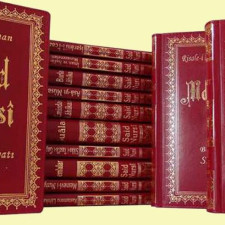
Five Muslims have been convicted of extremist activities and sent to penal colonies for studying the books of theologian Said Nursi in Moscow
The ‘Political Prisoners. Memorial’ human rights project, in accordance with international standards, considers Urdash Abdullaev, Zurab Dzhabrailov, Parviz Zeynalov, Mukazhan Ksyupov, and Yevgeny Tarasov political prisoners. The five Muslims were convicted of organising and participating in the activities of an extremist organisation for holding religious gatherings and studying the books of theologian Said Nursi. Their criminal prosecution and conviction violated their rights to freedom of conscience, expression, peaceful assembly and fair trial. We demand the immediate release of Abdullaev, Dzhabrailov, Zeynalov, Ksyupov, and Tarasov and that all criminal charges against them be dropped.
What were the charges in the latest Nurcular prosecutions in Moscow?
In 2008, the Supreme Court of the Russian Federation designated the ‘international religious association Nurcular’ an extremist organisation. According to the prosecution, in 2017 Yevgeny Tarasov created a cell of supporters of this association in Moscow. Along with Mukazhan Ksyupov, Parviz Zeynalov and Urdash Abdullaev, Tarasov organised meetings in rented apartments — home ‘madrasas’ — to study the works of Islamic philosopher Said Nursi. Ilmir Abdullin and Nikolay Nesterovich also participated in these meetings. On 5 October 2021, searches of the homes of all six men were conducted, during which books by Nursi, computer equipment and electronic media were seized. Weapons and self-defence equipment were also found, for which the individuals had licences. The six Muslims were detained and remanded in custody.
The Russian Prosecutor General’s Office describes Nurcular as a ‘clearly structured’ organisation that spreads Islamic and Turkish political influence in the world with the aim of creating a ‘universal Islamic state (caliphate).’ According to investigators, the aim of the madrasa was to ‘gradually transform the personalities’ of its students and change their worldview in accordance with the ideology of Said Nursi.
On 27 June 2023, the court found Tarasov, Ksyupov, Zeynalov and Abdullaev guilty of organising the activities of an extremist organisation (Article 282.2, Part 1, of the Russian Criminal Code). Tarasov was sentenced to six and a half years in a general regime penal colony, while Ksyupov, Zeynalov and Abdullaev were each sentenced to six years. Abdullin and Nesterovich were found guilty of participating in extremist activities (Article 282.2, Part 2) and sentenced to two years and seven months. They were released in the courtroom, with the time spent on remand being counted towards their sentence.
Later, in a separate criminal trial, Zurab Dzhabrailov and Dzheykhun Rustamov, who had been detained and remanded in custody in August 2023, were also convicted. According to the Investigative Committee, the two men had held religious meetings in apartments in Moscow in 2020–2022 at which they also read and discussed Nursi’s banned books. On 10 July 2024, Dzhabrailov was sentenced to six years in a general regime penal colony (under Article 282.2, Part 1) and Rustamov was sentenced to two years and nine months (under Article 282.2, Part 2).
None of the defendants in either criminal case admitted their guilt.
Why do we consider the five Muslims political prisoners?
The court found the Muslims guilty of studying Said Nursi’s books, which are banned in Russia, thereby ‘continuing and resuming’ the activities of the extremist organisation Nurcular.
This is one of a series of criminal cases against this de facto non-existent organisation. The Russian authorities consider Muslims who study books from the Risale-i Nur (Treatises of Light) series by Turkish theologian Said Nursi, who died in 1960, as members of Nurcular and prosecute them.
In reality, there is only an essentially apolitical community of people who consider themselves followers of Nursi’s teachings, communicate with each other, and hold joint book readings. No evidence of the existence of Nurcular as a structured organisation has been provided to date.
In 2007, 14 translations of Nursi’s books were banned by a decision of the Koptevo district court in Moscow. We consider this ban unjustified. A number of the arguments put forward in the evaluation by experts, on which the court based its decision, are absurd. For example, in the literature, the experts claimed to find condemnation of sinners (and even self-condemnation by the repentant) and intimidation of atheists with punishment after death, and on this basis concluded that the texts were extremist and promote religious discord.
Nursi’s books contain no calls for violence or terrorism and no hate speech. This has been stated by the Council of Muftis of Russia, the Central Spiritual Administration of Muslims of Russia, the Sova Research Centre, the European Court of Human Rights and the US Commission on International Religious Freedom.
The defendants were charged solely with reading and distributing Nursi’s books, conducting religious lessons, discussing what they read, and praying together. None of them was charged with violence or causing harm to anyone. Prosecution of this kind is in violation of basic human rights and is politically motivated.
A detailed description of the cases of Urdash Abdullaev, Zurab Dzhabrailov, Parviz Zeynalov, Mukazhan Ksyupov and Yevgeny Tarasov and of our position is available on our website.
Recognition of an individual as a political prisoner does not imply the ‘Political Prisoners. Memorial’ human rights project agrees with, or approves, their views, statements, or actions.
How can you help?
You can write to them at the following addresses:
RU: 446394, Самарская область, Красноярский р-н, пгт. Волжский, ул. Заводская, д. 46, ФКУ ИК-10 УФСИН России по Самарской области, Абдуллаев Урдаш Зубайруевич, 1982 г. р.
EN: Abdullaev Urdash Zubayruevich (born 1982), Penal Colony No. 10, Federal Penitentiary Service for Samara Oblast, 46 Ulitsa Zavodskaya, Volzhsky settlement, Krasnoyarsky district, Samara Oblast, 446394, Russia.
RU: 460026, г. Оренбург, пер. Крымский, д. 119, ФКУ ИК-1 УФСИН России по Оренбургской области, Зейналов Парвиз Октай оглы, 1973 г. р.
EN: Zeynalov Parviz Oktay ogly (born 1973), Penal Colony No. 1 Federal Penitentiary Service for Orenburg Oblast, 119 Pereulok Krymsky, Orenburg, 460026, Russia.
RU: 634031, г. Томск, ул. Д. Бедного, 18/2, ФКУ ИК-3 УФСИН России по Томской области, Ксюпов Мукажан Газизович, 1969 г. р.
EN: Ksyupov Mukazhan Gazizovich (born 1969), Penal Colony No. 3, Federal Penitentiary Service for Tomsk Oblast, 18/2 Ulitsa Demyana Bednogo, Tomsk, 634031, Russia.
You can also send an email using ZT (for payment with all bank cards) and Memorial-France (free of charge).
Please note that letters in languages other than Russian are highly unlikely to reach the intended recipient.
If you have information about the location of Zurab Dzhabrailov and Yevgeny Tarasov, please contact our Telegram bot or email us at [email protected].
You can donate to help all political prisoners in Russia.