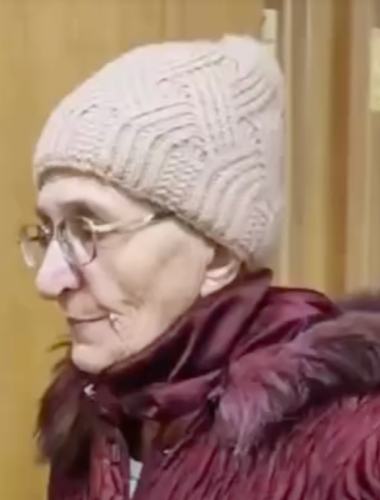
Pensioner whose symptoms of dementia are worsening has her sentence increased for donating to the Ukrainian army
Halyna Bekhter, a 68-year-old resident of the Russian-occupied part of Ukraine’s Zaporizhzhia Oblast, has had her sentence increased from eleven to twelve and a half years, SOTAvision reports.
The sentence was appealed by the prosecution, which had sought sixteen years. The First Court of Appeal of General Jurisdiction agreed that a harsher sentence was warranted, though it applied a smaller increase than the prosecution had requested, citing the commission of the offence during a period of mobilisation or in conditions of armed conflict as an aggravating circumstance.
Halyna Bekhter is being held at Simferopol Remand Prison No. 1. In May, it emerged that her dementia symptoms are believed to be worsening. She is no longer able to correspond with others, periodically stops communicating with those around her, and is losing the ability to care for herself. She has also been refusing food, and her cellmates make considerable efforts to feed her. Her weight is critically low. According to eyewitnesses, her condition deteriorated sharply after her imprisonment, as recently as the summer of 2025, no signs of dementia were apparent.
Halyna Bekhter was born in the village of Plodorodne in Ukraine’s Zaporizhzhia Oblast and lived there until her arrest. According to a record from the appellate court, she has been deprived of her liberty since the summer of 2025 (either 29 June or 29 July). The treason charge brought against her under Article 275 of the Russian Criminal Code indicates that she was compelled to accept Russian citizenship. The charges stemmed from a donation to the Ukrainian army equivalent to 1,240 roubles and 76 kopecks (≈€14). She was sentenced on 5 March.