
The five people accused of involvement in Aleksei Navalny’s ‘extremist organisations’ are political prisoners
Alina Olekhnovich, Ivan Trofimov, Aleksei Malyarevsky, Artemiy Perevozchikov, and Sergei Streknev have been arrested in the case of their connection with Navalny’s Headquarters and the Anti-Corruption Foundation
The ‘Political Prisoners. Memorial’ human rights project, in accordance with international standards, considers Alina Olekhnovich, Ivan Trofimov, Aleksei Malyarevsky, Artemy Perevozchikov, and Sergei Streknev political prisoners. They are being prosecuted under the article on participation in an extremist organisation for their support of opposition leader Aleksei Navalny. The criminal prosecution violates their rights to freedom of expression, association, and fair trial.
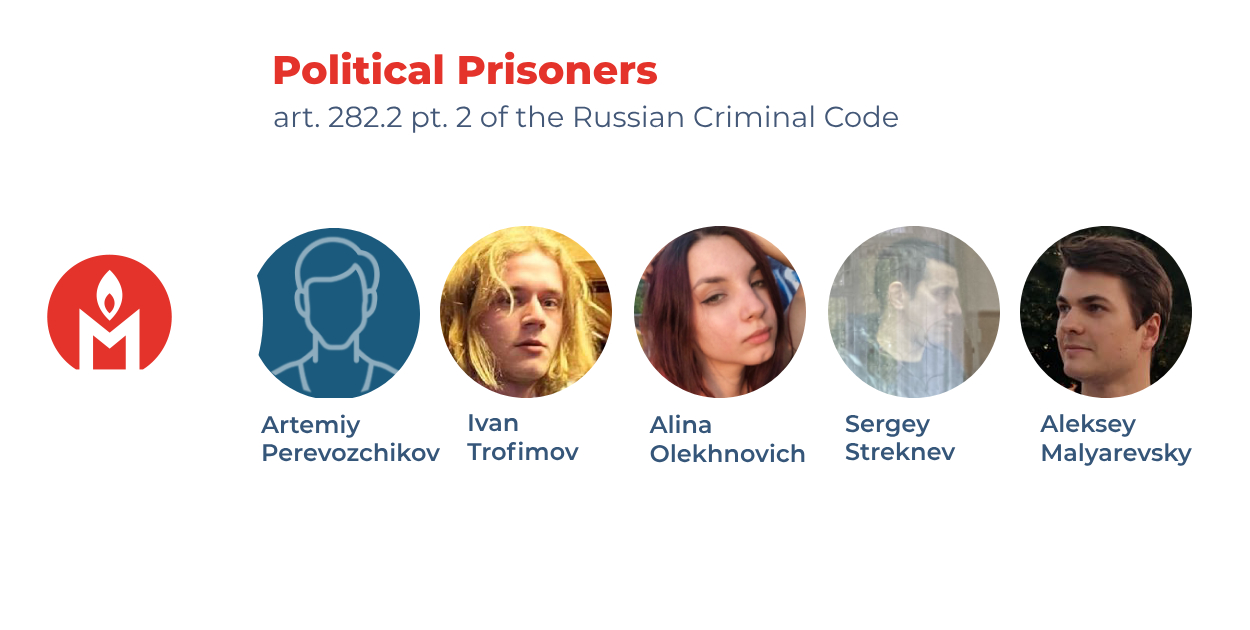
We demand the immediate release of Alina Olekhnovich, Ivan Trofimov, Aleksei Malyarevsky, Artemy Perevozchikov, and Sergei Streknev, and an end to their criminal prosecution.
What is the case of the involvement in Aleksei Navalny’s ‘extremist organisations’?
On 9 June 2021, the Moscow City Court ruled to recognise the organisations of Russian opposition leader Aleksei Navalny as extremist ones. The Anti-Corruption Foundation, Foundation for Defence of Citizens’ Rights and Navalny’s Headquarters were banned.
It was this court ruling that laid the groundwork for the criminal prosecution of 22-year-old Alina Olekhnovich and Ivan Trofimov studying design at the Higher School of Economics in Moscow, 28-year-old Aleksei Malyarevsky from Rostov-on-Don, 19-year-old student Artemy Perevozchikov from Udmurtia, and 40-year-old smelter worker Sergei Streknev from Yaroslavl Oblast.
All they have in common is that security service officers have considered them to be involved in Navalny’s organisations and charged under the article on participation in an extremist organisation (Article 282.2, Part 2, of the Russian Criminal Code).
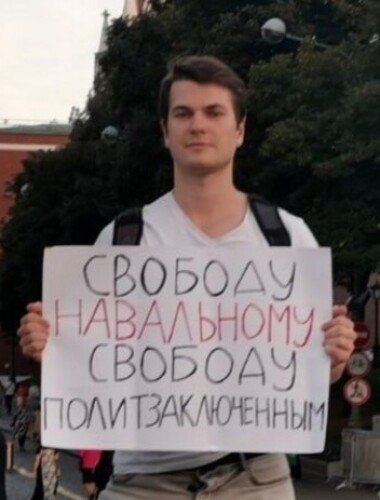
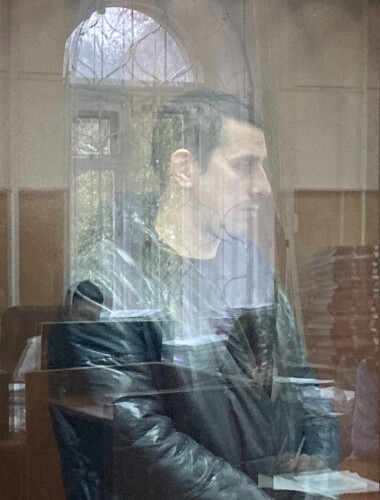
On 23 October 2023, Malyarevsky was arrested in Moscow for putting up posters condemning Navalny’s sentence. Perevozchikov was arrested on 23 March for inscriptions ‘Freedom to Navalny!’ and ‘No to war!’. Streknev was arrested on 8 June for writing ‘Freedom to political prisoners!’ at a bus stop. We do not know what exactly Olekhnovich and Trofimov were detained for as investigators have concealed information on their criminal case.
Each of them is facing up to 6 years in prison.
Why do we consider Olekhnovich, Trofimov, Malyarevsky, Perevozchikov, and Streknev political prisoners?
The analysis of the publicly available material, which formed the basis of the Moscow City Court’s decision to recognise Aleksei Navalny’s organisations as extremist ones, allows us to say with certainty that the court’s decision is politically motivated and illegal.
Firstly, no evidence of the real extremist activities of these organisations was presented. Administrative and criminal cases against Navalny’s individual colleagues are not evidence of the extremist activities of Navalny’s organisations.
Secondly, regular inspections of Navalny’s organisations did not reveal any sign of extremism, but the court referred to these inspections as if they had documented evidence of extremist activity.
Nevertheless, the Moscow City Court’s decision to recognise Navalny’s organisations as extremist ones has enabled a big repressive campaign against dissidents in Russia.
Although we do not currently have the full details on the charges against Olekhnovich, Trofimov, Malyarevsky, Perevozchikov, and Streknev, we believe that they are being unlawfully prosecuted for engaging in ordinary political activities.
Further information about this case and the position of the ‘Political Prisoners. Memorial’ human rights project is available on our website.
Recognition of an individual as a political prisoner does not imply the ‘Political Prisoners. Memorial’ human rights project agrees with or approves of their views, statements, or actions.
How can you help?
You can write a letter at the following letter:
In Russian: 109383, г. Москва, ул. Шоссейная, д. 92, ФКУ СИЗО-6 УФСИН России по г. Москве, Олехнович Алине Александровне, 2001 г. р.
125130, г. Москва, ул. Выборгская, д. 20, ФКУ СИЗО-5 УФСИН России по г. Москве:
Трофимову Ивану Вячеславовичу, 2001 г. р.
Маляревскому Алексею Сергеевичу, 1995 г. р.
Перевозчикову Артемию Ивановичу, 2003 г. р.
152919, Ярославская область, г. Рыбинск, Шоссейный пер., д. 5, ФКУ СИЗО-2 УФСИН России по Ярославской области, Стрекневу Сергею Александровичу, 1981 г. р.
In English: Alina Aleksandrovna Olekhnovich (born 2001), Remand Prison No. 6, Russian Federal Penitentiary Service for Moscow, 92 Shosseynaya Street, Moscow 109383, Russia
Ivan Vyacheslavovich Trofimov (born 2001),
Aleksei Sergeevich Malyarevsky (born 1995),
Perevozchikov Artemy Ivanovich (born 2003),
Remand Prison No. 5, Russian Federal Penitentiary Service for Moscow, 20 Vyborgskaya Street, Moscow 125130, Russia
Sergei Aleksandrovich Streknev (born 1981), Remand Prison No. 2, Russian Federal Penitentiary Service for Yaroslavl region, 5 Shosseyny Pereulok, Rybinsk 152919, Russia
Or you can send an electronic letter using the F-Pismo or Zonatelecom services; or, for payment using foreign bank cards, the PrisonMail service.
You can donate to support all political prisoners on our website.