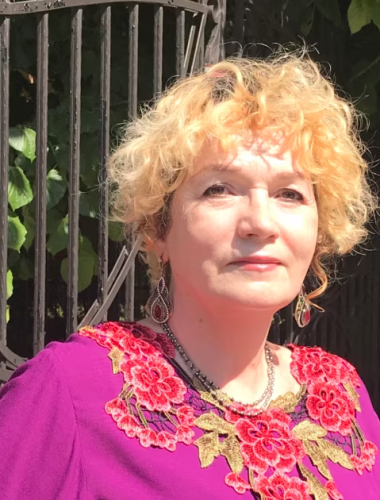
When the defence itself becomes a battleground: the case of Maria Bonzler
Maria Bonzler, a lawyer who is herself on trial, has appealed to the Kaliningrad legal community not to accept appointment as her court-appointed defence lawyer.
Her appeal comes after the court removed two of the lawyers she had chosen herself. Maria Bonzler argues that her lawyers were removed unlawfully and says she will not accept a court-appointed lawyer against her wishes.
The charges
Maria Bonzler is being prosecuted in connection with her professional activities as a lawyer.
According to Maria Bonzler, she communicated with a person calling himself Diyachuk, who presented himself as a relative of Ivan Kveselevich, a man sentenced in April 2025 to two and a half years in a general-regime penal colony for confidential cooperation with a foreign state. Investigators allege that Maria believed Diyachuk was an employee of the Security Service of Ukraine (SBU) and passed him information on that basis.
Maria Bonzler rejects the allegations. She says:
‘Colleagues, I am being arbitrarily prosecuted for my lawful legal activity, accused of allegedly passing on information from criminal cases that had previously been disclosed in open court hearings.’
Her defence argues that the man presenting himself as Diyachuk may in fact have been an officer of the Federal Security Service (FSB) conducting an entrapment operation. According to the defence, he posed as Ivan Kveselevich’s relative so that any communication could later be presented as deliberate cooperation with Ukrainian intelligence.
Why were her lawyers removed?
Maria Bonzler chose three lawyers to represent her: Ilya Sidorov, Alexander Chausov, and Roman Morozov.
The court has invoked state secrets in the case. Defence lawyers have been required to obtain security clearance or, in Chausov’s case, to sign a non-disclosure undertaking.
Ilya Sidorov and Alexander Chausov argued that neither intended to examine material classified as state secrets. Maria Bonzler agreed with this approach.
On 27 July, Ilya Sidorov was removed after refusing to obtain security clearance. Lawyers granted such clearance may subsequently be barred from leaving Russia. In Sidorov’s case, the court rejected their arguments, citing the need to protect Maria Bonzler’s rights.
On 6 August, Alexander Chausov was removed after refusing to sign a non-disclosure undertaking relating to state secrets. He likewise maintained that he had no intention of examining classified material.
Roman Morozov remains on the defence team for now.
Why is Maria Bonzler refusing a court-appointed lawyer?
Following the removal of two of her chosen lawyers, the court began considering appointing a lawyer to represent her.
Maria Bonzler has asked lawyers in Kaliningrad not to accept such an appointment. She writes:
‘I am consciously, voluntarily and of my own initiative refusing any court-appointed lawyers, because our positions cannot align, and I have retained defence lawyers who have been unlawfully removed by the court. Therefore, I categorically do not consent to the court appointing a lawyer against my will and legitimate interests.’
The Kaliningrad Regional Bar Association has also clarified that a non-disclosure undertaking should specify exactly what information cannot be disclosed and for how long. If such an undertaking is drafted in abstract terms, a lawyer is entitled to refuse to sign it.
Maria Bonzler maintains that there are no materials in her case that should have been classified in the first place.
A closed trial
According to a correspondent from Novaya Gazeta, the proceedings are being conducted under an unusually restrictive regime.
‘The proceedings are conducted under a special regime. Armed and taciturn personnel stand guard in and around the courtroom. The judge personally controls the presence of members of the public and journalists not only in the courtroom but throughout the building. Security at the entrance has been tightened. Every visit is individually approved by the judge.’
Why this matters
Maria Bonzler’s case is not only about the criminal charges against her.
It has also become a dispute over who has the right to choose her defence and under what conditions lawyers can defend anyone in cases involving state secrets.
The lawyers who refused to sign did so for a reason. The non-disclosure undertaking does not specify what information cannot be disclosed, or for how long. Signing it means agreeing to keep secret something that has never been defined. Any public comment — in court, to a journalist, in a complaint to an international body — could later be deemed a breach. The Kaliningrad Regional Bar Association has itself confirmed that a lawyer is entitled to refuse to sign an undertaking drafted in such abstract terms.
The consequences of signing go further. Lawyers granted security clearance may be barred from leaving Russia. Their ability to pursue international avenues — filing complaints with international human rights bodies, communicating with foreign colleagues — becomes legally precarious when the substance of the case cannot be discussed.
This creates a mechanism that is, in effect, a form of coercion: either your lawyers operate under constant threat of prosecution, or you have no lawyers at all. Maria Bonzler’s own case, a lawyer prosecuted for allegedly disclosing information that had already been made public in open court, illustrates precisely what that threat looks like in practice. Her lawyers have every reason to take it seriously.
For Maria Bonzler, the question is no longer only whether she will receive a fair trial, but whether she will be allowed to decide who defends her and whether those defenders can do their work without becoming the next defendants.