
Key Findings
- Russia’s unchanging level of repression: 500 prosecutions per quarter, among which the proportion of individuals deprived of liberty remains stable. The level of repression in Russia (within the country’s internationally recognized borders) remains stable. About 500 people are subjected to politically motivated prosecutions each quarter. This trend persisted throughout 2025 and remains unchanged in the first quarter of 2026. The proportion of those deprived of liberty also remains unchanged. The Russian authorities, it seems, view the current level of repression as optimal.
- Intensified persecution of Jehovah’s Witnesses. From the start of 2026, repression against Jehovah’s Witnesses intensified. New criminal prosecutions of groups of individuals were recorded in several regions of the country.
- The occupied territories: a statistical fluctuation or a new trend? In 2025, a steady increase in political repression was recorded in the occupied territories of Ukraine, while the gap between the level of repression in Russia and that in the occupied territories grew. However, in the first quarter of 2026, a new trend was observed with a significant decline in the number of new criminal cases in the occupied territories. Whether this is a temporary fluctuation or a sign of some change in the policy of repression remains unclear.
- Ukrainian prisoners of war: the ‘Kursk factor’ is no longer significant, but the scale of prosecutions continues to grow. In 2025 the campaign to prosecute Ukrainian armed forces personnel captured in Kursk Oblast had a major impact on the dynamics of repression. While in the first quarter of 2026 this campaign has been wound down, the number of criminal cases against other Ukrainian military personnel continues to rise.
- A pause in the further development of the legislative framework for repression. In the first quarter of 2026, there were no significant changes in repressive legislation.
How this report was prepared
This, our latest quarterly report on political repression, covers the first quarter of 2026.
The report draws on the database of criminal prosecutions that have signs of political motivation and illegality (hereinafter: politically motivated criminal prosecutions) drawn up by our project, ‘Political Prisoners. Memorial.’ Our sources include court records, press releases by law enforcement agencies, media publications, appeals from defendants in criminal cases or their relatives. The data is current as of 1 April 2026.
In this report, we assign criminal prosecutions to a particular quarter based on the date they were added to our database. Typically, we learn about new criminal proceedings sometime after they were initiated. This delay is often a matter of days, sometimes weeks, and less frequently spans a longer period.
Consequently, not all prosecutions attributed to a specific quarter were actually initiated during that period; some began earlier. Our approach, therefore, reflects the ongoing reality of repression, but with some delay. At the same time, this approach, applied consistently, enables us to describe the situation as fully as possible.
Data for the same period may vary slightly across different quarterly reports. This is as a result of new information received about individual prosecutions, as well as possible adjustments made to the methodology used in calculating certain indicators.
Overall scale of repression
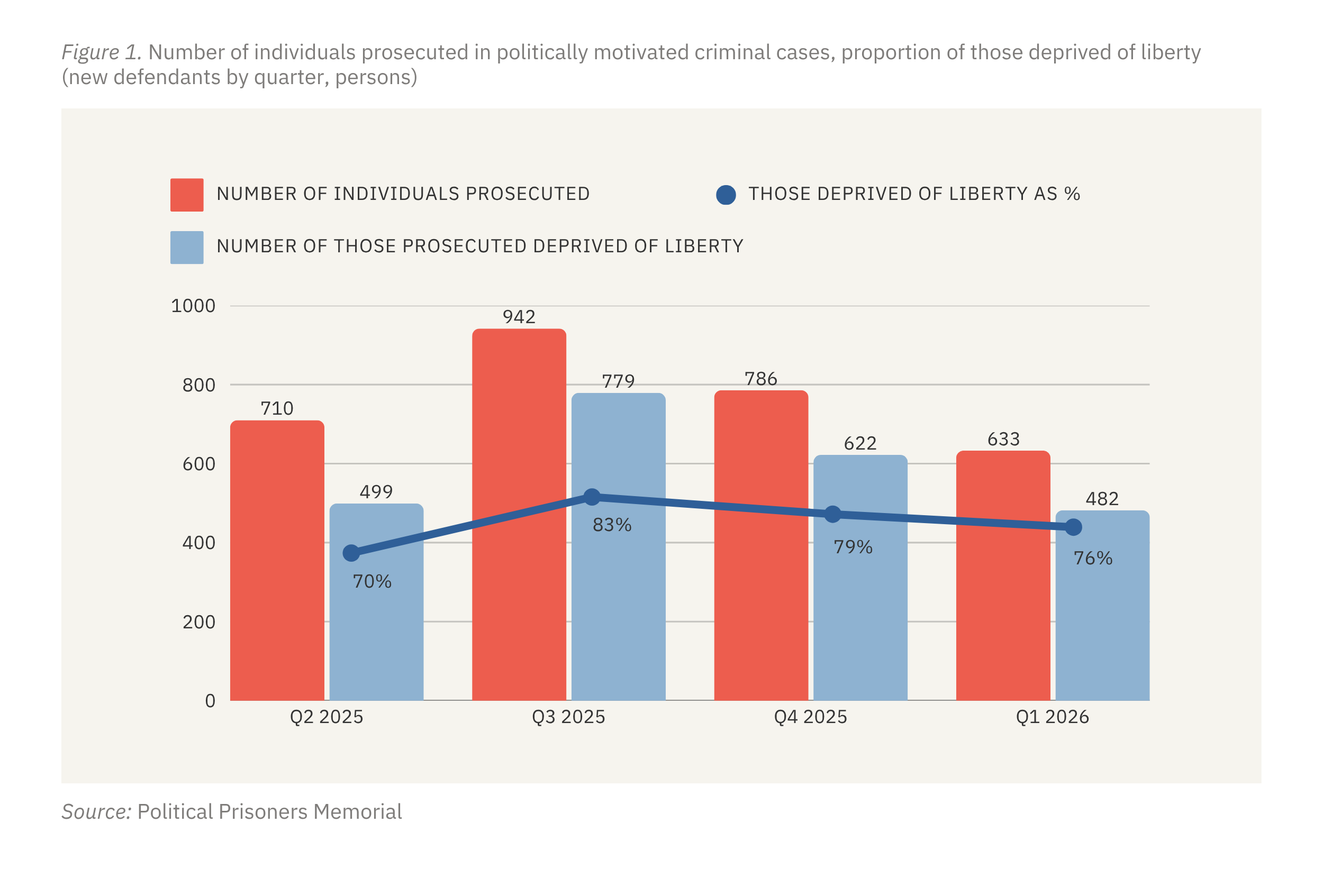
The first quarter of 2026 showed a slight decrease in the number of newly recorded politically motivated prosecutions. This is likely a result of two factors.
First, the campaign to prosecute Ukrainian soldiers captured in Kursk Oblast had a significant impact on the total number of politically motivated criminal cases in 2025. These prosecutions peaked in the third quarter and at that time had a major impact on the overall statistics of repression. Currently, this factor has practically ceased to influence the statistics on politically motivated prosecutions. This is discussed in more detail below.
Moreover, the smaller number of prosecutions reported in the first quarter of 2026 is also likely a reflection of the impact of the long New Year holidays, a period when law enforcement agencies reported less frequently on new criminal cases.
The proportion of individuals deprived of liberty as a result of prosecution declined somewhat during the last quarter of 2025 and the first quarter of 2026, but remains higher than it was in the first half of 2025. This indicator peaked in the third quarter of 2025 and was likewise related to criminal prosecutions of Ukrainian prisoners of war. It is worth noting, however, that the proportion of individuals prosecuted who have been deprived of liberty is slightly higher than we have recorded. We lack information about some of the prosecutions.
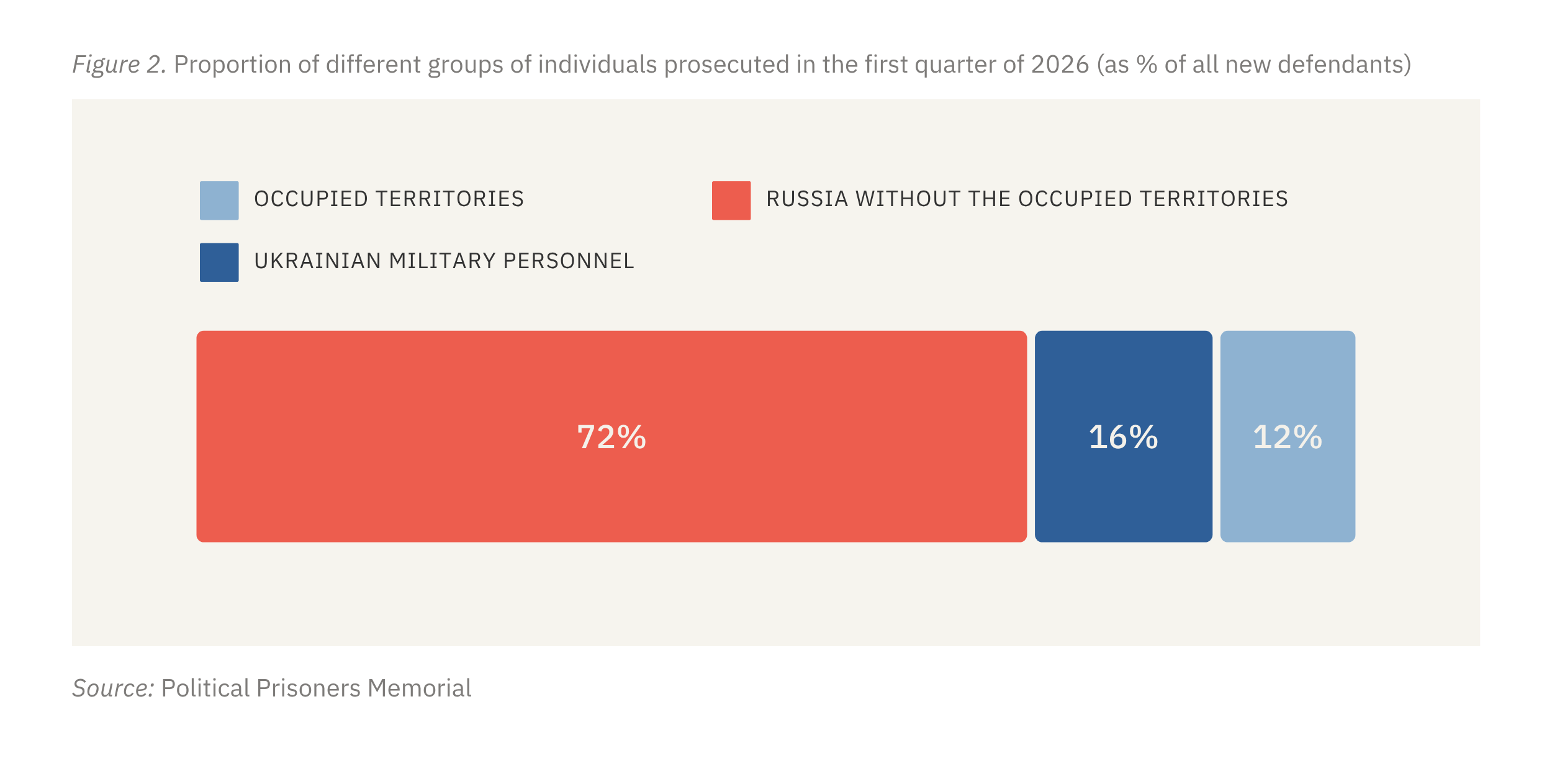
In this report, as usual, we divide politically motivated criminal prosecutions into three separate groups:
- cases initiated in Russia (within Russia’s internationally recognized borders);
- cases initiated in the occupied territories of Ukraine;
- cases initiated against Ukrainian military personnel.
Within Russia: a stable level of repression
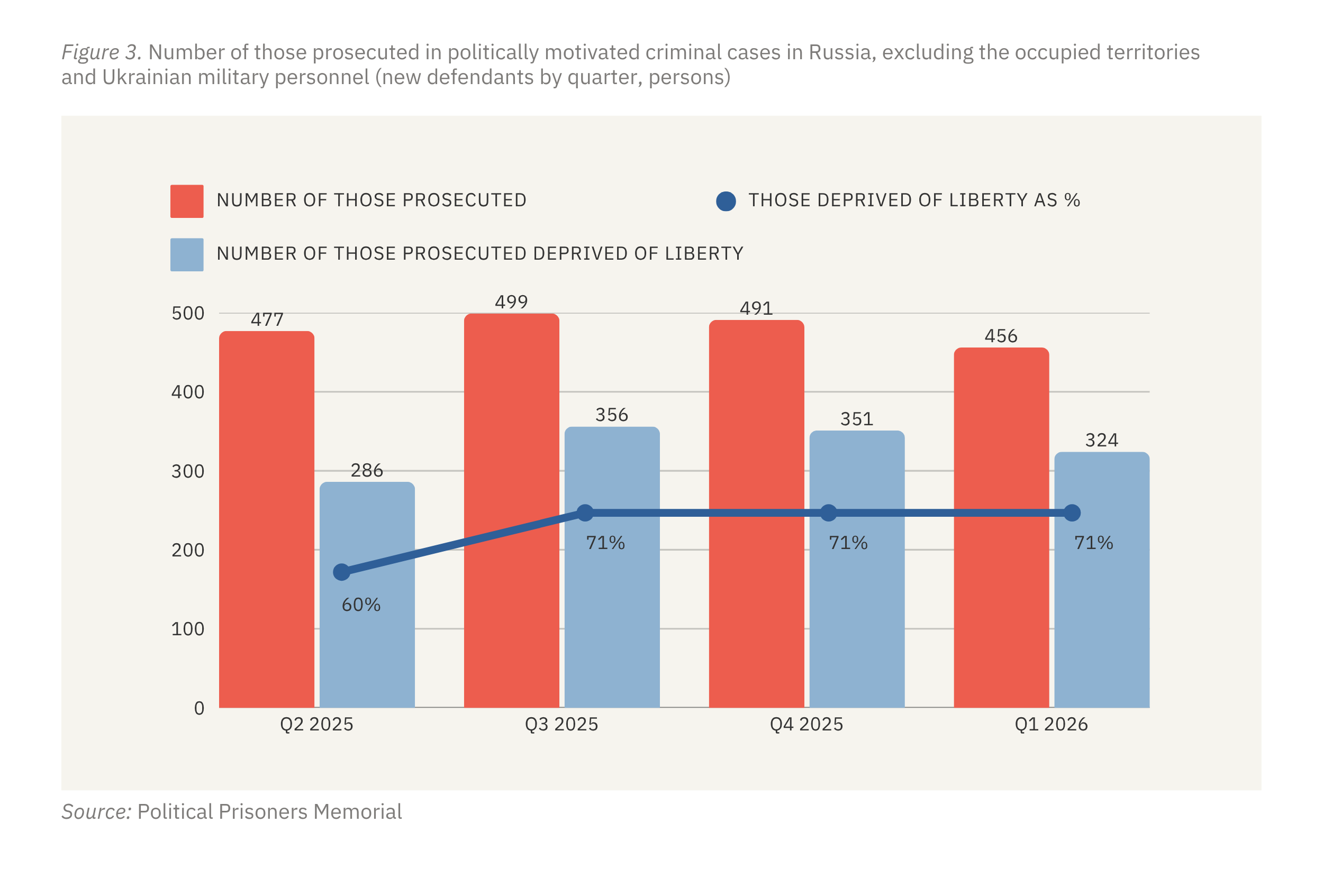
In Russia, within its internationally recognized borders, no significant changes occurred in the first quarter of 2026 in the use of the criminal law for purposes of political repression.
The number of new politically motivated criminal prosecutions that have come to light has remained virtually unchanged, with approximately 500 people subjected to such prosecutions each quarter. At the very beginning of this year, the number was slightly lower, but this was likely because of the New Year holidays. The proportion of those prosecuted deprived of liberty has also remained unchanged over the past three quarters.
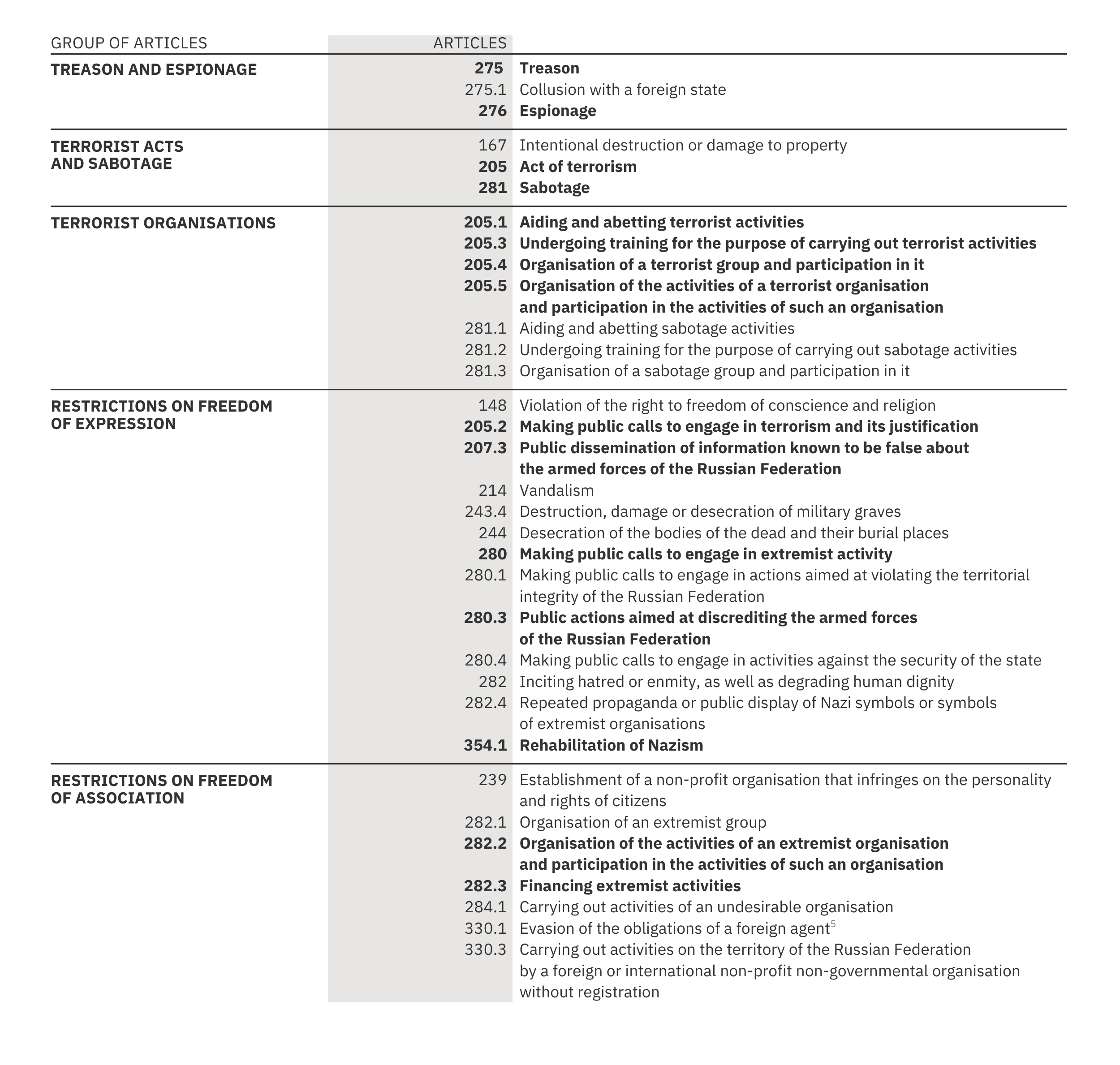
The laws used for purposes of repression have also remained largely unchanged. We group the articles of the Criminal Code of the Russian Federation [CC RF] most frequently encountered in politically motivated criminal cases as follows:
- ‘Treason and Espionage’
- ‘Acts of terrorism and sabotage’
- ‘Terrorist organizations’
- ‘Restrictions on freedom of expression’
- ‘Restrictions on freedom of association’
These groups of articles of the Criminal Code account for approximately 90% of all cases where there are signs of political motivation. More information about this categorization can be found in Appendix 1.
The first quarter of 2026 did not see any significant changes in the trends noted in the previous year. The category ‘Acts of terrorism and Sabotage’ continues in first place. The share of cases related to restrictions on freedom of expression has continued to decline gradually. In the preceding quarter, such cases accounted for less than a quarter of the total.
At the beginning of 2026, the share of prosecutions in the ‘Treason and Espionage’ category decreased noticeably. However, this was likely a random statistical fluctuation that will not persist into the next quarter.
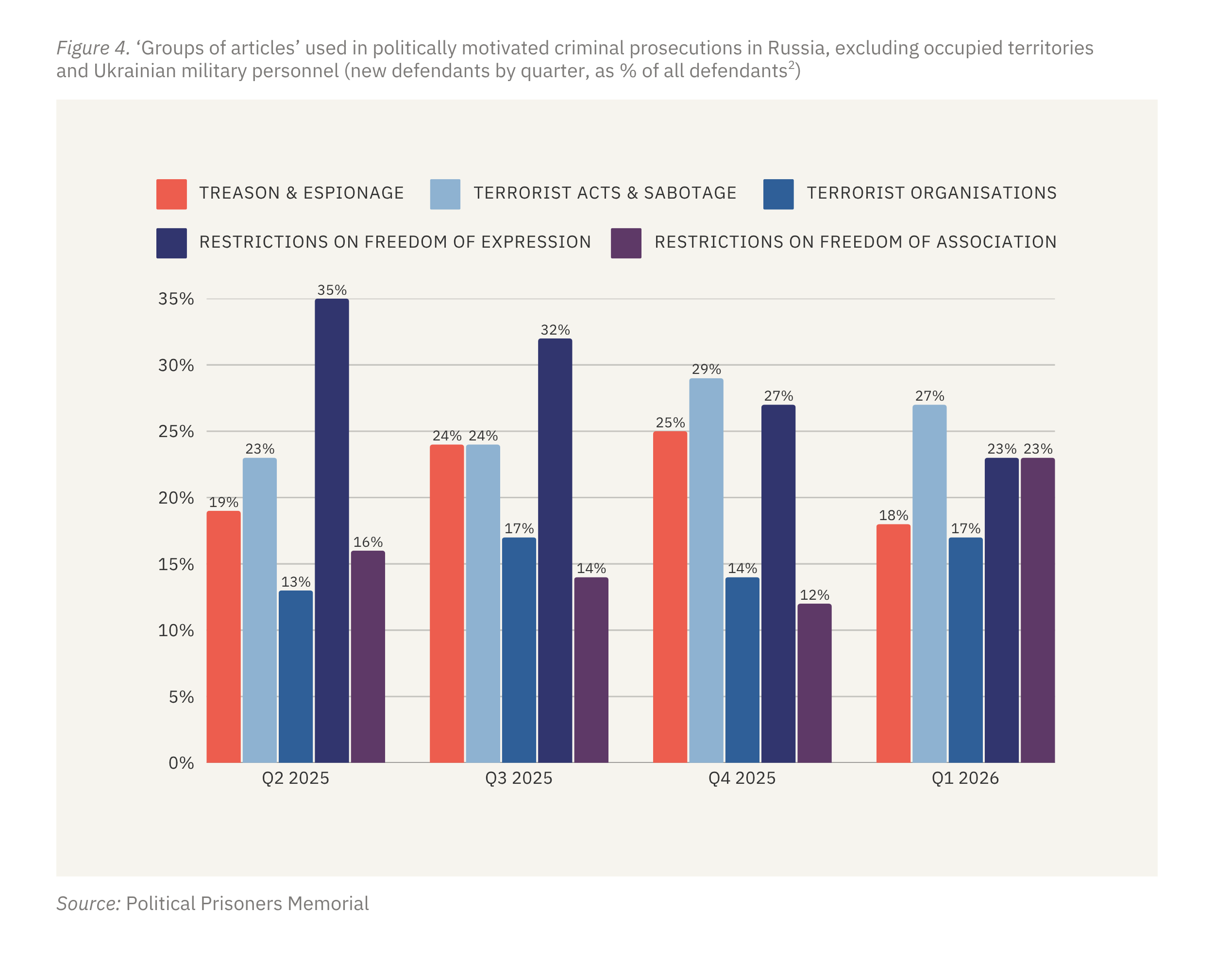
The share of prosecutions related to restrictions on freedom of association has increased significantly. The most frequently used articles from this group are Article 282.2 CC RF (‘Organization of and participation in the activities of an extremist organization’) and Article 282.3 CC RF (‘Financing of extremist activities’).
The increase in the use of these articles is related to prosecutions of Jehovah’s Witnesses and supporters of Aleksei Navalny. Article 282.2 CC RF is actively used to prosecute believers, while Article 282.3 CC RF is primarily used in cases related to donations to the late Navalny’s Anti-Corruption Foundation.
In the first quarter of this year, we recorded 39 individuals prosecuted under Article 282.2 CC RF in cases against Jehovah’s Witnesses, while for the entire year of 2025, that number was 51. Moreover, most of the prosecutions we became aware of at the beginning of this year had actually begun this year. In particular, new criminal cases against groups of believers have been recorded in Zabaikalsky Krai, Khakassia, Krasnoyarsk Krai, Nizhny Novgorod Oblast, and Bashkortostan.
There has also been a noticeable increase in the number of prosecutions of supporters of Aleksei Navalny. In the first quarter of 2026, we recorded 44 new prosecutions of Navalny’s supporters for financing extremism (Article 282.3 CC RF); for the entire year of 2025, there were 90 such cases. However, in the case of donations to the Anti-Corruption Foundation, we are dealing with the continuation of a campaign that was launched last year; many of these cases only come to light at the moment the verdict is handed down.
Other trends observed in 2025 have continued. The number of prosecutions for speech has continued to decrease, while the number of charges for more ‘serious’ offences — which are typically investigated by the FSB — has increased.
1. The occupied territories: statistical fluctuations?
In 2025, we noted that in the occupied territories of Ukraine, unlike in Russia, there was an increase in the level of political repression.[2] We put forward several possible explanations for this, including the ‘legalization’ of detentions without charge, an escalation in the scale of repression to suppress resistance, and the unchecked power of Russian security services in the occupied territories.
The first quarter of 2026 has seen a break in terms of this trend. The number of recorded cases of new politically motivated criminal prosecutions has decreased significantly. It is currently unclear whether this is a result of a random fluctuation related to the holiday season at the beginning of the year, or whether it reflects a significant change in repressive practice. The process of ‘legalizing’ illegal detentions may have been suspended or completed with respect to some cases, for example, those that the authorities view as most important and intend to prosecute. However, it is not possible to make assumptions with any confidence at this time. It is therefore best to await data from the next quarter.
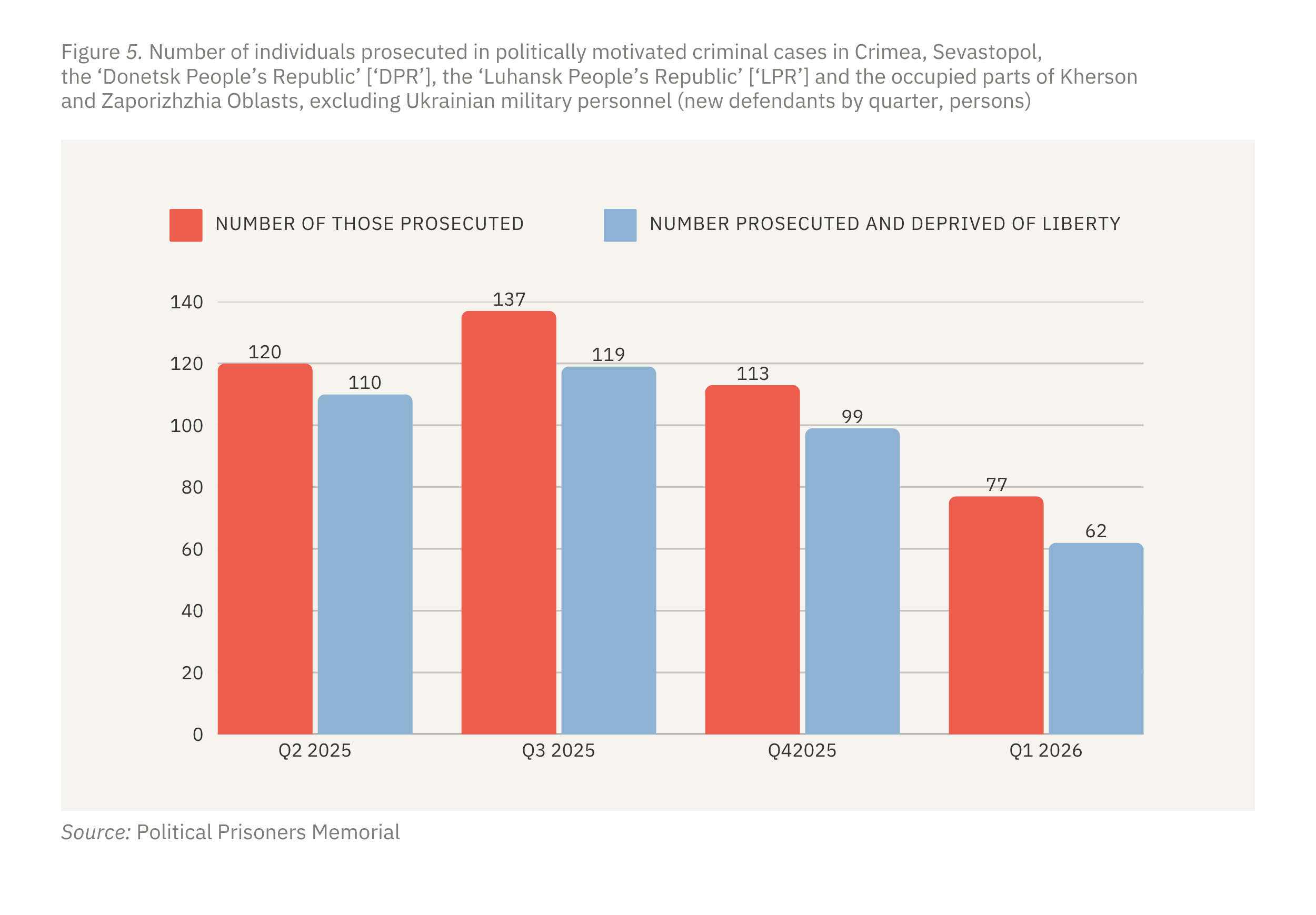
It is worth noting that even taking into account the decrease in recorded cases of new politically motivated criminal prosecutions in the first quarter of 2026, per capita the level of political repression in the occupied territories remains several times higher than in Russia.
2. Ukrainian military personnel: the new norm
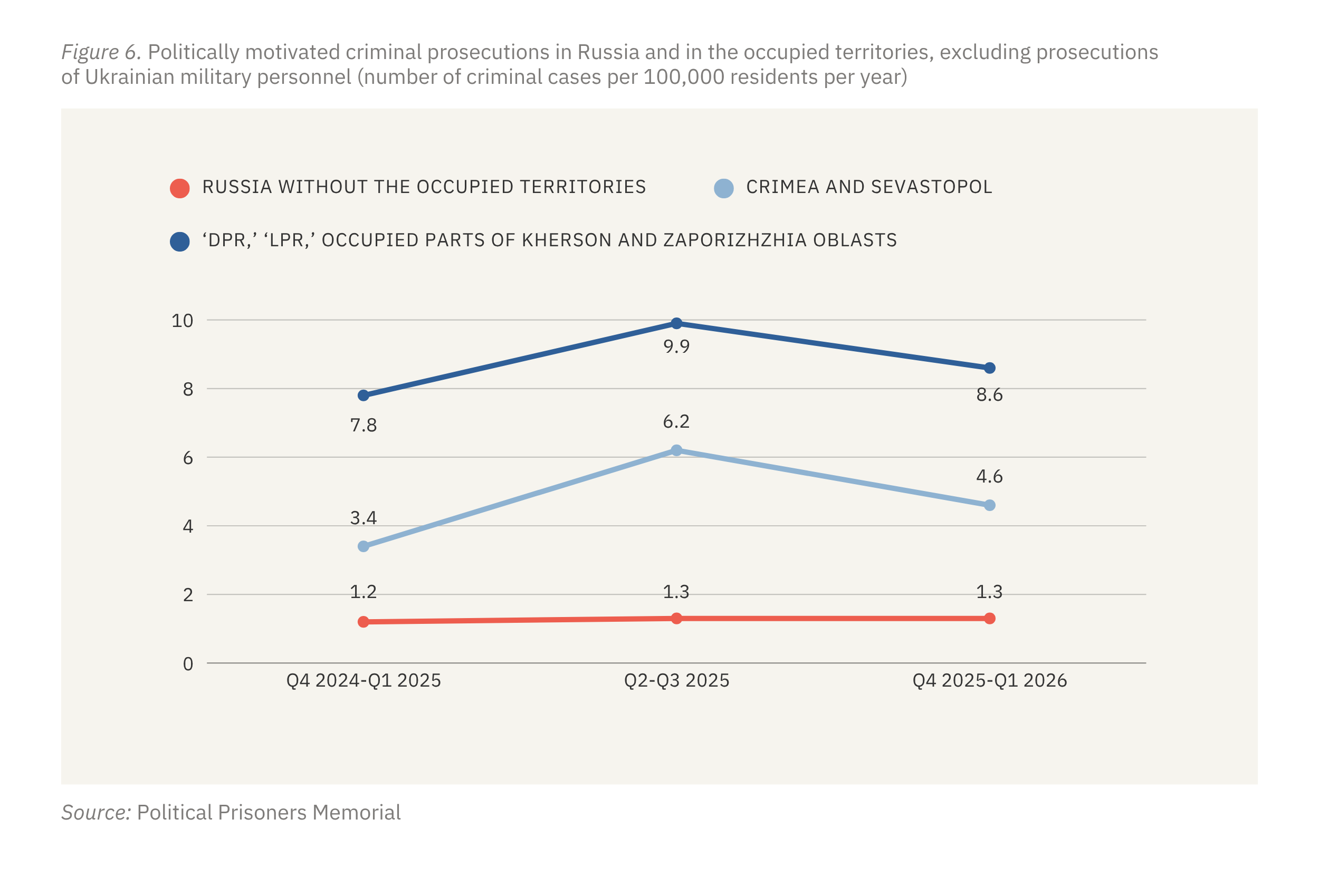
As noted in previous reports, in 2025 the prosecution of Ukrainian military personnel[3] became a significant factor in terms of the overall trend in the number of politically motivated criminal cases. In the third quarter of 2025, one in three new prosecutions involved a Ukrainian soldier; for 2025 as a whole, this proportion was one in five.
A major factor was the campaign to criminally prosecute Ukrainian armed forces personnel taken prisoner in Kursk Oblast. All such prisoners of war were automatically prosecuted, mostly on charges of terrorism, on the grounds that Russian law enforcement interpreted Ukraine’s military operations in Kursk Oblast as ‘terrorism.’ In 2025, the proportion of such service personnel among the total number of those prosecuted for political reasons exceeded 10%.
As of the present time, most of the criminal prosecutions of Ukrainian service personnel captured in Kursk Oblast are known. In the first quarter of 2026, we recorded only 15 new such cases.
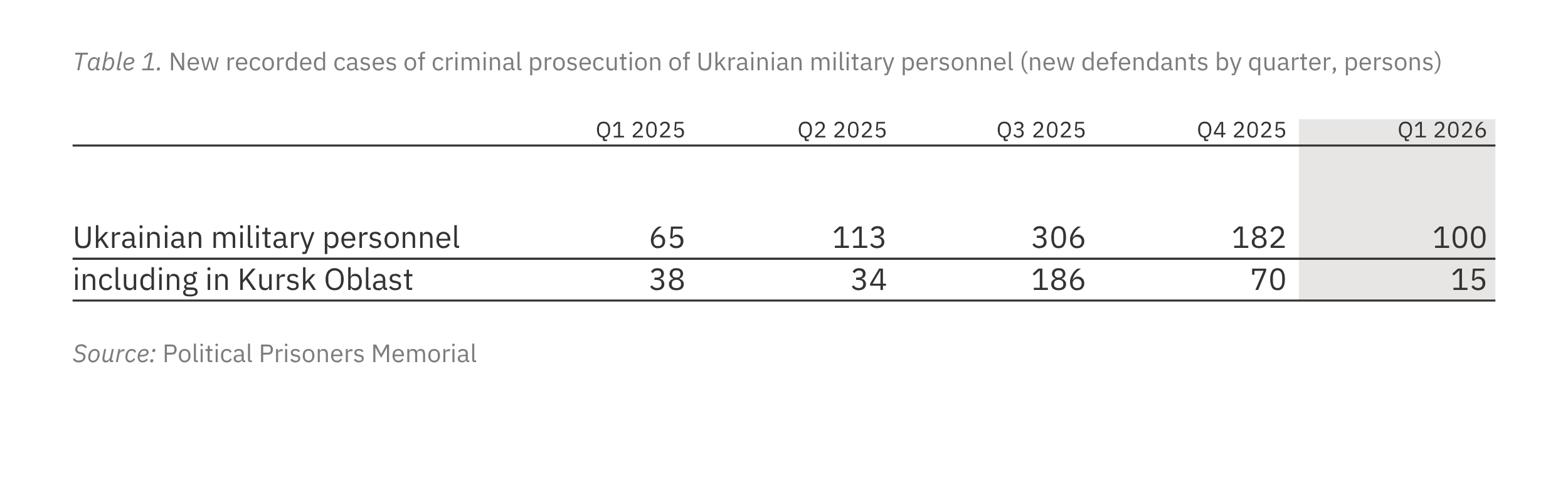
As a result, the number of Ukrainian military service personnel captured in Kursk Oblast and charged in criminal cases dropped to 2% of the total number of new politically motivated prosecutions. Despite this, the share of prosecutions of Ukrainian prisoners of war in the total number of prosecutions in the first quarter of 2026 did not return to pre-Kursk levels. The number of prosecutions of Ukrainian prisoners of war continued to grow regardless of events in Kursk Oblast.
While in the first quarter of 2025, prosecutions of Ukrainian military service personnel unrelated to the Kursk operation accounted for 5% of all politically motivated prosecutions, by the fourth quarter of 2025 and the first quarter of 2026, this figure had reached 14%, demonstrating a continuous increase.
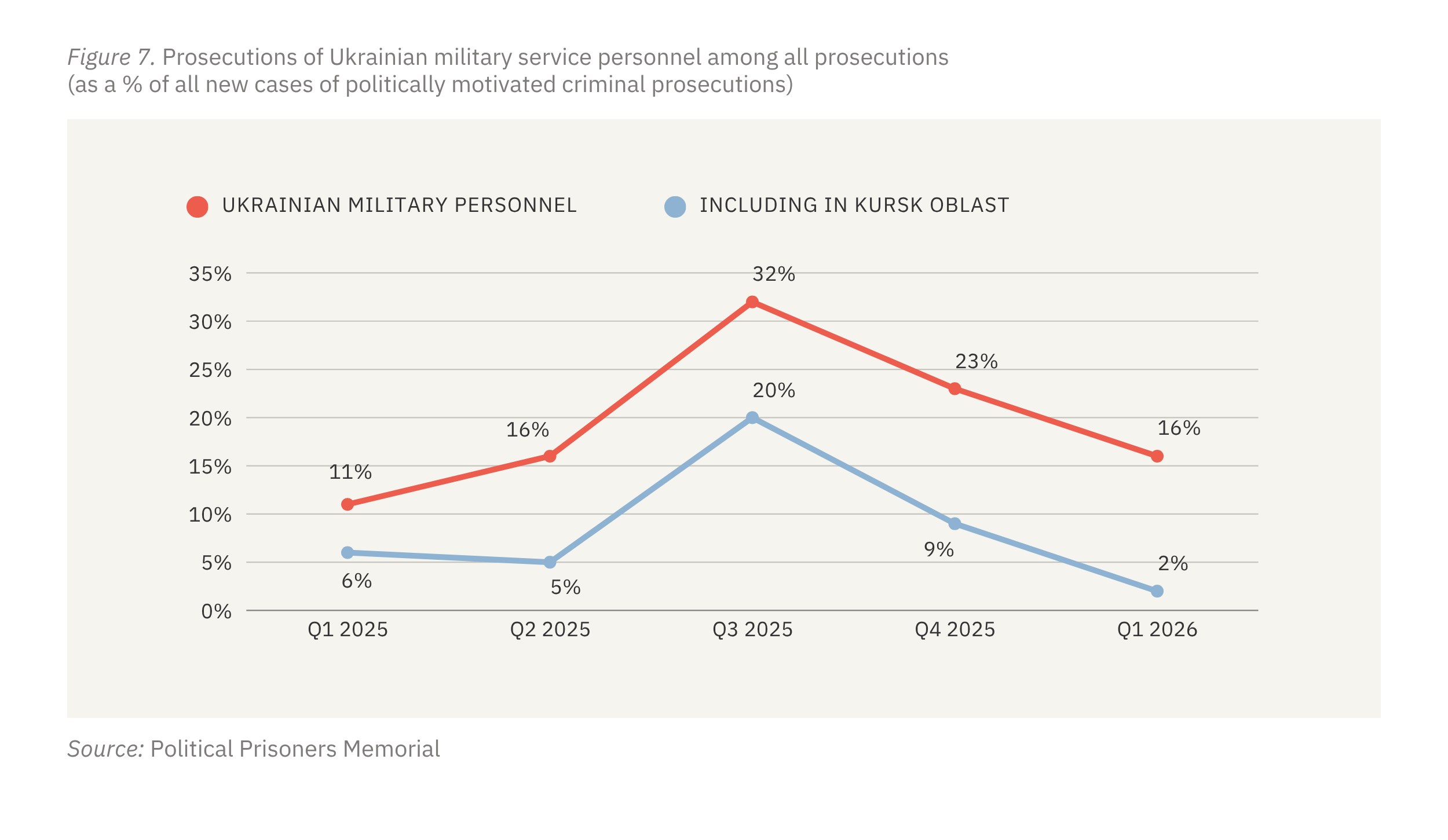
There has been a continuous increase in the number of criminal prosecutions of Ukrainian prisoners of war, as well as of civilians who served in the Ukrainian armed forces before the start of the full-scale invasion.
It is not entirely clear why repression against Ukrainian prisoners of war has continued to increase during the fourth year of the war and into the beginning of the fifth. Possibly, Russia’s leaders consider it necessary to tighten the ongoing campaign of intimidation in the occupied territories. Propaganda objectives aimed at the domestic Russian audience or the outside world cannot be ruled out either. Possibly, too, this may be retribution against the Ukrainian armed forces and Ukrainians in general for their stubborn resistance to Russia’s aggression.
Legislative developments
In the first quarter of 2026, the authorities paused the expansion and tightening of articles of the Russian Criminal Code used in politically motivated prosecutions. No changes were made this quarter to any such articles of the Criminal Code. By contrast, in 2025, changes relating to politically motivated prosecutions had been introduced into the Criminal Code every quarter.
In our previous quarterly report, we noted that in December 2025, bills had been submitted to the State Duma and passed in first reading that would make life more difficult for Russians living abroad who were prosecuted in absentia, specifically in terms of restricting their access to consular services and their ability to manage their property. During the first quarter of 2026, these bills were not only not adopted into law but were not even given a second reading in the Duma.
That said, it cannot be claimed that there were no new legislative initiatives in terms of political repression. A bill was introduced into the State Duma to establish criminal liability for denying or condoning the genocide of the Soviet people during the Great Patriotic War, as well as for insulting the memory of genocide victims. The bill also proposed the introduction of corresponding amendments to Article 243.4 CC RF (‘Destruction, damage, or desecration of military graves…’) and Article 354.1 CC RF (‘Rehabilitation of Nazism’). In March, the bill was adopted by the State Duma. Approval by the Federation Council, signing by the president, and entry into force are expected in the course of April 2026.
Amendments to the Criminal Code of the Russian Federation that are indirectly related to politically motivated criminal prosecutions include those made to Article 321 CC RF (‘Disruption of the work of institutions ensuring isolation from society’) and Article 321.1 CC RF (‘Transfer of mobile communication devices and other means of communication to a person imprisoned or on remand by a person subject to administrative punishment or having a criminal record’). The amendments entered into force on 1 January 2026 and are related to the transfer of certain pre-trial detention centres to the FSB.
Appendix 1
Classification of Articles of the Criminal Code of the Russian Federation by Group
[1] It should be noted that some of those prosecuted faced charges under articles from more than one group.
[2] Here we consider only criminal cases, excluding other widely used forms of repression such as abductions and deprivation of liberty outside formal legal procedures.
[3] The term ‘Ukrainian military personnel’ here refers to prisoners of war who have been defendants in criminal cases, as well as individuals charged in connection with service in Ukrainian military units prior to 2022. Note that this report is concerned solely with criminal prosecutions. Prisoners of war against whom no criminal charges have been brought are not included here.
[4] While most prosecutions under this article of the Criminal Code are of individuals designated as ‘foreign agents,’ by its nature prosecution under this article is aimed at obstructing civil society activity; we have therefore classified it in this group.