Three years over an old comment about the Crimean Bridge and 12 for transferring money to the Ukrainian army
Read our overview of these and other cases of political prisoners we have recognised last week
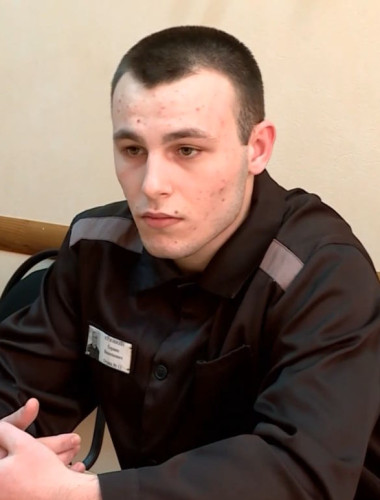
German Kuzovkin, a 17-year-old from Chelyabinsk Oblast who was studying at a mechanical engineering college in Ufa, threw a Molotov cocktail at a military enlistment office in protest against the war in June 2023. He was sentenced to five years in a general-regime penal colony on charges of attempting to commit a terrorist act.
Konstantin Perfilyev, a maintenance fitter, and Roman Zvyagintsev, a cook, both from Sverdlovsk Oblast, were arrested in August 2025. They were accused of setting fire to a railway battery cabinet at the request of a Ukrainian agent, and Perfilyev was also accused of preparing to set fire to a relay cabinet. The men were sentenced on terrorism charges to 18 and 13 years in a high-security penal colony, respectively.
Ivan Tsoi, who worked at the Federal Research Centre for Virology and Microbiology in Vladimir Oblast, was sentenced to three years in a general-regime penal colony in July 2026. The court ruled that a Telegram comment he had posted almost four years earlier about the attack on the Crimean Bridge amounted to public justification of terrorism.
Stepan Golich, a Ukrainian-born activist from Volgograd, was remanded in custody when his trial on charges of spreading military ‘fake news’ in his social media posts began in October 2026. His lawyer says Golich ‘was relaying the views of international organisations’.
Sergei Morev from Amur Oblast was fined on administrative charges of ‘discrediting’ the Russian army in January 2026. In August he was sentenced to one and a half years of forced labour, this time on criminal charges of repeatedly ‘discrediting’ the army. A criminal case was opened over several Telegram comments he left under a post about the deaths of Russian troops.
Yury Rudoi, a fire inspector from Sochi, was detained in August 2025 over Telegram comments in which he wished Putin dead and urged Ukrainians to strike the occupiers. He was charged with public calls for terrorist and extremist activity, and later also with treason over donations to a Ukrainian foundation. The court sentenced him to 15 years in a high-security penal colony.
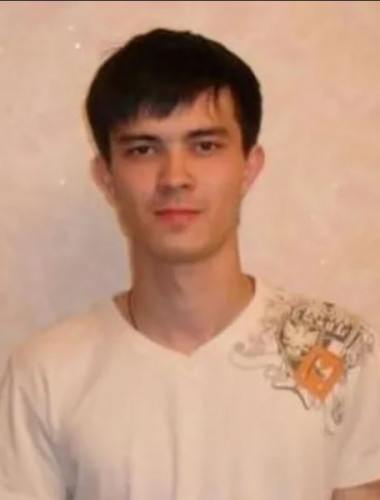
Vladimir Markin from Nizhny Novgorod was probably arrested in March 2025. He was charged with treason over two cryptocurrency transfers to the Freedom of Russia Legion and sentenced to 12 years in a high-security penal colony. In an FSB ‘confession’ video, Markin, who was 22 at the time, said he had decided to support the Ukrainian army ‘so that they could buy themselves drones’.
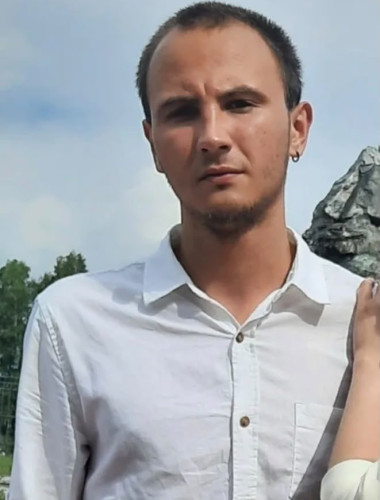
Sergei Ninikin, who worked at a photo studio in Krasnoyarsk, was accused of transferring money to the Artpodgotovka movement. He was sentenced to nine years on charges of financing extremist and terrorist activity in February 2026. He will serve the first two years in prison and the remainder in a high-security penal colony.
Maksim Zavyalov, a resident of Novokuznetsk and the father of a young child, was remanded in custody in August 2026 on charges of organising the activities of an extremist organisation over his involvement with the local Jehovah’s Witnesses community.
Ukrainians Vasyl Dmytriuk and Ivan Tereshchenko were serving with the State Border Guard Service of Ukraine in 2018 when they detained a fishing vessel in the Sea of Azov and brought it, together with its crew, to the port of Berdiansk. The vessel was operating under documents issued in occupied Crimea. Four years later, Dmytruk and Tereshchenko were taken prisoner by Russian forces in Mariupol and charged with hijacking a vessel and kidnapping. Both were sentenced to 17 years, the first three years to be served in prison and the remainder in a high-security penal colony.
Other Ukrainian prisoners of war were charged with terrorism offences over their service with Azov and given lengthy prison sentences. Serhii Krystapchuk was sentenced to 21 years in a high-security penal colony, Mykola Hnydin and Oleksandr Kuranov to 20 years, Serhii Ponomarenko to 19 years, and Serhii Samokhvalov, Oleksandr Klypa and Mykhailo Zamuruiev to 18 years. The sentences imposed on Oleksii Myroshnychenko, Oleksandr Vylyshchuk, Oleksandr Lizin, Volodymyr Shpyntiuk, Mykhailo Ishchenko, Andrii Fomenko, Vitalii Rosokha and Oleksandr Kulius are unknown to us.
You can read more about these cases, including addresses to write to the political prisoners, on our website.
By staying informed, sharing updates, or making one-off or regular contributions, you can help those affected by political repression in Russia.