Five and a half years for a wheelchair user over a comment, and fourteen years for a Ukrainian-born man over plans to join the Ukrainian armed forces and for ‘justifying terrorism’
Read our overview of these and other cases of political prisoners we have recognised last week
Bogdan Ter-Arutyunov, a thermal physicist and candidate of technical sciences from Moscow Oblast, was arrested in August 2024. For comments on VK stating that the Crimean Bridge should be destroyed, he was charged with public calls for activities directed against state security and sentenced to three years in a penal colony.
Leonid Kuzminykh from Chelyabinsk Oblast was also charged with public calls for activities directed against state security. The charge was based on a message reading ‘donate to the Ukrainian armed forces urgently, everyone’ posted in a six-person gaming chat. In February 2026, he was sentenced to three and a half years in a penal colony.
Aleksandr Krichevsky, a wheelchair user who worked as a system administrator in Izhevsk, was remanded in custody in December 2024. The case was brought under the article on public incitement to terrorism after investigators claimed that a Telegram comment contained calls to kill Putin and FSB officers. Following his arrest, his elderly mother, for whom he had been caring, was placed in a care home, where she died a month later. Krichevsky was sentenced to five and a half years in a penal colony.
Nazim Gurbanov from Moscow Oblast was remanded in custody in December 2024. Nine comments supporting Ukraine that he posted in Telegram channels led to four charges: incitement to terrorism, incitement to extremism, public calls for activities directed against state security, and incitement to hatred. The court sentenced Gurbanov to five years in a penal colony.
Maksym Poliakov, a Ukrainian citizen serving a sentence in a penal colony on non-political charges, was accused of posting messages in Telegram chats in support of the Freedom of Russia Legion and the Russian Volunteer Corps. In October 2024, he was sentenced to eight years’ imprisonment on charges of publicly advocating terrorism and public calls for activities directed against state security.
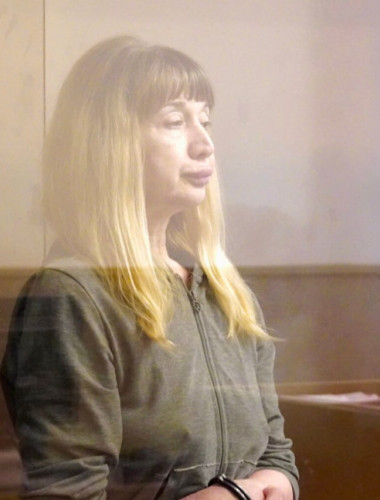
Svetlana Kudryashova from Moscow was sentenced twice to a custodial term for the same tattoo based on Azov’s insignia. The tattoo had been done by her former partner, who served in the unit. After serving seven months in prison under the first conviction, Kudryashova had the tattoo covered up, but in April 2025 she was remanded in custody again under the same charge of displaying extremist symbols. Under the new case, she was sentenced to two years and five months in a penal colony. Her teenage daughter and elderly mother, who has a disability, remain outside prison.
Borys Franchuk, a Ukrainian-born former serviceman from Sakhalin Oblast, was detained at an airport in March 2023 when he was allegedly about to leave to fight alongside the Ukrainian armed forces. Following repeated administrative arrests, he was charged with attempted state treason. For social media posts made while ‘adhering to a pro-Ukrainian nationalist ideology’, he was charged with publicly advocating terrorism. He was ultimately sentenced to fourteen years in a penal colony and stripped of his military rank.
You can read more about these cases, including addresses to write to the political prisoners, on our website.
By staying informed, sharing updates, or making one-off or regular contributions, you can help those affected by political repression in Russia.