Medical student sentenced to four years over Telegram Stars, journalist to 12 years on charges of organising the financing of the Armed Forces of Ukraine, and Russian man to 28 years over service with the Russian Volunteer Corps
Read our overview of these and other cases of political prisoners we have recognised last week
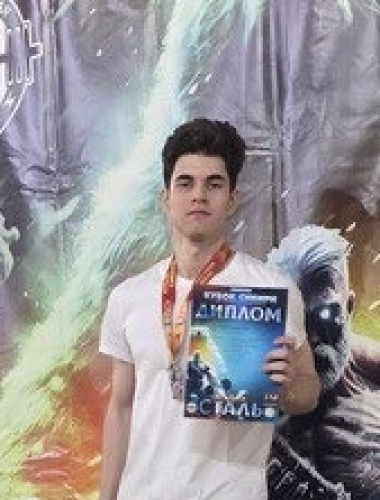
Dmitry Skripkin, a 17-year-old medical college student from Kuzbass, was placed under house arrest in March 2026 on charges of financing terrorism. He allegedly used Telegram Stars to send paid reactions to posts on the channel of a Ukrainian ‘terrorist’ unit. The court sentenced the teenager to four years in a juvenile penal colony.
Yelena Mironova, a resident of Chelyabinsk, was sentenced to four years in a penal colony for participating in an extremist organisation and financing it. The court decided that the older woman had taken active steps ‘out of extremist motives’ to continue the unlawful activities of Jehovah’s Witnesses.
Albert Pilshchikov, a Jehovah’s Witness from Cheboksary, was also charged with an extremism offence and sentenced to six and a half years in a penal colony. A French-language video presented in court as allegedly showing a meeting of Jehovah’s Witnesses turned out to be a webinar on osteopathy.
Three people were charged with confidential cooperation with a foreign entity for allegedly communicating with Ukraine’s Security Service (SBU) or Main Directorate of Intelligence (HUR). Yegor Malkov from Khabarovsk Krai was sentenced to five years and nine months in prison, and Vadim Trach from Luhansk to five and a half years in a penal colony. The sentence handed to Andrei Maskaev from Ryazan Oblast is not known.
Journalist Darya Shipachyova was sentenced to 12 years in a penal colony on charges of high treason. She was allegedly ‘involved in organising the financing of the Armed Forces of Ukraine and nationalist battalions in Russia using cryptocurrency’.
Anatoly Astakhov, a resident of Arkhangelsk Oblast, was charged with public calls for terrorism and for activities directed against state security over posts on VK that allegedly called on others to commit violence and join a Ukrainian unit. The court sentenced him to four years in a penal colony.
Anatoly Lipkovsky from Altai Krai was sentenced to five years in a penal colony in January 2025 on charges of public calls for terrorism and extremist activity over four comments, one of which was simply the word ‘Bravo’.
Dmitry Malyshev, a resident of Ivanovo, was detained in January 2025 for allegedly posting on his VK page a link to a video by the Freedom of Russia Legion calling on Russian troops to join its ranks. He was charged with aiding and abetting the inducement of others to join an illegal armed formation. The court sentenced Dmitry Malyshev to seven years in a penal colony, and the sentence was reduced to five years on appeal.
Viktor Voloshchuk from the occupied part of Zaporizhzhia Oblast is believed to have been detained in August 2025. In his comments, he allegedly called on others to join Azov and to ‘use violence against the social group “citizens of Russia”’. He was sentenced to five and a half years in a penal colony on charges of public calls for terrorism and extremist activity.
Pyotr Kolistratov, a resident of Rostov Oblast, was detained near the Ukrainian border in April 2023, and a criminal case was opened over an attempt to cross it. He was later also charged with attempted high treason: he allegedly filled in an application form to join the Russian Volunteer Corps (RDK) and was travelling to Ukraine to take part in hostilities. The court sentenced Pyotr Kolistratov to eight years in a penal colony.
Yevgeny Savostin, a native of Moscow Oblast, was accused of joining the RDK, where he served as a driver. He allegedly returned to Russia at the RDK’s request in October 2025 and was detained there. He was sentenced to 28 years in a high-security penal colony on charges of high treason, participation in a terrorist organisation and undergoing terrorism training.
Ukrainian prisoners of war were charged with undergoing terrorism training and participating in a terrorist community over their service with Azov. The court sentenced Artem Kushakov to 19 years, and Taras Koshman, Yevhen Krasnikov, Dmytro Sentiabriov and Hryhorii Saltan to 18 years each in a high-security penal colony. The sentences handed to Oleksandr Horyslavets, Serhii Kovaliov and Anton Korneichuk are not known.
You can read more about these cases, including addresses to write to the political prisoners, on our website.
By staying informed, sharing updates, or making one-off or regular contributions, you can help those affected by political repression in Russia.