Our third quarterly report on political repression in 2026, in a departure from our traditional approach, focuses not on the changes that have taken place in the latest quarter but on the developments that have taken place in terms of criminal politically motivated prosecutions this year. We compare the first three quarters of 2026 with the corresponding period for 2025. This enables us to identify the main trends in repressive practices this year and put forward some hypotheses regarding the mechanisms behind these changes.
Key Findings
- Russia: Scale of repression unchanged amid significant internal developments
The number of Russian citizens subject to politically motivated prosecutions in the first nine months of 2026 has remained stable, while there have been significant changes in the nature of the repression. The increase in politically motivated prosecutions on charges of treason and terrorist acts observed in 2025 has come to a halt. The number of prosecutions related to speech has fallen. However, there has been a marked increase in the number of people prosecuted for aiding and abetting, or participating in, the activities of banned organisations. - Russia: Not for speech, but for ‘affiliation’
The most significant change in 2026 has been a marked shift in the focus of the repressive apparatus from prosecutions for speech (a fall of almost a 25%) to prosecutions for supporting banned organisations (an increase of 50%). - Russia: Escalating campaigns to prosecute supporters of banned organisations
In 2026, the intensity of several entirely different campaigns of prosecution increased. There was an increase in the number of prosecutions of supporters of Aleksei Navalny, Jehovah’s Witnesses, Citizens of the USSR, and supporters of Vyacheslav Maltsev’s Artpodgotovka movement. It is unclear whether this is a coincidence or whether the change reflects developments in the policy of repression, with the fight against ‘organised enemies’ being given a higher priority. These repressive campaigns have become a factor significantly influencing the structure and, in some cases, the geographic spread, of repression. - Russia: FSB not only the main implementer, but also a catalyst, of repression
The FSB continues to play a leading role in political repression. In the first three quarters of 2026, 67% of all recorded politically motivated prosecutions were based on articles of the Criminal Code that fall within the FSB’s jurisdiction. An important new development is the mixed trend in repression for speech. While there has been an overall decline, the number of such prosecutions for offences that fall within the FSB’s jurisdiction have not decreased and may even be on the rise. This leads to the conclusion that the FSB plays a special role in maintaining the level of politically motivated prosecutions. - Russia: Intensification of prosecutions
Penalties handed down in politically motivated prosecutions have become increasingly severe. The proportion of cases involving charges for particularly serious offences is rising. - Occupied territories: Stabilisation in the scale of politically motivated prosecutions
Following a significant increase in repression in the occupied territories in the second and third quarters of 2025, the situation stabilised in 2026 with a slight decline from peak levels. There have also been some other developments that may indicate a slight decline in the level of repression in the occupied territories. Nonetheless, the severity of repression in the occupied territories remains several times higher than in Russia. - Ukrainian prisoners of war: Taken captive in Kursk region
The prosecution of Ukrainian military service personnel taken prisoner in Kursk region remains the most significant factor determining the dynamics of repression under this heading. The numbers of such prosecutions have decreased noticeably compared with 2025. However, new cases continue to be recorded. In the third quarter of this year, there were more such cases than in the first and second quarters.
How this report was compiled
This is our latest quarterly report on political repression, covering the third quarter of 2026.
The report is based on data gathered by the project ‘Political Prisoners Memorial’ about criminal prosecutions that show signs of political motivation and unlawfulness (hereinafter: politically motivated criminal prosecutions). Our sources include court records, press releases from law enforcement agencies, media reports, appeals from those prosecuted and their relatives, and so on. The database is current as of 30 September 2026.
In this report, we assign criminal cases to a particular quarter based on their date of inclusion in our database. We usually learn of the initiation of criminal proceedings with a delay that is often measured in days, sometimes weeks, and less frequently a longer period. Consequently, not all prosecutions attributed to a particular quarter were initiated in that period; some prosecutions began earlier. Our approach therefore reflects the reality of repression with a certain time lag. At the same time, when applied consistently, this allows us to describe the situation as comprehensively as possible.
Data for the same period in different quarterly reports may vary slightly. This is because of updates to information about prosecutions, as well as possible adjustments to the methodology used to calculate individual indicators.
Key indicators of the ‘Political Prisoners Memorial’ project
Political prisoners
Political prisoners are individuals currently deprived of liberty and recognised as political prisoners by the Memorial Human Rights Centre or the ‘Political Prisoners Memorial’ project.
Number of political prisoners

Persons deprived of liberty in cases with signs of political motivation and unlawfulness
We also maintain a list of individuals subjected to criminal prosecution, in whose cases there is a high probability of political motivation and serious violations of the law. This includes both those recognised as political prisoners and those in whose cases no decision to recognise them as such has yet been taken.
Number of persons deprived of liberty in cases showing signs of political motivation and serious violations of the law

The overall scale of repression
We traditionally divide individuals prosecuted into three groups:
● those prosecuted in Russia within the country’s internationally recognised borders;
● residents of occupied territories of Ukraine;
● members of the Ukrainian armed forces.
Repressive practices towards these groups differ significantly.
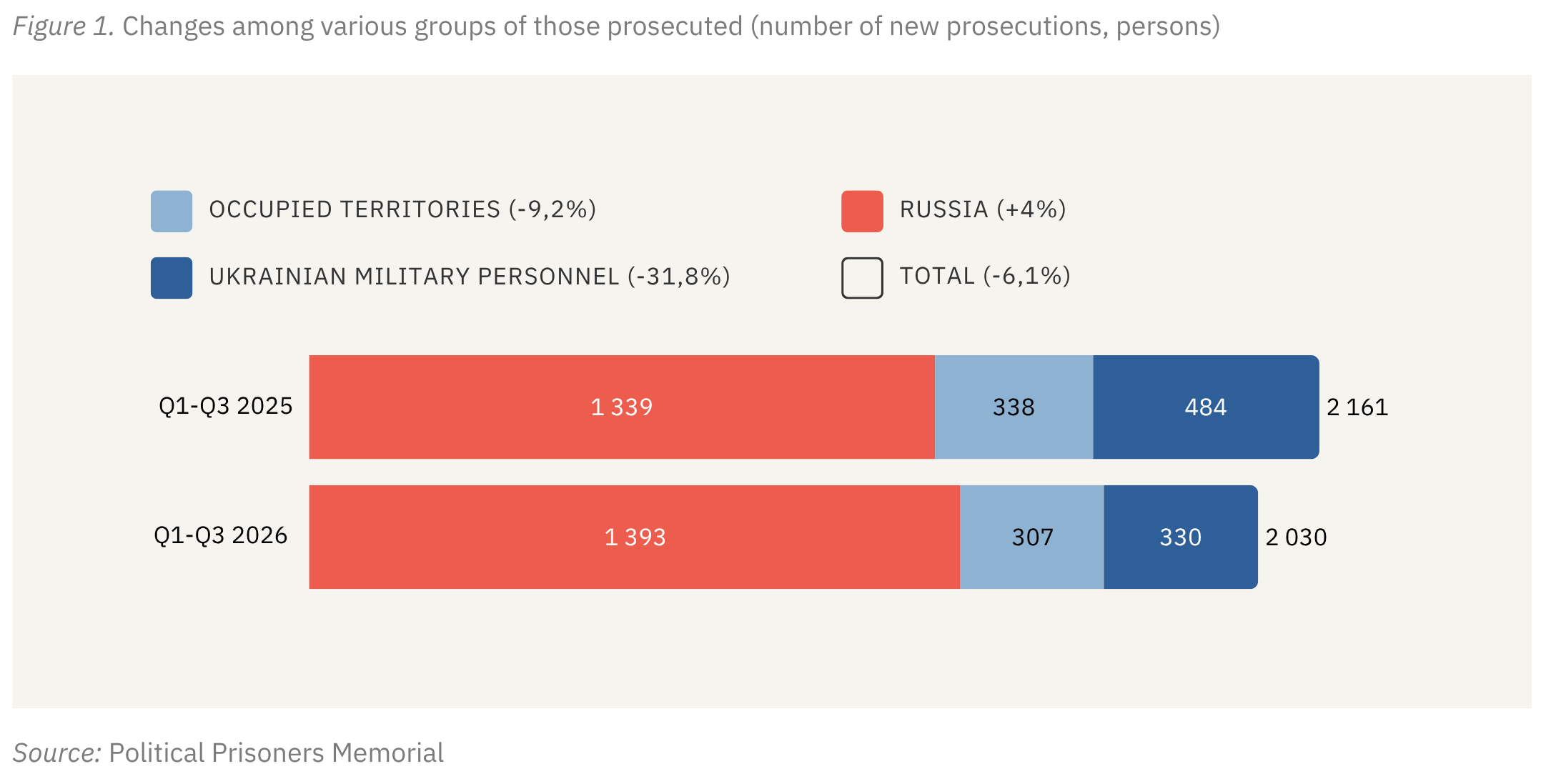
In the first three quarters of 2026, there was a noticeable decrease in the number of Ukrainian military personnel prosecuted, a slight reduction in repression in the occupied territories, and, overall, an unchanged level of prosecutions within Russia. Below, we investigate the factors influencing these developments and why the stable level of repression in Russia in no way implies that the situation has not changed.
Within Russia: The stable level of repression conceals a profound transformation
A comparison of the number of politically motivated prosecutions in Russia across large sample periods, such as the first three quarters of 2025 and 2026, demonstrates that the level of repression has remained constant. In the first nine months of 2026, the number of victims of prosecutions increased by only 4% compared to the same period in 2025. This confirms our earlier observation that there are approximately 500 new prosecutions (on average slightly fewer) per quarter.
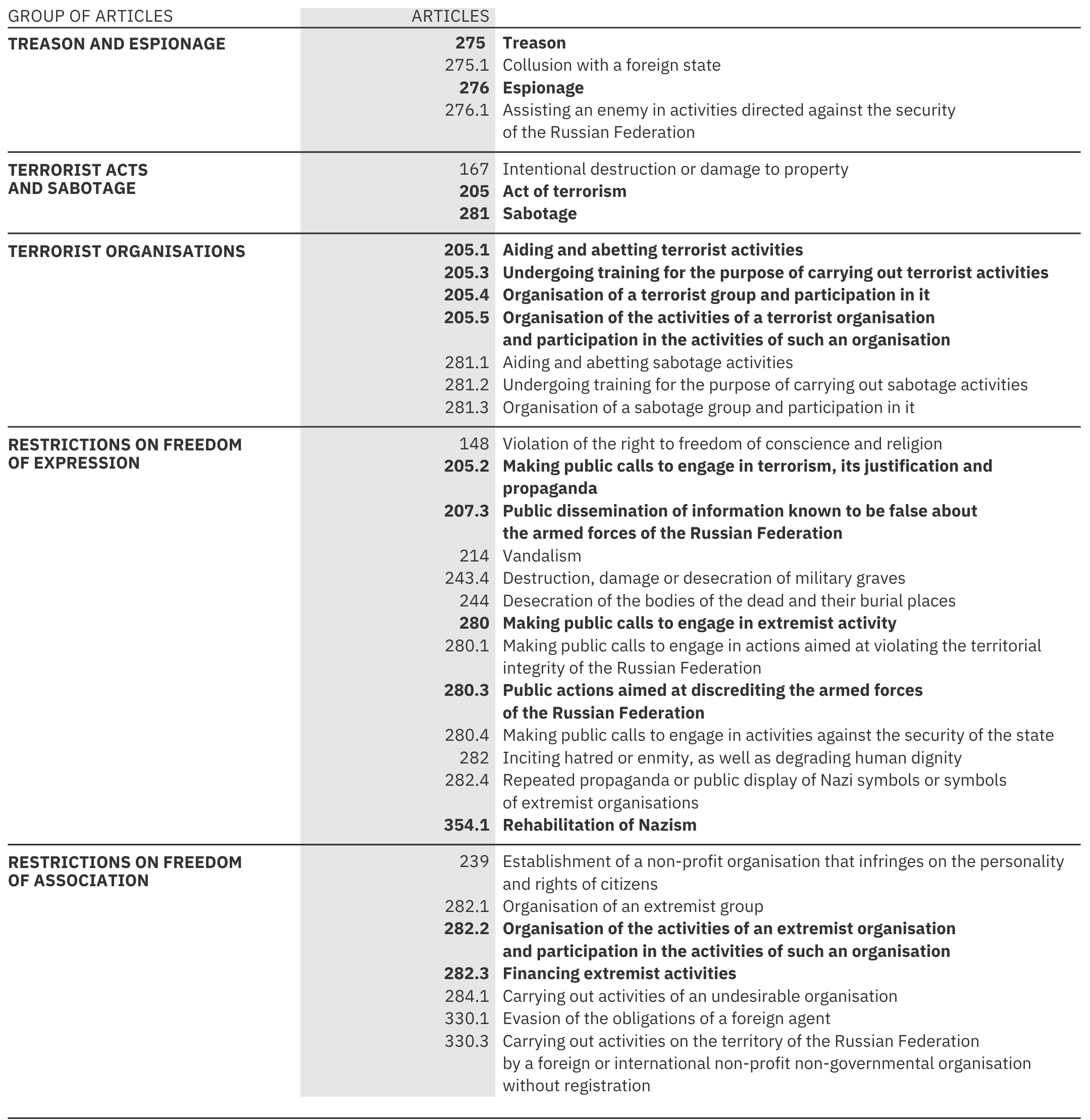
However, while political repression in Russia in 2026 is not increasing in quantitative terms, it is undergoing a significant internal restructuring. To analyse the structure of repression, we use our traditional classification of the articles of the Criminal Code into five groups.
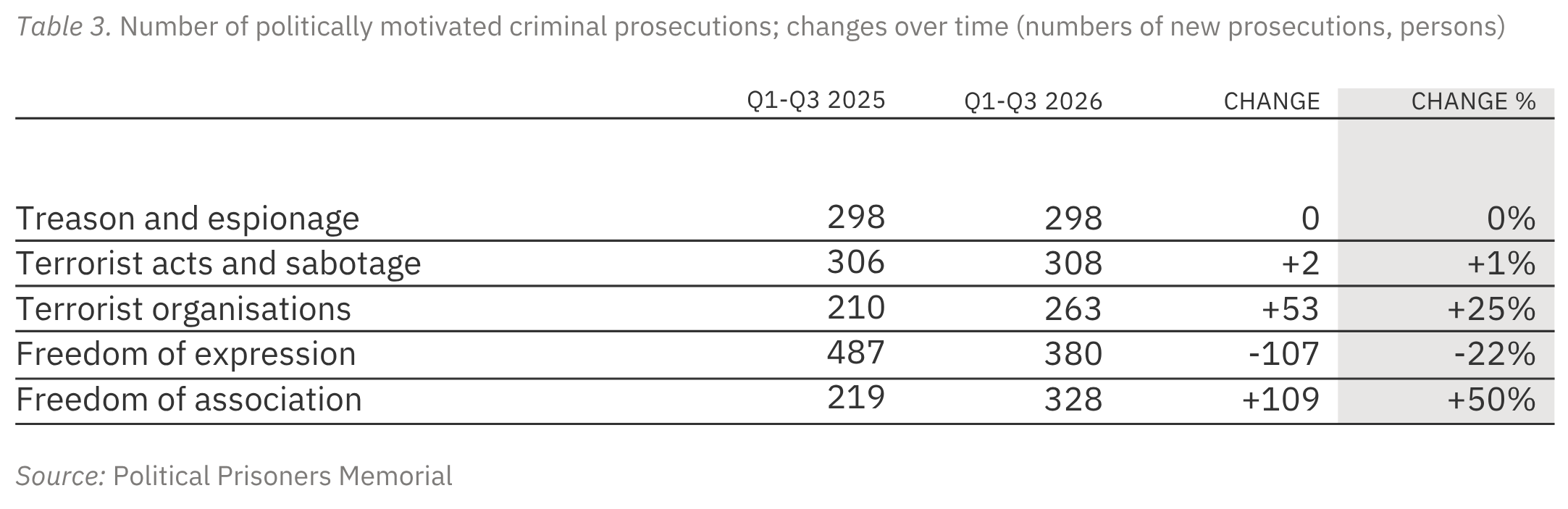
While the total number of individuals prosecuted increased by just 54 (a rise of less than 5%) the ‘Freedom of Expression’ category saw a decrease of 107 individuals (22%). Meanwhile, prosecutions on charges in the ‘Freedom of Association’ category rose by 50%. There was also a noticeable increase of 25% (53 persons) in the number of those prosecuted in the ‘Terrorist Organisations’ category.
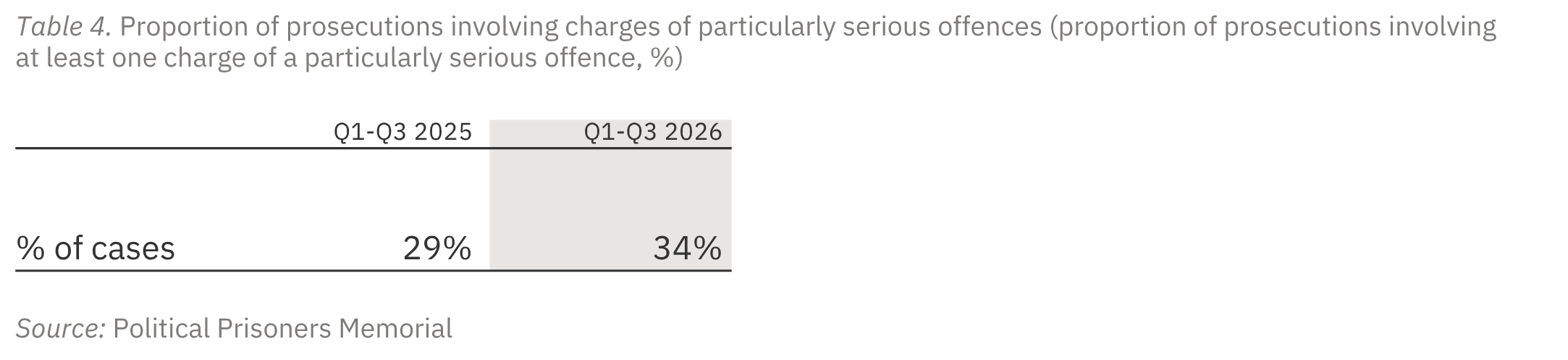
Another notable change was the continuing rise in the use of charges of particularly serious offences in prosecutions. Over the course of the year, the proportion of cases involving at least one such charge rose by 5%.
The year 2026 did not see an increase in the quantitative level of political repression within Russia. Instead, it brought a structural reorganisation of such repression.
In the Barometer for the fourth quarter of 2025, extrapolating from the trends observed at that time, we spoke of a possible further reduction in prosecutions for speech and an increase in prosecutions for treason and terrorism. Based on data for the first nine months of 2026, this forecast has been only partially borne out. While the number of prosecutions in the ‘Restriction of Freedom of Expression’ category has fallen significantly, there has been no increase in the number of prosecutions on charges falling within the ‘Treason and Espionage’ and ‘Terrorist Acts and Sabotage’ categories. Another notable trend in 2026 was a 50% increase in prosecutions on charges within the ‘Freedom of Association’ category.
Here we examine in more detail the changes that have taken place in prosecutions and put forward some hypotheses as to the reasons behind them.
‘Restrictions on freedom of expression’
Table 5 lists the 10 most frequently applied offences relating to freedom of expression. As mentioned above, overall, the number of criminal prosecutions involving charges from this group of articles of the Criminal Code of the Russian Federation fell by almost a quarter in 2026. However, the decline in the application of criminal charges from this group has been uneven.
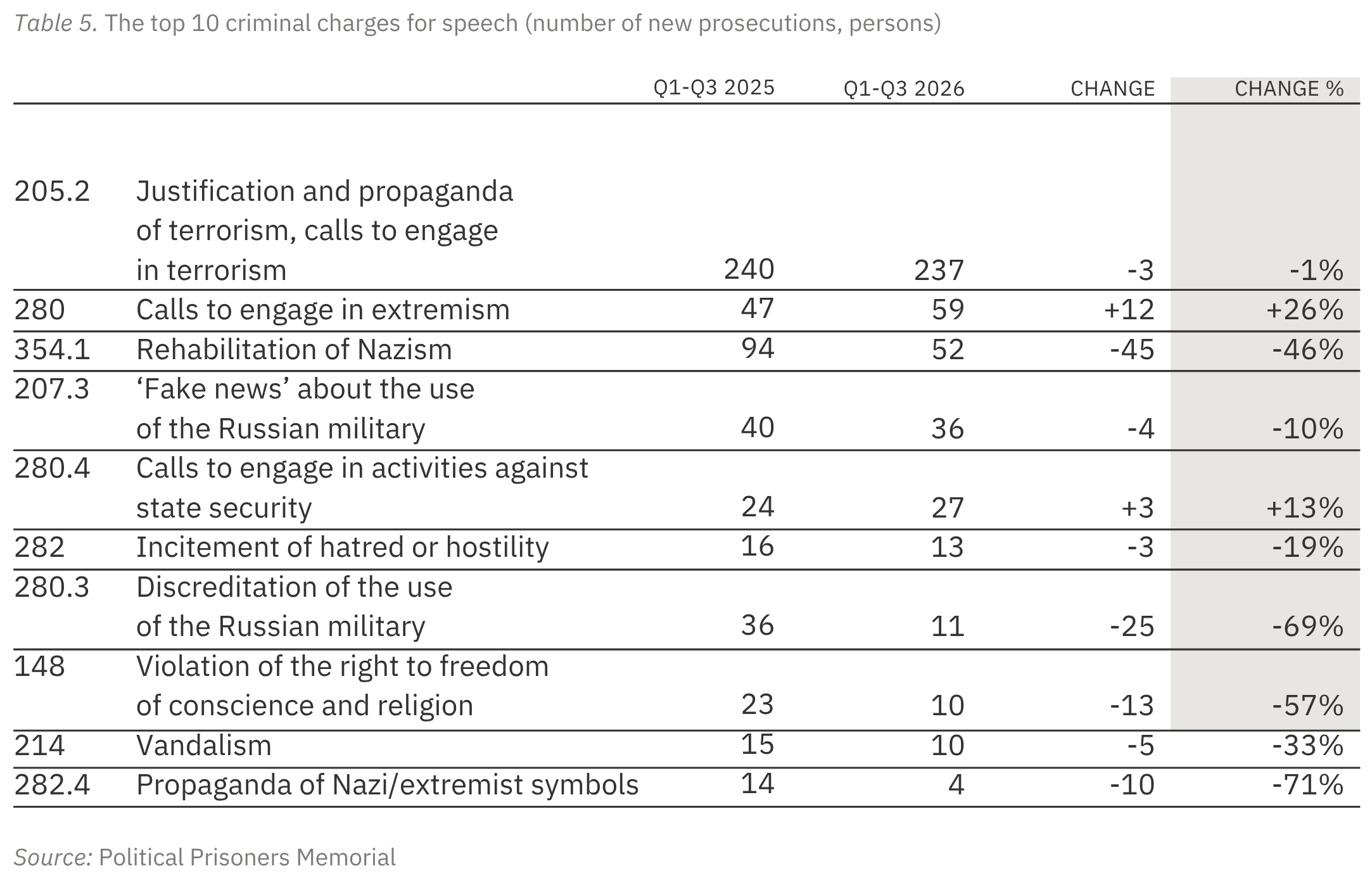
Three offences stand out as being applied approximately as frequently as last year, or even more often. These are Art. 205.2 CC RF (‘Making public calls to engage in terrorism or its justification’), which saw a decrease of only 1%; Art. 280.4 CC RF (‘Making public calls to carry out activities directed against state security’), which increased by 13%; Art. 280 CC RF (‘Making public calls for the commission of extremist activities’), which increased by 26%.
A distinctive feature of these three offences is that they are the only ones among the ten that fall under the jurisdiction of the FSB. It can therefore be said that prosecutions for speech are declining, except for those conducted by the FSB.
One consequence of this structural reorganisation of prosecutions for speech has been to make the penalties more severe. For example, the proportion of convictions under Art. 205.2 CC RF in this group exceeded 60% in 2026 (in Q1– Q3 2025 this figure was 49%), while imprisonment under this article was recorded in more than 80% of cases. As a result, the proportion of those imprisoned in prosecutions for speech in 2026 almost equalled the average figure for all prosecutions (67% and 69% respectively).
In general, it is primarily the less severe forms of prosecution for speech that have declined, while the use of the most severe widely applied charge (that of justification of terrorism) has remained virtually unchanged. Consequently, prosecutions for speech occur less frequently, but are increasingly linked to imprisonment.
‘Restrictions on freedom of association’
The most frequently applied offences in this group are those under Art. 282.3 CC RF and Art. 282.2 CC RF. The varying trends in their application in 2026 have been closely linked to distinct campaigns of repression.
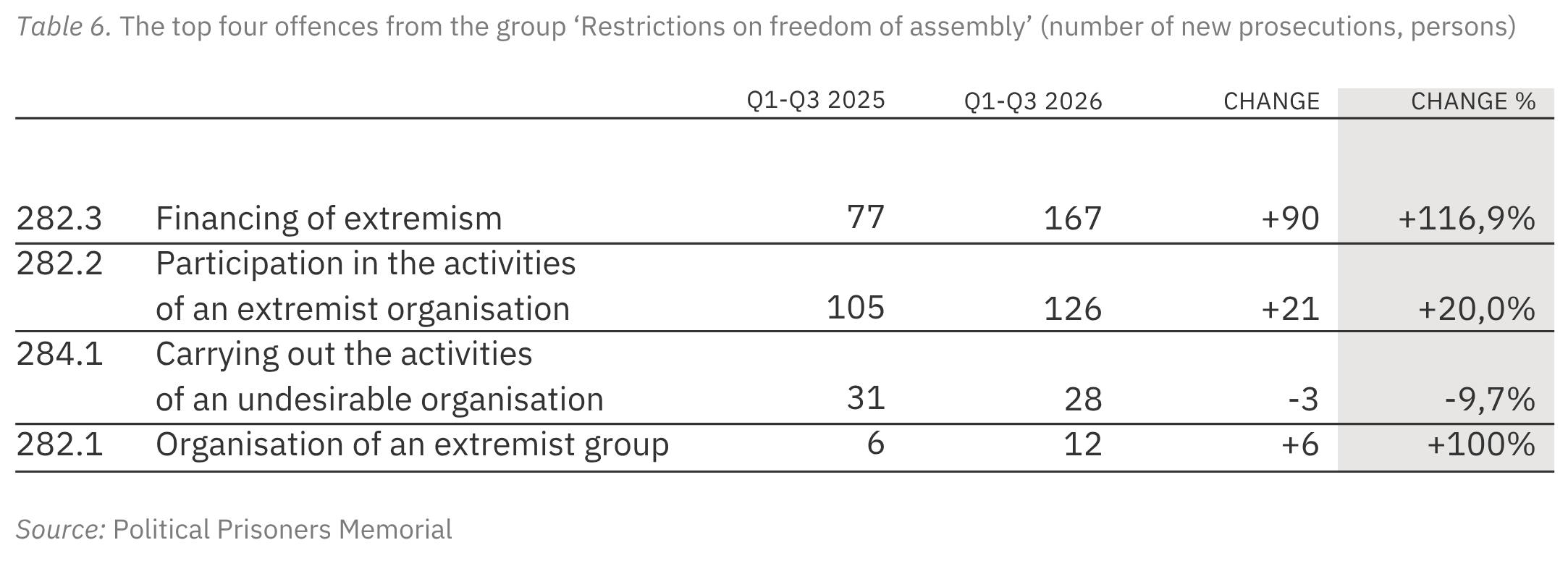
Table 7 presents an overview of the most significant repressive campaigns of prosecution in 2026.
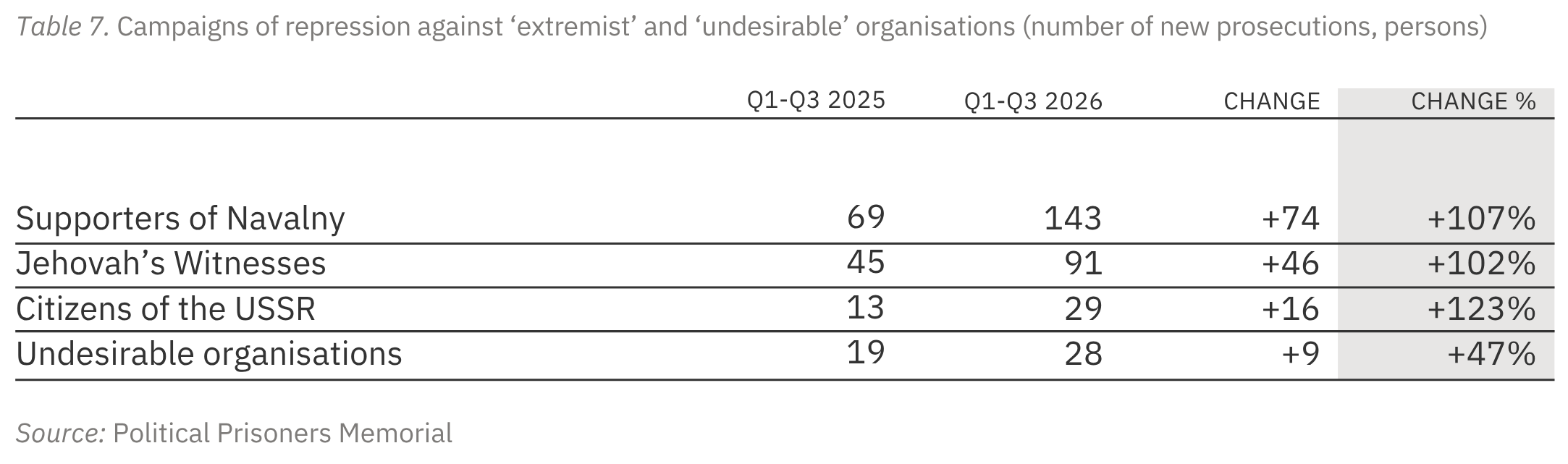
Supporters of Aleksei Navalny
We have written about the prosecutions of those who donated to the Anti-Corruption Foundation (FBK), including highlighting the repressive potential of this campaign when it was first launched, in our report Prosecutions related to the Anti-Corruption Foundation. This year fully confirmed our grim predictions. The increasing use of the law on the financing of extremist activities is directly related to prosecution of Aleksei Navalny’s supporters. As of the present, almost all cases against Navalny’s supporters have been on charges under this law.
Once the law enforcement agencies mastered this repressive tool, the campaign gained momentum. Each quarter in 2026 there have been at least 40 new prosecutions for donating to the FBK. The geographical scope of these prosecutions is wide, being relatively evenly spread across a number of regions.
Jehovah’s Witnesses
Jehovah’s Witnesses are another group of individuals increasingly prosecuted on ‘extremism’ charges. We have already reported on the increase in their prosecution in 2026. Although Jehovah’s Witnesses were designated an extremist organisation as far back as 2017, for reasons that are unclear their prosecution (under Art. 282.2 CC RF) intensified this year. Unlike the prosecutions of Navalny supporters, prosecutions of Jehovah’s Witnesses are geographically localised, with approximately 60% of those prosecuted living in the Siberian or Far Eastern Federal Districts. However, it is worth noting that in the third quarter of 2026 the number of prosecutions fell somewhat. It may be that this campaign is beginning to peter out.
The increase in 2026 of the number of prosecutions for offences covered by articles of the Criminal Code from the ‘Restrictions on freedom of association’ group was also fuelled by the intensification of prosecutions of individuals associated with the informal grouping, ‘Citizens of the USSR.’
However, despite a significant increase in the prosecution of Jehovah’s Witnesses (under Art. 282.2 CC RF) in 2026 there was no corresponding marked change in overall trends associated with this article. This has been because law enforcement agencies began to pay less attention to certain groups previously targeted. For instance, the number of prosecutions of members of the Islamic movement Tablighi Jamaat has fallen, and fewer criminal cases have been recorded for participation in the activities of the so-called ‘international LGBT social movement.’
‘Terrorist organisations’
In 2026, there was a 25% increase in politically motivated prosecutions for involvement in the activities of terrorist organisations or groups, aiding and abetting terrorist or sabotage activities, and so on (see Table 3).
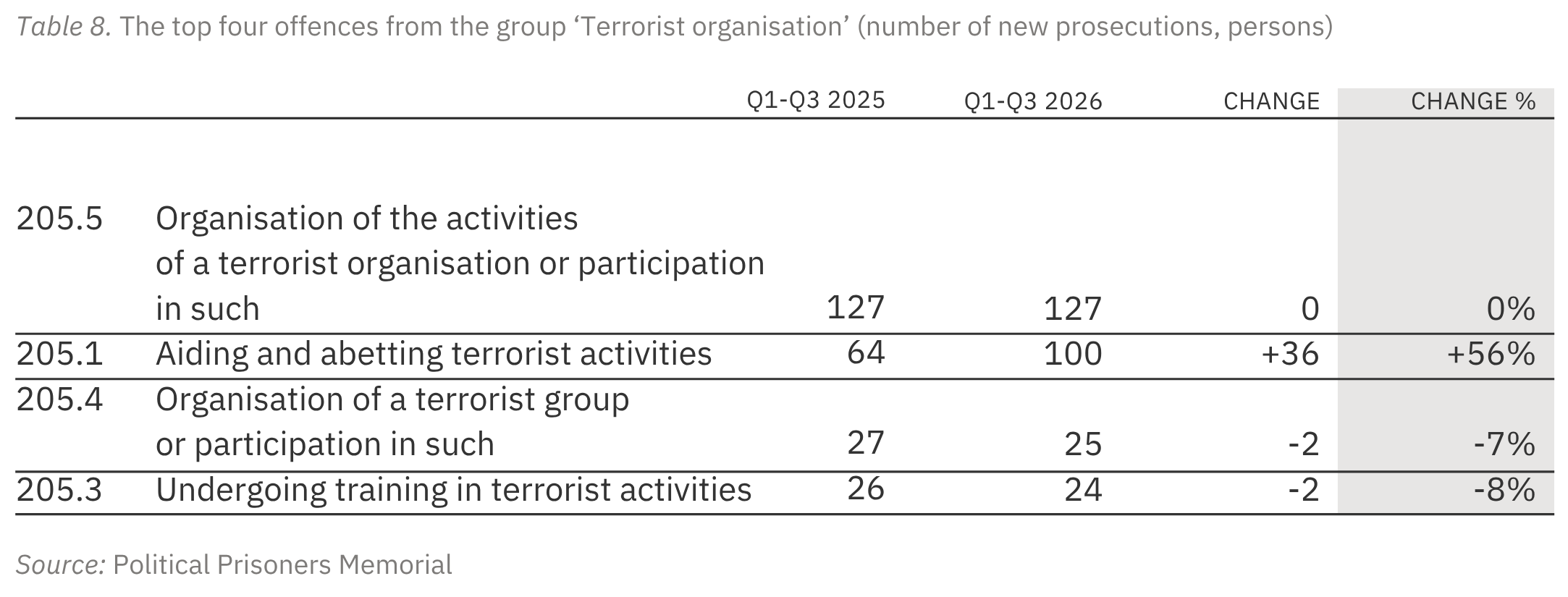
The most marked increase has been in prosecutions involving charges of aiding and abetting terrorist activities (Art. 205.1 CC RF). A significant proportion of this increase was accounted for by criminal prosecutions related to Vyacheslav Maltsev’s Artpodgotovka movement. Although the movement was designated as extremist in 2017, and in 2021 a part of it was designated as terrorist (which is when prosecutions began), it was in 2026, for reasons that remain unclear, that the number of criminal prosecutions for involvement in this movement’s activities rose significantly. While we recorded 20 such criminal prosecutions in the first nine months of 2025, the figure for the corresponding period in 2026 was 44.
_________________
The campaigns of prosecution against supporters of various organisations and movements appear unrelated to one another. With regard to prosecutions for making donations to the FBK, law enforcement agencies needed time to scale up their operations. As a result, the number of defendants rose in 2026. However, it is difficult to say what caused the significant increase in the prosecution of supporters of other movements. Possibly, these campaigns are a manifestation of a new repressive strategy in which the focus of law enforcement is shifting towards allegedly organised structures as representing an increasing threat. However, we cannot rule out the possibility that this is simply a coincidence, with several unrelated campaigns overlapping.
In any case, these campaigns have a significant impact on the overall statistics of repression. First and foremost, the structure of repression is changing. Furthermore, in some cases, they are also affecting the geographical distribution of prosecutions. In our Barometer of Repression for the second quarter of 2026, we noted that the overall rise in the level of political repression in the Far East was largely linked to the prosecution of Jehovah’s Witnesses. It is currently difficult to say how long-lasting this trend will be and what other changes there will be in repressive practices.
Another important, though less obvious, factor influencing political repression is the increased role of the FSB. We have already noted that the FSB has become the main agent of political repression. This is confirmed by data on the proportion of cases involving articles of the Russian Criminal Code that fall within the FSB’s jurisdiction. In the first nine months of 2026, 67% of politically motivated criminal prosecutions involved at least one such article.
With regard to prosecutions for speech, the number of criminal cases is in decline across all offences except for those falling within the jurisdiction of the FSB. However, this can hardly be explained by the fact that Russian citizens have started to make fewer criminalised statements except for those coming within the FSB’s jurisdiction. It is most logical to assume that the FSB demonstrates greater zeal in initiating politically motivated criminal cases than other law enforcement agencies. The argument that the FSB is the main perpetrator of political repression should then be supplemented by the assertion that the FSB is not only a perpetrator but also a catalyst for repression, intensifying its scale. In other words, this assumption can be formulated as follows: the FSB’s approach to politically motivated prosecutions differs from that of other law enforcement agencies and increases the scale of repression.
In conclusion, the use of politically motivated prosecutions in Russia continues to intensify. We wrote about this in detail in our report Enemies, Not Criminals. The increase recorded in the first three quarters of 2026 in the proportion of cases involving at least one particularly serious charge (see Table 4) confirms this conclusion.
Occupied territories
The number of individuals prosecuted on political grounds in the occupied territories, as recorded by our project, stood at 307 in the first three quarters of 2026. During the same period in 2025, that figure was 338. In other words, there has been a reduction in the level of political repression of approximately 10%.
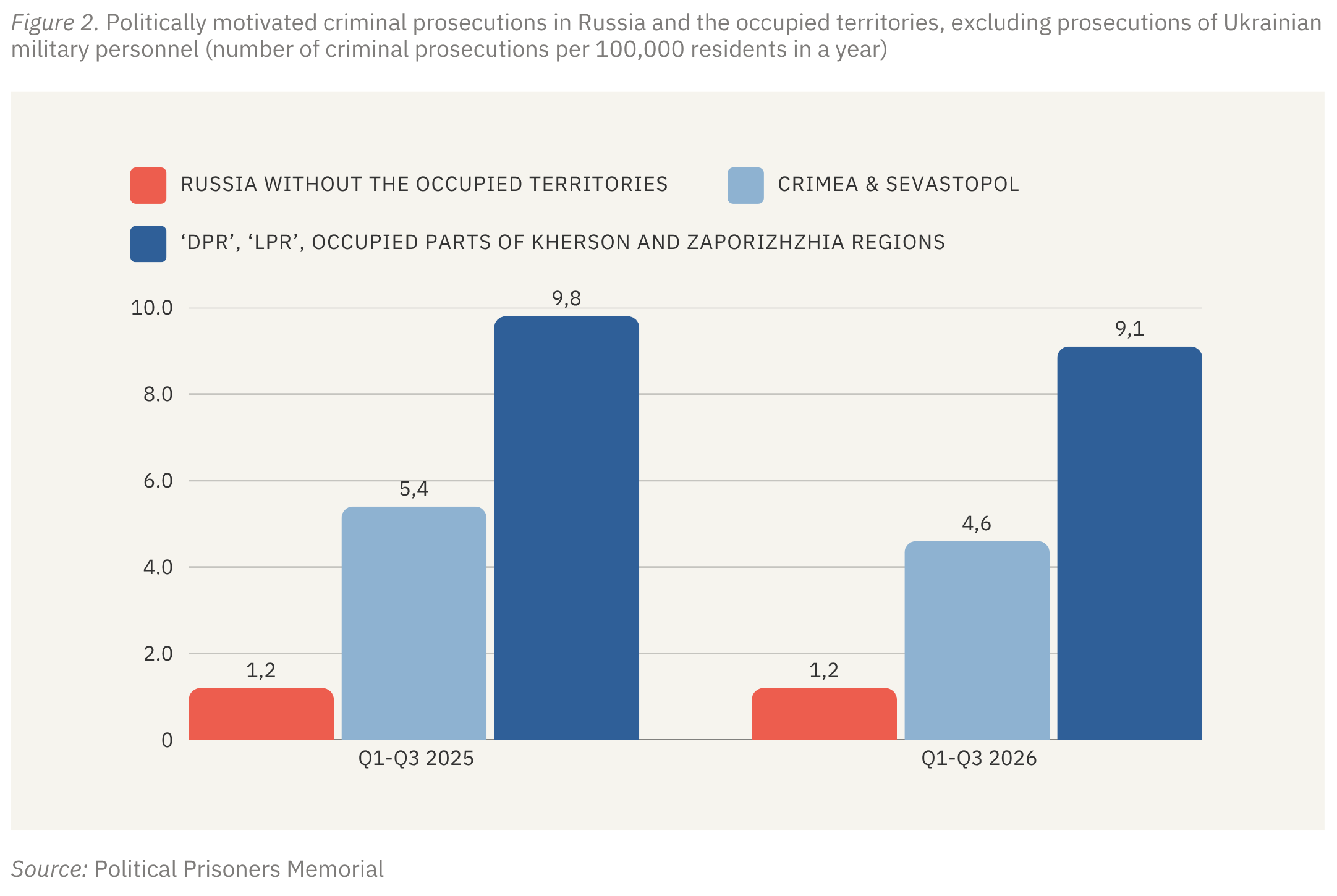
However, the claim that politically motivated prosecutions in the occupied territories decreased in 2026 is not an accurate reflection of the situation. It is rather the surge in criminal prosecutions in the second and third quarters of 2025 that should be noted. During this period, the number of politically motivated criminal cases recorded by our project reached 5.7 per 100,000 inhabitants in Crimea and Sevastopol, and 11.9 in other occupied territories. In 2026, the level of repression fell slightly compared with the peak in the second and third quarters of 2025, although it did not return to the levels seen in late 2024 and early 2025. It would therefore be more accurate to speak not of a reduction in repression, but rather of a sharp increase in mid-2025 that proved to be temporary. It should also be noted that the level of repression in the occupied territories remains several times higher than in the Russian Federation.
We noted this surge in previous quarterly reviews. In our Barometer for the fourth quarter of 2025, several mutually compatible explanations for this phenomenon were put forward. Firstly, we hypothesised that this surge might be a result of the ‘legalisation’ of extrajudicial practices, whereby security forces, for whatever reason, decided to reduce the number of detainees held without legal status and formally charged them. The second possible explanation for the intensification of the repression was that it served a functional purpose in reaction to ongoing resistance to the occupation. The third possible explanation was the internal logic of the repressive apparatus itself. Security forces, endowed with special powers in the occupied territories and operating without even the weak constraints that exist in the Russian Federation, fabricated an ever-greater number of criminal cases. We described this situation as follows: ‘Security forces, less constrained in their actions, are acting more aggressively; prosecutions are on a larger scale, and it appears that the peak level of repression in these regions has not yet been reached.’
At present, when the level of repression in the occupied territories has eased somewhat compared with the peak levels of mid-2025, it is probably safe to rule out the third possible explanation. There is no basis for claiming that Russian security forces in the occupied territories have encountered any new constraints. However, the cause of the increase in repression in 2025 remains unclear.
The pattern of politically motivated prosecutions in the occupied territories has undergone minor changes. A decline, on a roughly comparable scale, occurred across all categories of cases, except for prosecutions for speech. The scale of prosecutions in this category, on the contrary, increased slightly.
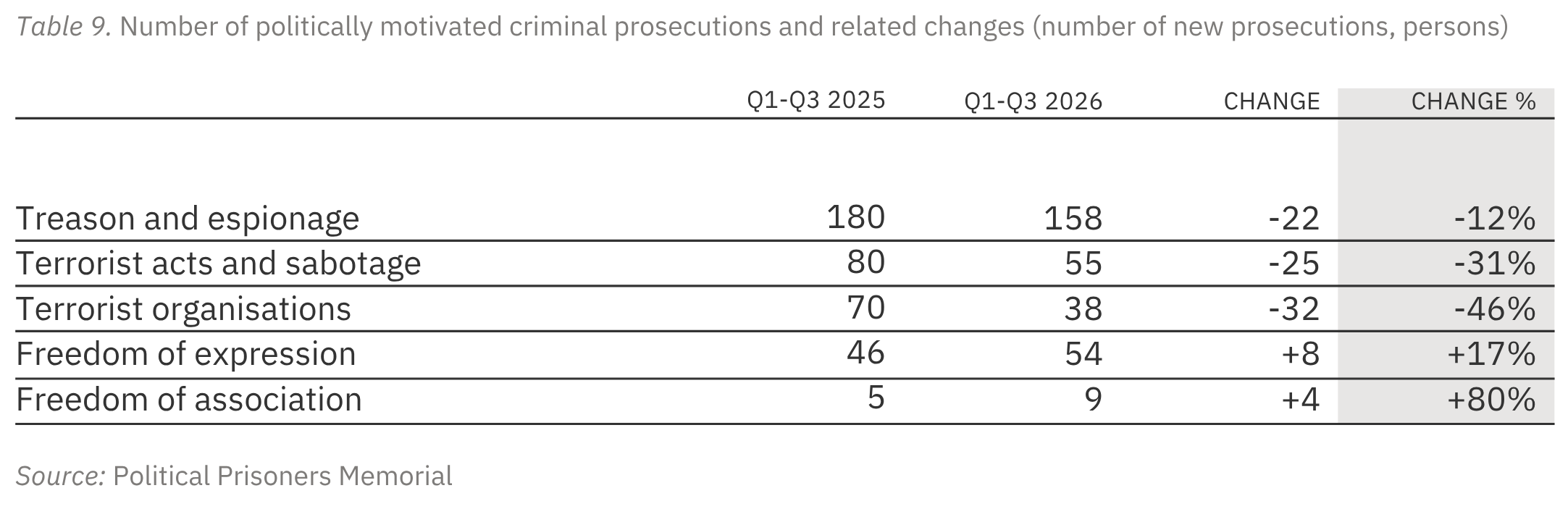
It is difficult to say what is behind the rise in prosecutions for speech in the occupied territories. Possibly the simultaneous decline in the overall level of repression and the increase in the proportion of prosecutions for speech (which, incidentally, remains significantly lower than in Russia) should be interpreted as evidence that the use of repressive measures in the occupied territories has somewhat declined in a shift towards Russian levels of repression. Possibly the occupying authorities consider that repressive measures have proved effective and think it is time to move towards ‘normalisation.’
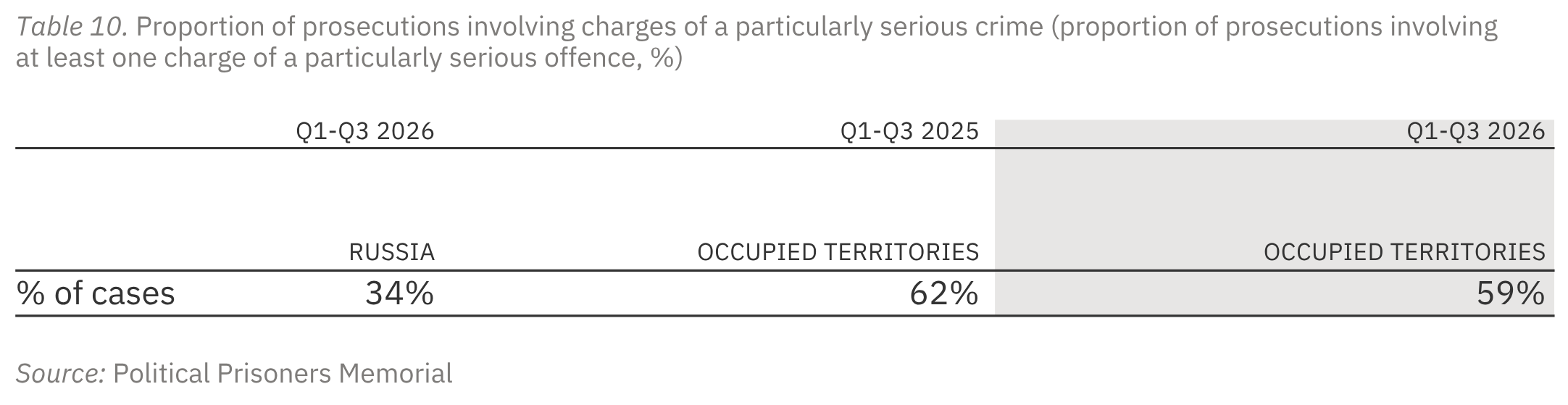
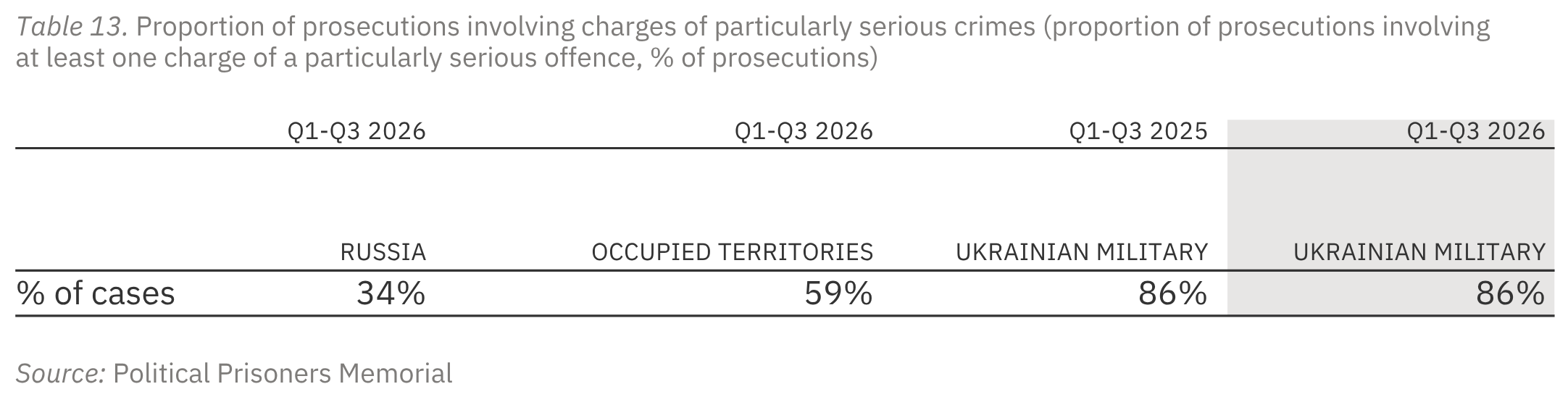
This conclusion is partly supported by the proportion of politically motivated prosecutions involving at least one particularly serious charge. In 2026, this figure had fallen by 3%. It is worth noting, however, that in the occupied territories the proportion of such prosecutions remains almost twice as high as in Russia. In any case, it is premature at present to speak of a noticeable shift in repressive practices in the occupied territories towards ‘Russian levels.’ It may be that we are seeing the first signs of this, or perhaps these fluctuations are caused by other factors.
Ukrainian military personnel
The campaign of prosecutions of Ukrainian military personnel taken prisoner in Kursk region has been the most significant factor determining the dynamics of prosecutions of Ukrainian military personnel in 2025–2026. This campaign clearly violated the provisions of the Geneva Convention of 12 August 1949 relative to the Treatment of Prisoners of War, ratified by both Ukraine and Russia. Prisoners of war may not be subject to prosecution solely on grounds of participation in an armed conflict.
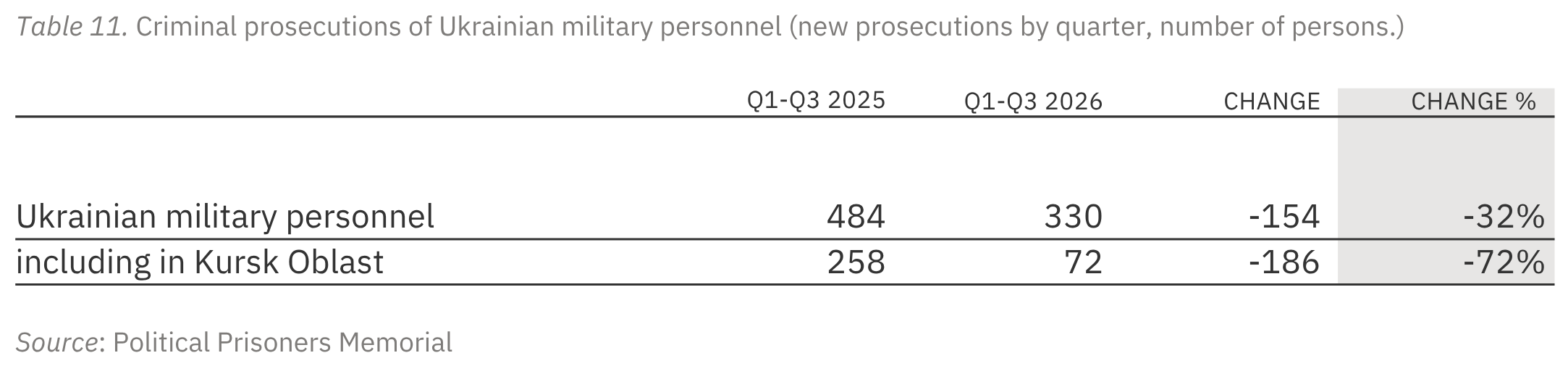
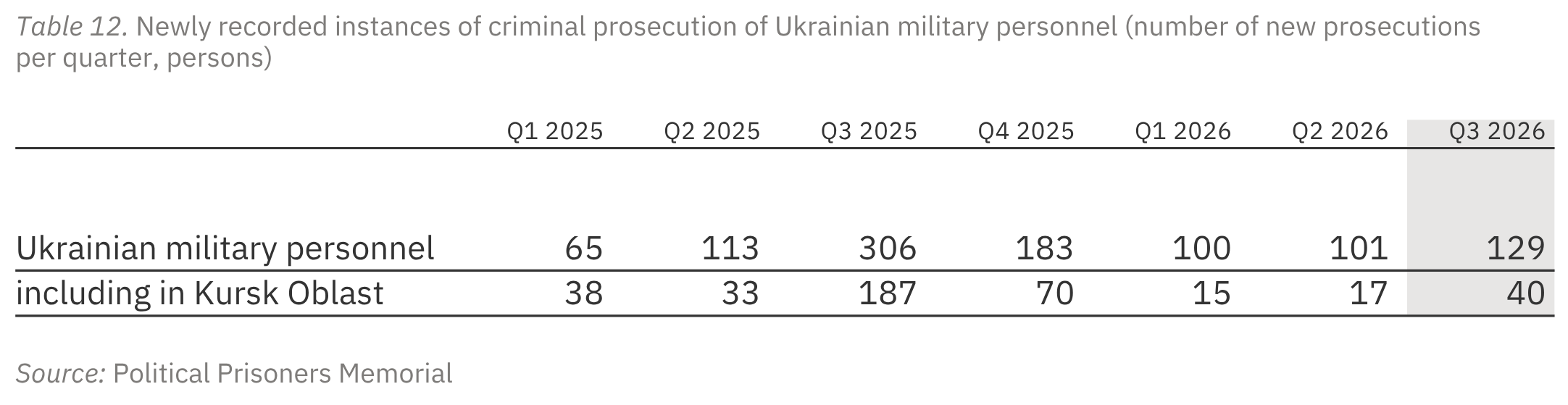
The number of new criminal prosecutions of Ukrainian service personnel, recorded by our project in the first nine months of 2026, was down by almost a third compared with the same period of 2025. The overall reduction in the number of new prosecutions was primarily a result of a reduction in the number of new prosecutions of prisoners of war from the Kursk sector. The decrease in this group even slightly exceeded the overall reduction.
As mentioned previously, the peak in the prosecution of Ukrainian military service personnel taken prisoner in Kursk region has passed. However, we only learn of many prosecutions after some time has passed. In the third quarter of 2026, the number of newly recorded cases of criminal prosecution rose once again. In total, Russian authorities claimed to have taken prisoner in Kursk region more than 500 Ukrainian military service personnel. At present, we are aware of 400 individuals whose prosecutions are either completed or ongoing.
As we have repeatedly emphasised, the prosecution of Ukrainian military service personnel has been of the most severe kind. While this report does not cover the extrajudicial pressure and abuse to which Ukrainian prisoners of war have been subjected, we note that the proportion of charges for particularly serious offences under the Russian Criminal Code used in prosecutions of this group stands consistently at 86%. This is almost 30% higher than in the occupied territories, and more than 50% higher than in Russia as a whole.
Legal developments
In the third quarter of 2026, no amendments directly related to politically motivated prosecutions were made to the Criminal Code of the Russian Federation.
The most notable legislative initiative relating to political repression was the law ‘On Temporary Restrictive Measures with Respect to Persons outside the Russian Federation Evading the Execution of their Sentences’, adopted by the State Duma of the Russian Federation in July 2026 and signed by the President on 4 August.
The law applies to individuals outside the borders of the Russian Federation who are subject to a final and binding court conviction in a criminal case, or a ruling imposing an administrative-law penalty, and are deemed to be evading the enforcement of their sentence (including fines, community service, compulsory work in custody, or imprisonment).
Among the administrative-law offences covered by this law are ‘foreign agent’ offences, participation in the activities of ‘undesirable organisations,’ making calls to violate the territorial integrity of the Russian Federation or calls for the imposition of sanctions against Russia, and the ‘discrediting’ of the Russian army and Russian authorities.
The law provides for far-reaching restrictions on a number of rights:
● financial and property rights (freezing of bank accounts and other financial assets on the territory of the Russian Federation; transfer of all income to special accounts; a ban on transactions involving property and vehicles);
● access to public and digital services (suspension of the provision of state and municipal services in electronic form; a ban on registration as sole traders and of legal entities; a ban on the use of banking apps; etc.);
● a ban on renouncing Russian citizenship, carrying out notarial acts, receiving consular services (including obtaining a foreign passport), revocation of previously issued powers of attorney, etc.
In essence, this law imposes an almost total deprivation of civil rights on Russian citizens falling within its scope, while maintaining their obligations to the state. A decision to impose restrictive measures on a person evading the enforcement of a sentence is to be taken by the Ministry of Justice of the Russian Federation on the basis of ‘proposals’ it receives, submitted by the FSB, the Ministry of Internal Affairs, the Prosecutor General’s Office, the Federal Bailiff Service or the Federal Tax Service. Restrictive measures take effect from the moment a person is entered into a special register. The grounds for lifting restrictive measures are a person’s return to Russia, their death, the quashing of a criminal or administrative-law conviction, or the completion of an imposed sentence.
Furthermore, on 1 September 2026, amendments to the Code of Administrative Offences of the Russian Federation entered into force, setting out specific provisions regarding the imposition of administrative-law liability for persons residing outside Russia. The amendments introduced a procedure whereby a court may freeze a person’s funds and other property on the basis of a prosecutor’s application, without summoning the parties, even before a final decision is handed down in the case. Furthermore, the value of the property that may be frozen is not limited to the amount of the fine provided for under the relevant article of the Code of Administrative Offences. This procedure will apply to individuals charged with offences under ‘political’ articles of the Code of Administrative Offences, such as violating the regulations governing foreign agents, discrediting the Russian army, co-operating with undesirable organisations, disseminating ‘fake news,’ insulting the authorities online, making calls for sanctions against Russia, and producing or disseminating ‘extremist materials.’
Appendix 1