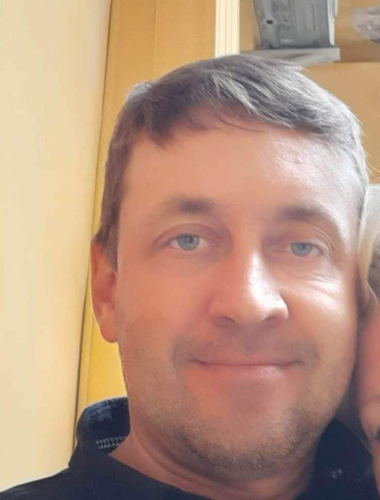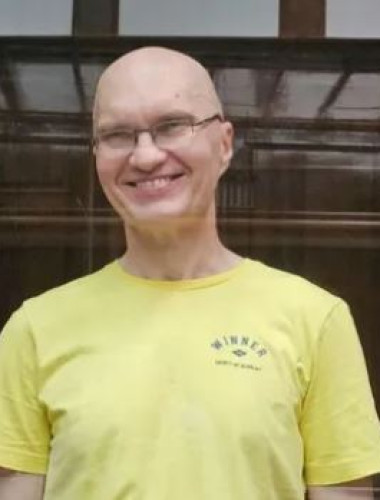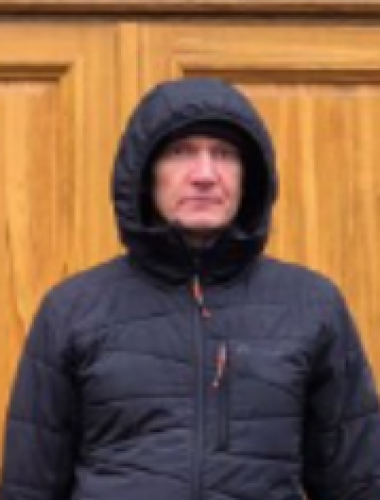
Arrest over 219 roubles’ worth of Telegram ‘stars’, and 15 years on a fabricated espionage charge
Aleksandr Novosad from Chelyabinsk worked for a company that sold and installed ventilation equipment. He was detained in March 2024 and charged with incitement to extremism, public justification of terrorism and incitement to terrorism over anti-Putin comments on Telegram, as well as treason over a transfer of 15,000 roubles (≈€155) to Ukraine. During his detention, officers beat Aleksandr Novosad, abused him and forced him to record a video confession. The court sentenced him to 17 years in a high-security penal colony.
Galina Umyarova, from the Moscow Oblast, is a former parachutist who spent her retirement breeding quails and caring for sick relatives. In April 2026 she was sent to a remand prison on a charge of financing terrorism, over 100 Telegram ‘stars’, worth a total of 219 roubles (≈€2), that she had sent under a post by the Freedom of Russia Legion.
Vladyslav Buhar was abducted from his village in the occupied part of Zaporizhzhia Oblast in the summer of 2024, and charged several months later. Investigators claim he transferred 5,000 hryvnia (≈€96) to Ukraine’s Azov unit. The court convicted him under the financing-terrorism statute and sentenced him to nine years in a high-security penal colony.
Yekaterina Knyazeva is a trainee architect from Voronezh. At the end of 2025, prosecutors opened criminal proceedings against her over two Telegram comments she had posted back in the autumn of 2022. Investigators treated the comments as public justification of terrorism and incitement to terrorism. In April 2026, after a single hearing during which Yekaterina Knyazeva cried almost throughout, the court sentenced her to two years in a penal colony.
Saint Petersburg resident Aleksei Bykov was detained in February 2025 and accused of publicly justifying terrorism over six Telegram posts about the Russian Volunteer Corps. He remained under house arrest until his sentencing; in October 2025 the court sentenced him to five and a half years in a penal colony.
Adrian-David Kercho, a Romanian citizen living in the UK, travelled to Abkhazia to marry a woman he had met online. A few months later, in November 2024, Abkhaz security forces detained him and soon handed him over to their Russian counterparts. According to Adrian-David Kercho, FSB officers tortured him to extract a confession that he had passed photographs of air-defence installations to Ukrainian intelligence officers and had planned to fight for Ukraine’s armed forces in a nonexistent ‘British Legion’. The court sentenced him to 15 years in a high-security penal colony on an espionage charge.
In Saint Petersburg in August 2026, officers detained two local residents a day apart on charges of financing extremist activity over donations to the Anti-Corruption Foundation. Igor Zaitsev, deputy dean of the faculty of philosophy, theology and religious studies at the Russian Christian Humanitarian Academy named after F. M. Dostoevsky is accused of transferring 3,500 roubles (≈€36), and Darya Berezovskaya of transferring 2,100 roubles (≈€22).
Russian forces took 17 Ukrainian servicemen prisoner and charged them, over their service in Azov, with participation in a terrorist community and undergoing terrorism training. The court sentenced Andrii Koshelenko, Vasyl Zalutskyi, Andrii Zhyzhoma, Maksym Onduliak, Davyd Cherednyk, Dmytro Lenko, Andrii Tetiorkin, Oleksandr Stafiichuk and Yurii Tryfanov to 18 years’ imprisonment each, and Oleksandr Dokiichuk and Dmytro Lebedev to 17 years each. The sentences given to Serhii Borovyk, Ivan Butenko, Vladyslav Yesiuk, Anton Usov, Vladyslav Sokol and Volodymyr Mityun remain unknown to us.
You can read more about these cases, including addresses for correspondence with political prisoners, in our full report.
One-off or regular donations in support of people affected by political repression in Russia can also be made via our website.