Five years for two comments about drones, and 20 years for serving in a Crimean Tatar battalion
Read our overview of these and other cases of political prisoners we have recognised last week
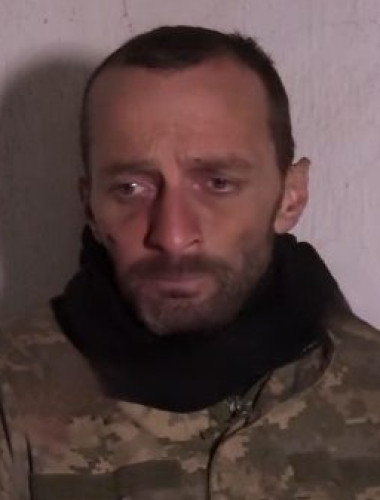
Seiran Asanov received Russian citizenship after the annexation of Crimea, but later left for mainland Ukraine. In 2024, he joined the 48th Separate Assault Battalion of the Ukrainian Armed Forces named after Noman Çelebicihan, and was soon taken prisoner by Russian forces. He was sentenced to 20 years in a high-security penal colony on charges of high treason, participation in a terrorist organisation, and undergoing terrorism training.
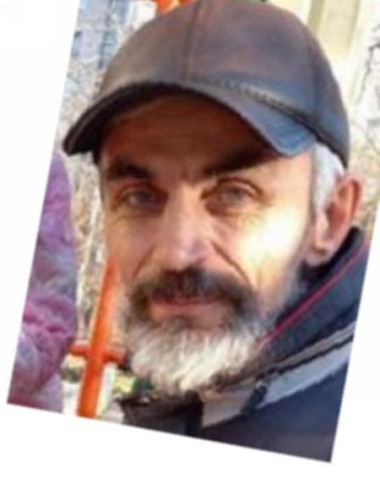
Viktor Kuzmenko, a military pensioner from Mariupol, was subjected to ‘filtration measures’ for a year and a half after the occupation began, but was later released. He subsequently accepted Russian citizenship and, in April 2024, travelled to Russia to obtain an international passport so that he could join relatives in Europe. He was detained on the border with Rostov Oblast. He was accused of having served with Azov and sentenced to 18 years in a high-security penal colony on charges of participation in a terrorist community and undergoing terrorism training. In court, he said he had served in a different unit.
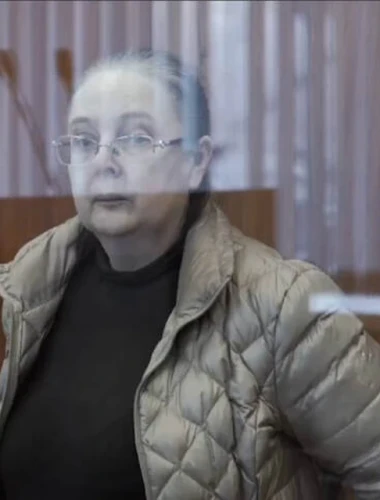
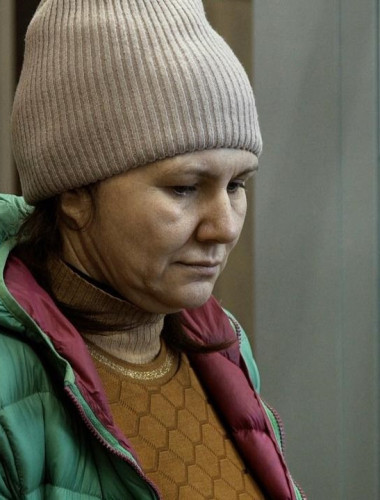
Viktoriya Tkachenko and Olena Maksymenko, residents of the occupied town of Tokmak in Zaporizhzhia Oblast, were sentenced in April 2026 to 12 and 13 years in a penal colony, respectively, on charges of high treason. According to the prosecution, Tkachenko donated 1,000 hryvnias (≈€20) to the Ukrainian Armed Forces, while Maksymenko donated around 13,000 hryvnias (≈€250).
Volodymyr Dobriian, a native of Ukraine, lived in Tver and worked as a self-employed repairman. He was sentenced to five years in a penal colony on a charge of the public justification of terrorism over two comments he posted on Telegram about Ukrainian drone attacks on Russian territory.
Igor Ranav is a resident of the town of Pevek and a former head of a branch of the Association of Indigenous Small-Numbered Peoples of Chukotka, as well as a well-known businessman and public figure in the region. Since 2022, he has been prosecuted several times on administrative charges for anti-war statements. In February 2026, Igor Ranav was sentenced to two years in a settlement penal colony on a charge of the rehabilitation of Nazism over posting a picture featuring the St George ribbon.
Aleksei Devyatkin is an engineer from Chita. He was detained in late December 2025 and later sentenced to two years in a penal colony over a single comment he posted beneath a news report about a Ukrainian Armed Forces missile strike on a restaurant in occupied Lysychansk. According to the prosecution and the court, his comment amounted to the public justification of terrorism.
Valeriy Ledovskoy, from Astrakhan Oblast, was sentenced in May 2026 to three years in a penal colony. The authorities alleged that comments criticising Putin and approving of the actions of the Ukrainian Armed Forces amounted to public calls for extremism and terrorism.
Sergei Dubkov, a resident of Stavropol Krai, was detained in December 2025 and, after a series of ‘carousel’ arrests, remanded in custody on charges of spreading military ‘fake news’ motivated by hatred. He was sentenced to six years in a penal colony over several comments he posted on Telegram.
Oleg Popov lived in Novosibirsk and worked as a logistics director for a retail chain. He had previously captained a hockey team. Oleg Popov was arrested in March 2026 and accused of public calls for terrorism, its public justification, and propaganda of terrorism over Instagram posts supporting the Russian Volunteer Corps (RDK).
Olga Archibasova is an activist from Altai Krai. She has campaigned against the abolition of local self-government, rising utility tariffs, and digitalisation, and supported farmers in Novosibirsk during the mass culling of livestock. In August 2026, Olga Archibasova was arrested, along with several other supporters of Svetlana Lada-Rus (Peunova). She is accused of public calls for terrorism over a music video set to a cover version of ‘The Internationale’.
Mikhail Ukolov, a resident of Kursk Oblast, was sentenced in July 2026 to one and a half years of compulsory labour on a charge of financing an extremist organisation over transferring 1,000 roubles (≈€10) to the Anti-Corruption Foundation.
You can read more about these cases, including addresses for correspondence with political prisoners, in our full report.
One-off or regular donations in support of people affected by political repression in Russia can also be made via our website.