5.5 years over a single comment and 14 years for calling on others to fight on Ukraine’s side
Read our overview of these and other cases of political prisoners we have recognised last week
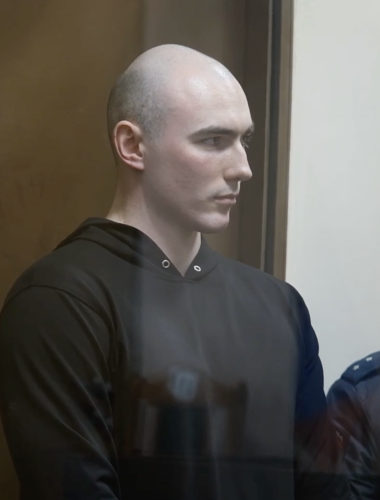
Kirill Denisenko, from Krasnodar, was detained in August 2025 while trying to cross the border on foot in Bryansk Oblast, allegedly to fight on Ukraine’s side. The 20-year-old man was sentenced to nine and a half years in a high-security penal colony on charges of attempted high treason and attempted illegal border crossing.
Mikhail Aid, from Tomsk, was reportedly detained in August 2024 over calling on people, in a public group and in private messages, to join the Freedom of Russia Legion and enrol on its drone operator courses. He was sentenced to 14 years in a high-security penal colony on charges of assisting terrorist activity, public calls for terrorism, and high treason.
Artyom Khoroshilov, from Moscow, holds a Candidate of Physical and Mathematical Sciences degree and works at the Prokhorov General Physics Institute of the Russian Academy of Sciences. He was detained in December 2023 and initially charged with using malicious computer software over his alleged involvement in a DDoS attack on the website of Russian Post. A charge of high treason was then added, relating to the same attack and to transfers to Ukraine. Artem Khoroshilov was later also charged with preparing an act of sabotage and the illegal manufacture of explosives. According to investigators, the scientist was planning an explosion on a railway. He was sentenced to 21 years in a high-security penal colony.
Mikhail Antonovich, from Tyumen, allegedly bought Telegram Stars worth around 300 roubles (≈€3) and then sent them to several posts in news and personal channels. Investigators concluded that, because other posts in those channels had called for donations to units of the Ukrainian army designated as terrorist by Russia, Stars sent to any post in those channels amounted to financing terrorism.
Valentin Gulimov, a bank employee from St Petersburg and father of a young child, was remanded in custody in October 2025 over comments on Telegram. Three of them were about Azov, and in one he said that protesters outside the Russian embassy in Yerevan should set it on fire. Valentin Gulimov was sentenced to seven years in a penal colony on charges of public justification of terrorism and public calls for terrorism.
Six Ukrainian servicemen were charged with participation in a terrorist community over their service with Azov. Ivan Matushkin was sentenced to seven years, Roman Oliinyk and Oleh Doroshenko to six years, Oleksandr Mytiuk to five and a half years, and Andrii Hulak to five years and four months. Oleksii Yermak‘s sentence is not known. A further nine servicemen were also charged with undergoing terrorism training. Dmytro Romanenko was sentenced to 20 years, Dmytro Smetaniuk, Artem Syryk, Dmytro Zhytnyk and Tymofii Vashchenko to 19 years, Artem Shevchenko, Serhii Medvedev and Oleksandr Shcherbak to 18 years, and Bohdan Trofymiuk to 16 years in a high-security penal colony.
Raisa Serohlazova, a resident of Feodosia, was charged with public calls for terrorism over a single comment in which she allegedly called for missile and bomb strikes on Russian military facilities in occupied Crimea. She was sentenced to five and a half years in a penal colony in May 2026.
Ruslan Useinov is a native of Uzbekistan who lives in occupied Crimea. He was sentenced to six and a half years in prison in May 2026 on charges of public calls for terrorism over three posts on a messaging app. According to investigators, in these posts he called for missile strikes on Russian territory, including Moscow and St Petersburg.
You can read more about these cases, including addresses for correspondence with political prisoners, in our full report.
One-off or regular donations in support of people affected by political repression in Russia can also be made via our website.