Teenagers on trial on terrorism charges, a Ukrainian lawyer forced to dig trenches, and a preacher
Read our overview of these and other cases of political prisoners we have recognised last week
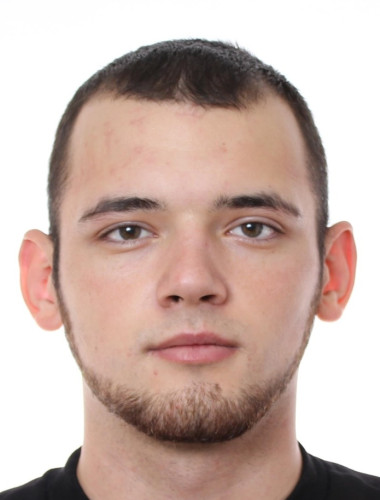
Two teenagers from Sverdlovsk Oblast — 14-year-old Kirill Blokhin and 17-year-old Aleksandr Kruchinin — were detained in January 2025. They were remanded in custody on charges of setting fire to a relay cabinet on a railway line. They face up to ten years’ imprisonment on terrorism charges.
Andrei Voinov, a worker from Pskov Oblast, posted on VK that he considered setting fire to a relay cabinet for money to be acceptable. In April 2026, he was sentenced to one year in a penal colony on charges of justifying terrorism.
Dmitry Arkhipov, a street cleaner from Omsk Oblast, was arrested in May 2024. For copying a Telegram post calling for donations to the Russian Volunteer Corps, he was prosecuted under two articles: financing terrorism and justifying terrorism. He was sentenced to 11 years in a high-security penal colony.
Tatiana Golovina from Novosibirsk Oblast is being prosecuted for donating 3,500 roubles to the Anti-Corruption Foundation. In May 2026, she was placed under house arrest. Valeria Dyugaeva from Moscow was placed under house arrest on similar charges on 21 May 2026. Aleksei Yekaterinin, also from Moscow, was sentenced to four years in a penal colony for making seven donations of 300 roubles each.
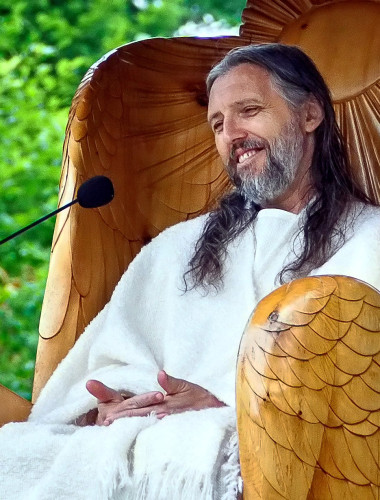
Sergei Torop (Vissarion), the leader of the ‘Church of the Last Testament’, which he founded in the 1990s, was arrested in September 2020 along with two associates: Vladimir Vedernikov and Vadim Redkin. They were charged with establishing and leading a religious organisation whose activities involved violence, and with intentionally causing grievous bodily harm. According to the prosecution, seven people among Vissarion’s thousands of followers developed mental disorders as a result of practices within the community. Vedernikov, the director of the community’s school, was also charged with fraud in connection with voluntary donations from teachers. Torop and Vedernikov were sentenced to 12 years in a high-security penal colony, Redkin to 11. Before the criminal case was opened, the authorities mounted a campaign against the ‘Church of the Last Testament’; after its leaders were arrested, the organisation was dissolved.
Alik Yeliseev and Sergei Barsukov, Jehovah’s Witnesses from Slavgorod in Altai Krai, were sentenced to six years’ imprisonment for organising the activities of an extremist organisation, specifically, for holding video conferences at which participants read and discussed the Bible. Alik Yeliseyev is a third-generation Jehovah’s Witness.
After the Russian occupation began, Yevhen Ilchenko, a lawyer from Melitopol in Ukraine, started a Telegram channel called ‘Dear Poplar’ (Milyy Topol), where he reported on events in the city. In July 2022, he was abducted by Russian security forces. A video subsequently appeared in which he ‘confessed’ to cooperating with the SBU, inciting ethnic hatred, and money laundering. Ilchenko was tortured and forced to dig trenches. No formal charges have ever been brought against him, yet he continues to be held in captivity.
Olena Nikolaieva from Makiivka in Ukraine’s Donetsk Oblast was detained no later than March 2025 and charged with financing terrorism. She allegedly transferred money through intermediaries to ‘Azov’ for the purchase of drones. She was sentenced to nine years in a penal colony.
Yuri Boiko, a sheet metal worker for Russian Railways from Kabardino-Balkaria, was detained in Belgorod Oblast in February 2024. According to the prosecution, he submitted an application to join ‘Azov’ and a video of an oath of allegiance to a representative of the SBU, after which he intended to travel to Ukraine. He was sentenced to 17 years in a high-security penal colony on charges of participation in a terrorist organisation and attempted state treason.
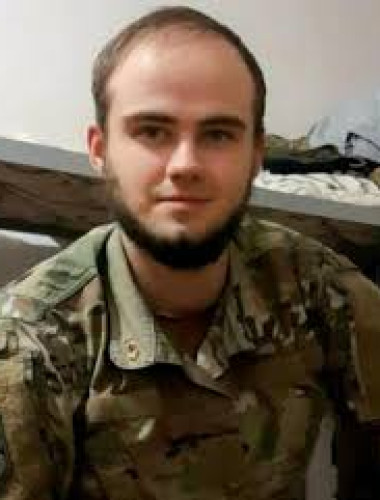
Eight Ukrainian servicemen have been charged with participation in a terrorist community and undergoing terrorist training in connection with their service in ‘Azov’. Mykhailo Ihumentsev was sentenced to 20 years’ imprisonment, Artur Anikanov and Serhii Spanchek each received 18 years. The sentences handed down to Pavlo Bahriak, Volodymyr Zhdamarov, Dmytro Samatov, Dmytro Orel, and Roman Meshcheriakov are unknown.
You can read more about these cases, including addresses to write to the political prisoners, on our website.
By staying informed, sharing updates, or making one-off or regular contributions, you can help those affected by political repression in Russia.