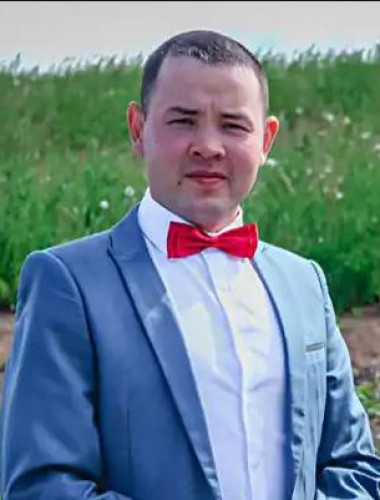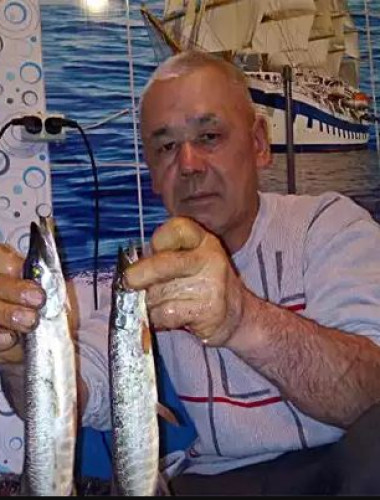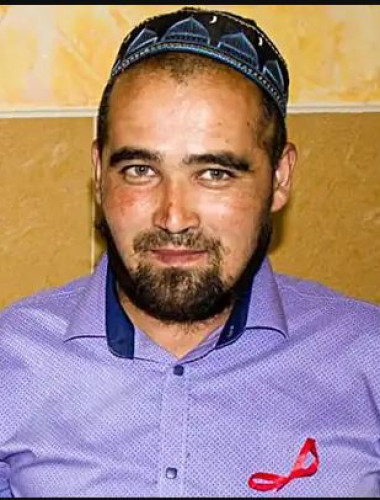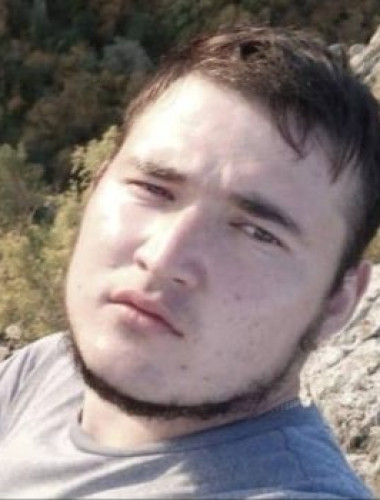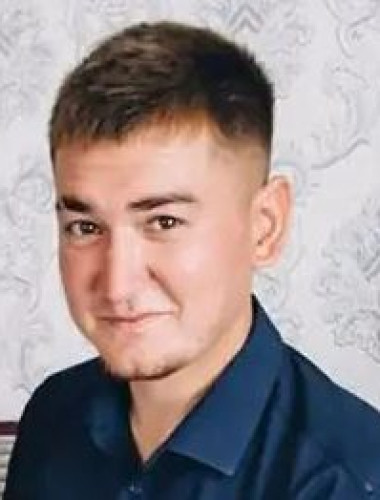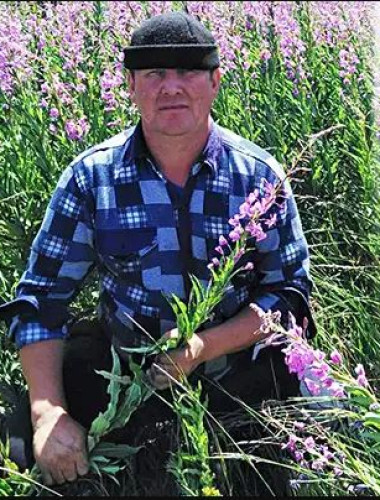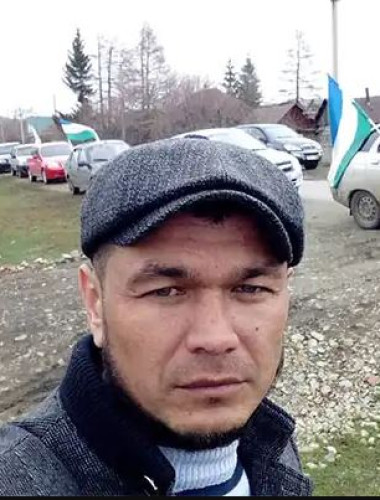
Those convicted in the ‘Baymak case’ are political prisoners
Forty-six participants in a public rally in support of opposition figure Fail Alsynov were sentenced to long terms of imprisonment
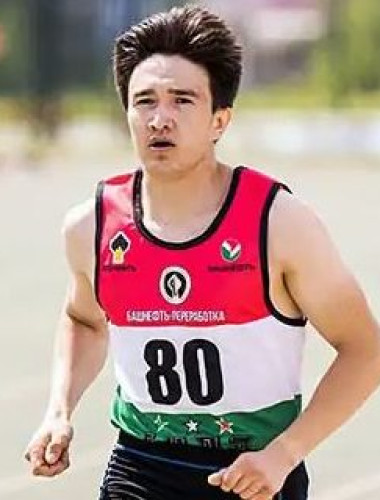
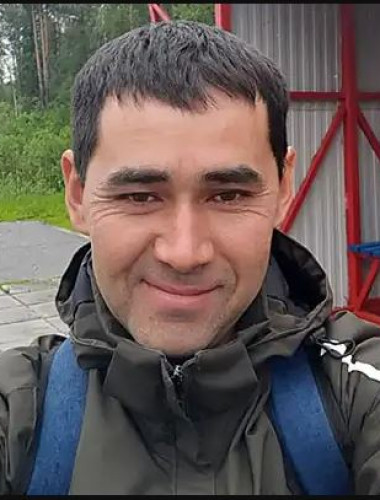
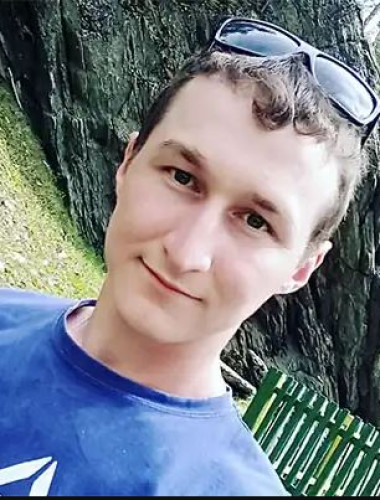
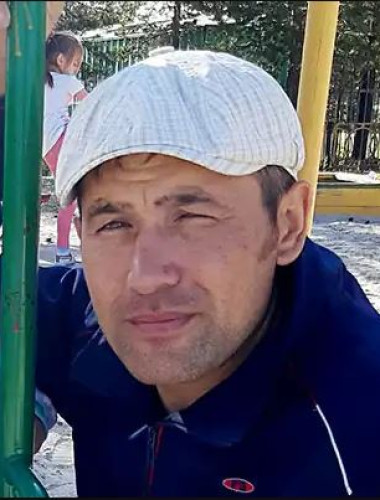
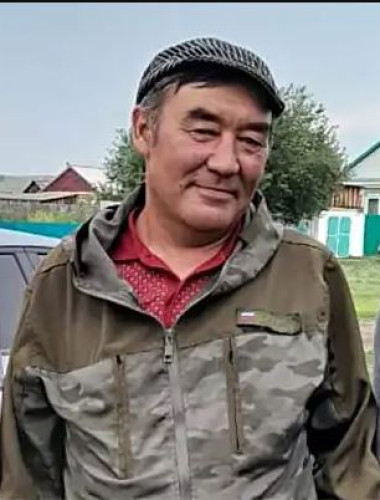
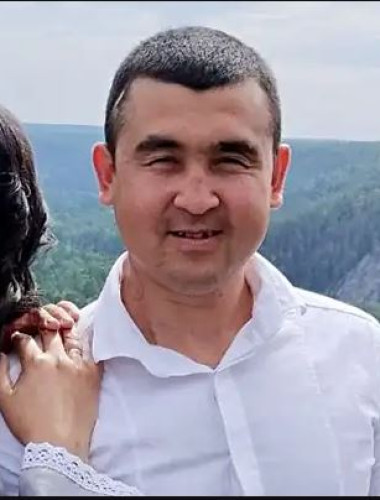
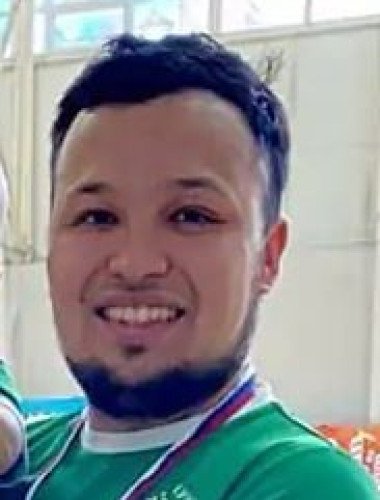
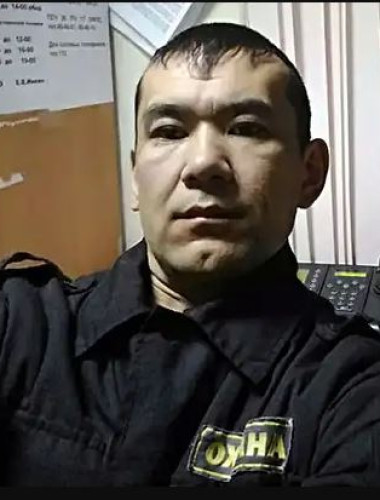
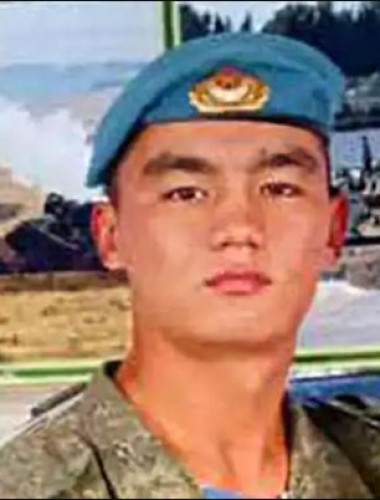
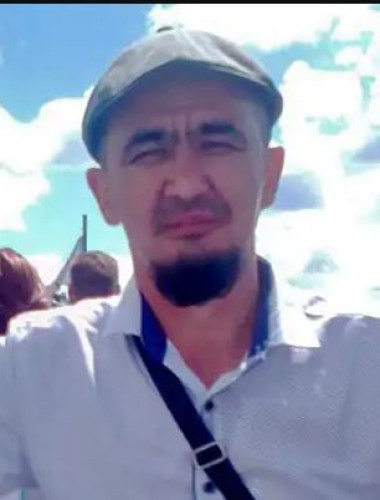
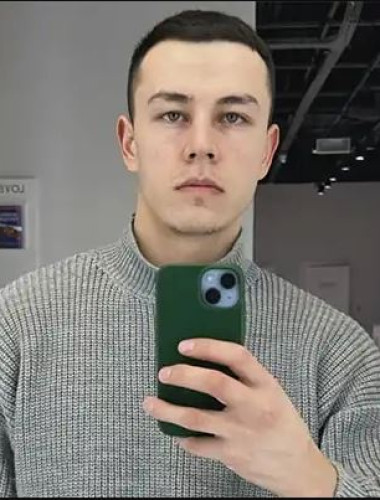
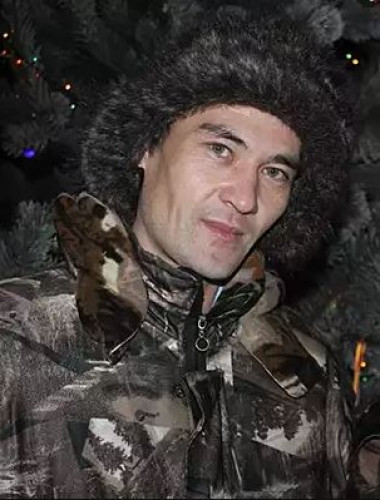
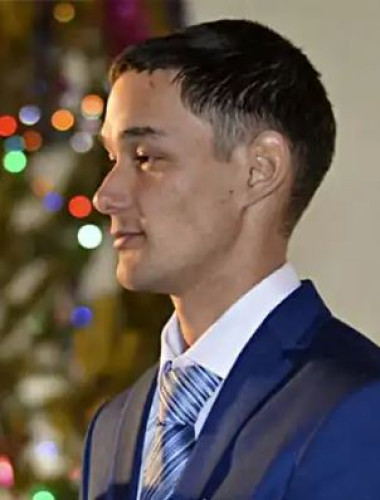
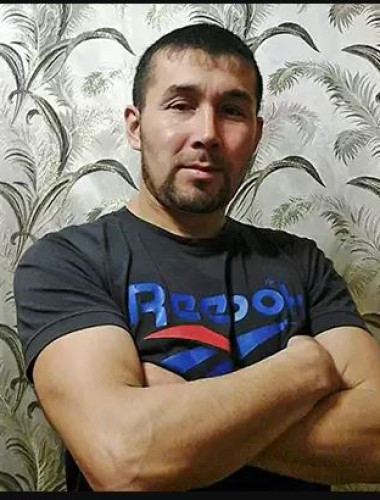
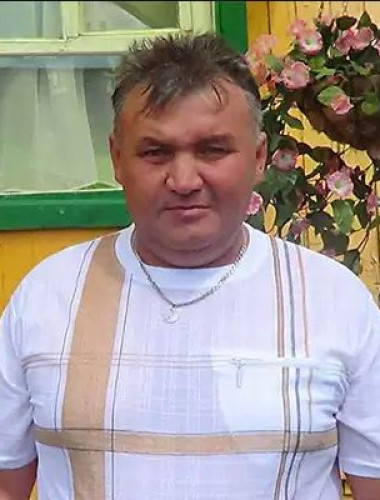
The ‘Political Prisoners. Memorial’ human rights project, in accordance with international criteria, considers Aytugan Abdullin, Denis Ikbaev, Murat Bikbulatov, Ilmir Ryskulov, Aybulat Nigamatov, Aydar Yusupov, Ilnaz Makhmutov, Zakiy Ilyasov, Vallyam Mutallapov, Aytugan Kitikov, Shafkat Ulmasbaev, Rayan Fattakhov, Fidan Ismagilov, Ilnar Asylguzhin, Aygiz Ishmurzin, Rafil Utyabaev, Fanur Khazhin, Fangiz Sharifgaleev, Aygiz Absalyamov, Rail Galin, Vadim Kagarmanov, Aysur Tulybaev, Aygiz Urazaev, Khalid Ishkuvatov, Ilfat Ishmuratov, Zakir Kulmukhametov, Danis Uzyanbaev, Azat Mirzin, Fatikh Akhmetshin, Vener Yaubasarov, Vilyur Karachurin, Aytugan Malabaev, Akhat Gibadullin, Galim Zamanov, Ilnur Khazhiev, Dinar Akbalin, Dayan Valeev, Dim Davletkildin, Ilmir Akhatov, Azat Kusarbaev, Aidar Magadeev, Saniya Uzyanbaeva, Azamat Aminev, Aynur Karimov, Vilyur Sagadiev and Albert Tagirov political prisoners. For taking part in a protest in support of Bashkir opposition figure Fail Alsynov, the 46 individuals were convicted of participating in riots and of using violence against representatives of the authorities. Their criminal prosecutions and convictions violated their rights to freedom of peaceful assembly, freedom of expression and a fair trial. We demand that the 46 individuals be released, their criminal convictions for riot be quashed, and their criminal convictions for use of violence against representatives of the authorities be reviewed.
There is evidence that the prosecution of Ilshat Ulyabaev was unlawful and politically motivated. We demand that his criminal case be reviewed in a fair trial in accordance with international standards of justice.
There is evidence of political motivation and unlawfulness in the cases of other defendants remanded in custody whose trials are pending. We continue to monitor the progress of these criminal cases with a view, potentially, to subsequently recognising these defendants as political prisoners.
What were the charges in the ‘Baymak case’?
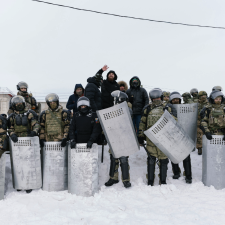
On 17 January 2024, thousands of residents of Bashkortostan gathered outside a courthouse in Baymak, where the trial of Fail Alsynov, leader of the Bashkir national movement, was taking place. Alsynov was sentenced to four years in a penal colony for inciting hatred in a speech at an environmental rally. Alsynov’s supporters were outraged by the verdict. Riot police attempted to disperse the protesters, who pelted them with snowballs. The police responded by firing tear gas, using batons and throwing flashbang grenades.
The next day, mass arrests began in Bashkortostan. About 500 people were charged with administrative-law offences. Criminal cases were opened against at least 82 people, including three women. Almost all the accused were remanded in custody, most of them the sole breadwinners for their large families.
Most of those facing criminal charges were accused of using violence against police officers that was not dangerous to life or health (Article 318, Part 1, of the Russian Criminal Code) or participating in riots (Article 212, Part 2). Ten people were charged with organising riots (Article 212, Part 1). Allegedly for security reasons, the trials of the defendants have been held in different regions of Russia, often in camera.
The first verdict was handed down in the case of Ilshat Ulyabaev, convicted on a charge of using violence against a police officer that was dangerous to life and health (Article 318, Part 2). He pleaded guilty, and his case was considered under a special procedure for a plea agreement.
To date, 48 defendants in the Baymak case have been convicted. Sentences handed down have ranged from terms of imprisonment of three years three months to seven years six months. Trials of other defendants are continuing.
Why do we consider the defendants political prisoners?
There were no riots outside the courthouse in Baymak. There was a peaceful gathering in support of Fail Alsynov, whose unlawful prosecution outraged many residents of Bashkortostan.
Those gathered did not commit any acts that could be classified as riots. The security forces used unjustified force against people awaiting the verdict and chanting slogans.
The wording of the article of the Criminal Code on riots is vague, which allows the authorities to apply it arbitrarily against dissidents. The violence against the authorities was provoked by the actions of the security forces themselves, who tried to disperse the protesters. At the same time, claims by the prosecution that police officers in full protective gear experienced physical pain from snowballs thrown at them seem absurd.
The scale of the criminal case is unprecedented even for Putin’s Russia, and the severity of the sentences handed down was disproportionate to the public danger of the acts committed. For example, Saniya Uzyanbaeva was sentenced to five years and six months’ imprisonment, and her son Danis, who tried to protect her from the police, was sentenced to a term of four and a half years. Mother and son were tried in different Russian regions, although clearly their cases should have been heard in a single trial.
Many of the defendants deny that they used violence against the police. Some deny they were even outside the courthouse that day. Evidence of guilt consists of videos, often of very poor quality, or, failing that, of the testimony of police officers and provocateurs in the crowd. The court also heard from classified prosecution witnesses, whose testimony cannot be verified.
The security forces themselves used violence during the arrests and interrogations. Dima Davletkildin was sent from the remand prison to the hospital because of spinal injuries he had suffered. Rifat Dautov died in a police van after his arrest, an examination of his body revealing numerous injuries he had suffered. Minigar Bayguskarov committed suicide because of intimidation by the security forces.
A detailed description of the ‘Baymak case’ and of our position is available on our website.
Recognition of an individual as a political prisoner, or as a person subject to what is most likely a politically motivated prosecution involving serious violation of the law does not imply the ‘Political Prisoners. Memorial’ human rights project agrees with, or approves, their views, statements, or actions.
How can you help?
You can donate to help all political prisoners in Russia.